Canada Employment Preview: The Bank of Canada’s patience is rewarded
- Job creation expected to slip in October after two strong months.
- Unemployment to return to 45 year low following a two month rise.
- Annual wage increases forecast to post near decade high.


Statistics Canada will issue its Labour Force Survey for October on Friday November 8th at 13:30 GMT, 8:30 EDT.
Forecast
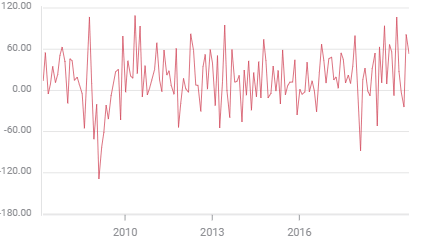
The Canadian labor economy is expected to create 15,900 jobs in October after adding 53,700 in September and 81,100 in August. The unemployment rate should be unchanged at 5.5% as will the participation rate at 65.7%. Annual average hourly wages rose 4.25% in September and 3.78% in August.
Canada’s labor economy
The Canadian economy has an enviable record of job creation. Over the past year payrolls have averaged 39,400 each month and the six-month average is almost the same at 40,400. In comparison its much larger southern neighbor with about 10 times its population has seen about 4 times as many new positions, 155,000 in the six-month average and 174,000 in the 12-month average.
Canada Employment Change
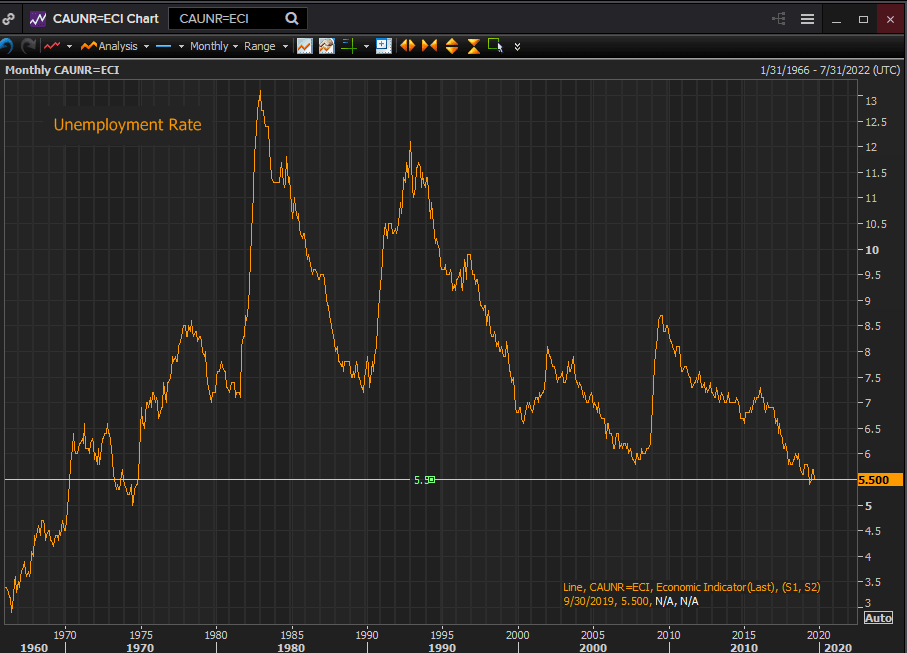
Wage gains for permanent employees have accelerated this year rising from 1.46% annually last November to 4.25% in September. The three-month moving average of 4.19% last month was the best since March 2009. Unemployment has been at 45 years lows for much of this year and the participation rate has gained almost half a percentage point from late last year.
Reuters
Canadian economy
Annualized GDP recovered smartly in the second quarter jumping to 3.7% from 0.5% in the first quarter and 0.3% in the final three months of last year. The third quarter will be reported on November 29th.
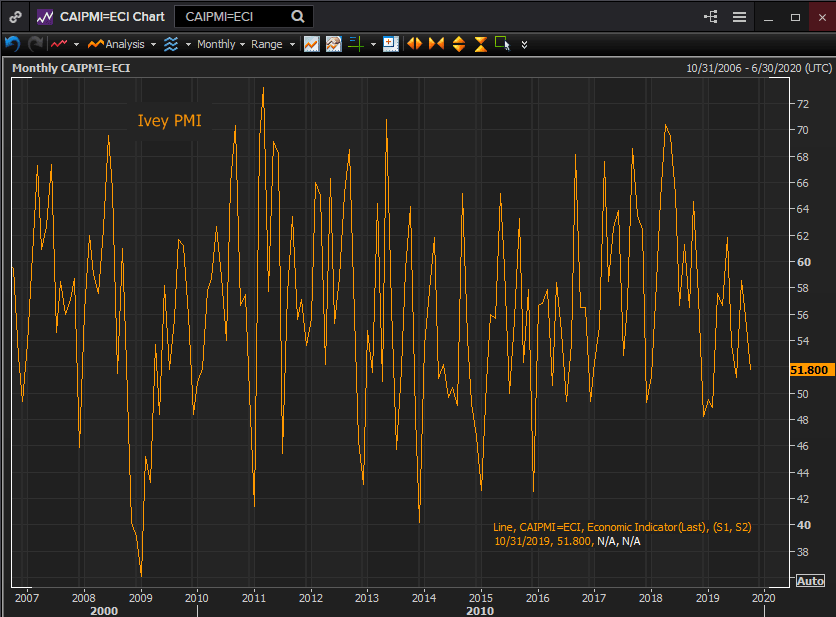
The Ivey composite purchasing managers’ index has been volatile this year but the trend has been lower from 2018’s high in May at 61.8. Scores plunged at the end of last year falling from 64.6 in October to 57.3 in November and then into contraction for three months at 48.2 in December 49.5 in January and 48.9 in February. This coincides with the collapse in GDP in the fourth quarter of 2018 and the first quarter of this year.
Reuters
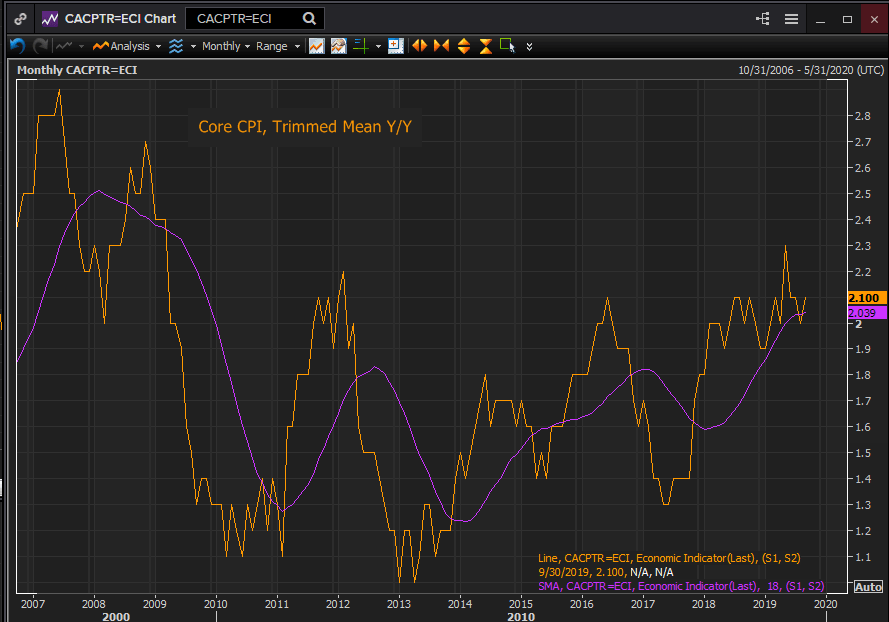
Annual core inflation was 2.1% in September and has averaged 2.039% monthly over the last 18 months essentially removing prices changes from the Bank of Canada’s list of concerns.
Reuters
Bank of Canada
The Canadian central bank along with the Bank of England are the two holdouts in this year’s rate reduction decisions. The Federal Reserve, the Reserve Bank of Australia and the Reserve Bank of New Zealand have all cut their base rates by varying amounts.
With the Fed now on hold and the China trade war threat in abeyance, any further reductions are, at least through the end of the year, unlikely. The next Bank of Canada rate meeting will be on December 4th.
Canadian dollar
The Federal Reserve’s three rate cuts did little to move the Dollar/Canada trading range. From mid-July the US dollar rose from about 1.3060 to 1.3330 and then from early October to then end of the month it fell back to 1.3050.
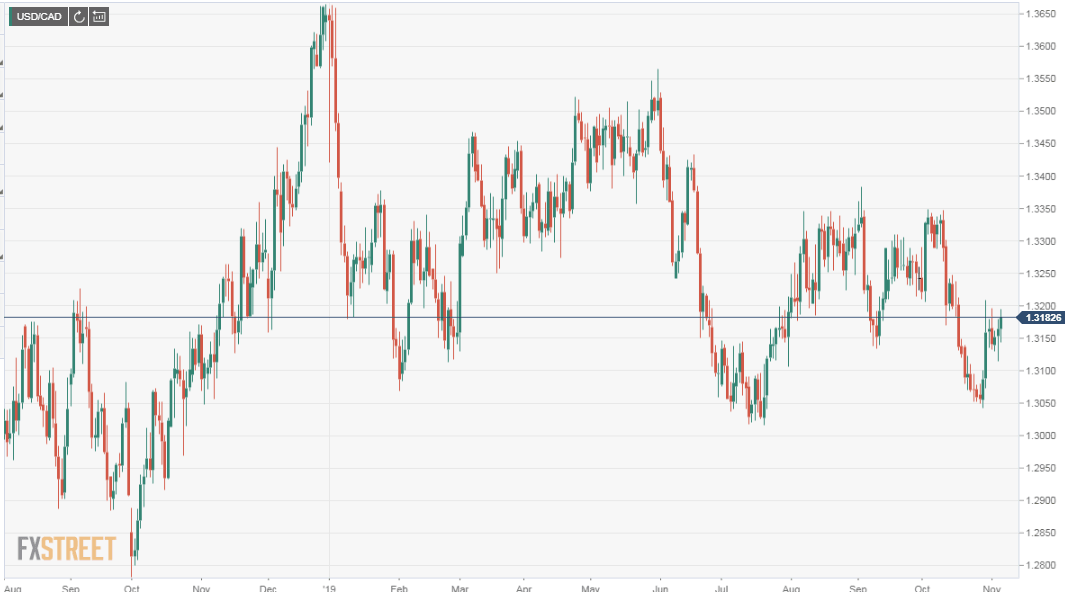
Currently the loonie is trading near the center of its six-month range. The direction through the end of the year will likely be determined by whether the US economy and the dollar are strengthened by the completion of the China trade deal.
Conclusion
Canada’s economy has provided excellent job growth this year after declining for most of 2018. Business sentiment has remained positive despite the US China trade dispute which for Canada’s resource based economy and status as the United States’ largest trading partner, is never far in the background.
The pending phase one trade deal is almost as important for Canada as for the US. If the arrangement is completed and signed the positive impact for both economies will stretch well into next year.
Author
Joseph Trevisani
FXStreet
Joseph Trevisani began his thirty-year career in the financial markets at Credit Suisse in New York and Singapore where he worked for 12 years as an interbank currency trader and trading desk manager.

















