BOE Preview: Why GBP/USD set to suffer even in response to a 50 bps hike, a lose-lose event
- The Bank of England is set to raise rates by another 25 bps to 1.25% as prices rise.
- BOE Governor Bailey may push for a 50 bps hike to catch up with other central banks.
- Britain's dire economic data limits how high rates could rise – potentially weakening sterling.

Higher prices are the cure for high prices – at least in the UK, which has lacked economic growth since January. The Bank of England is between the rock of elevated inflation and a hard place – potentially being the first developed economy to experience a cost-induced recession. I see the BOE's move as a dovish hike, a bearish outcome for the pound.
Inflation is high, so are recession risks
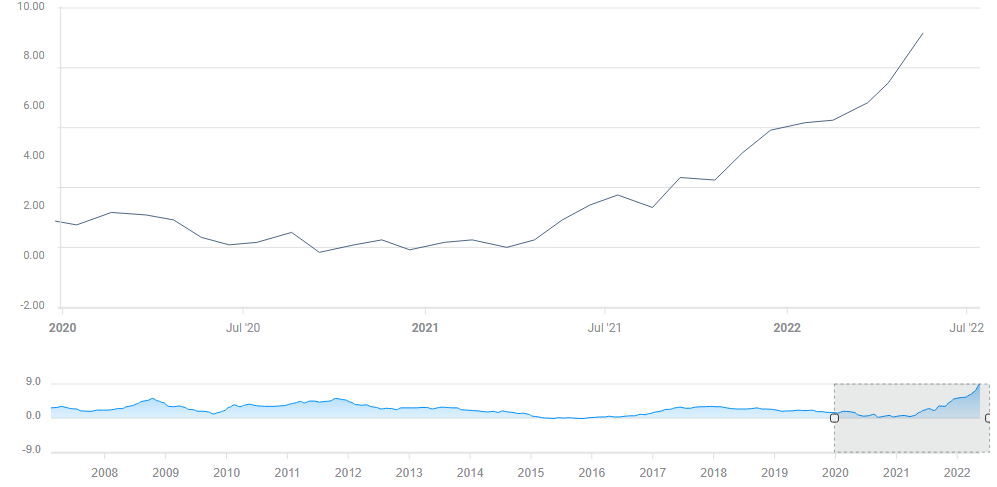
The economic calendar is pointing to another increase in the interest rate from 1% to 1.25%, extending the bank's tightening cycle. Such an increase, or even a 50 bps move, would come in response to soaring Consumer Price Index (CPI) levels. Headline inflation rose by 9% YoY in April, and Britain is projected to report a leap to 9.8% in next week's report for May. Core CPI provides no solace – it stood at 6.2% in April.
UK CPI is off the charts:
Source: FXStreet
However, higher prices at the pump, at the supermarket and everywhere else are already causing consumers a pause for thought. Retail sales are already down 4.9% YoY in May, a hangover from the reopening. Consumers and also businesses are becoming more cost-sensitive, ready to walk away if the price is too high – that is already taking a toll on the economy.
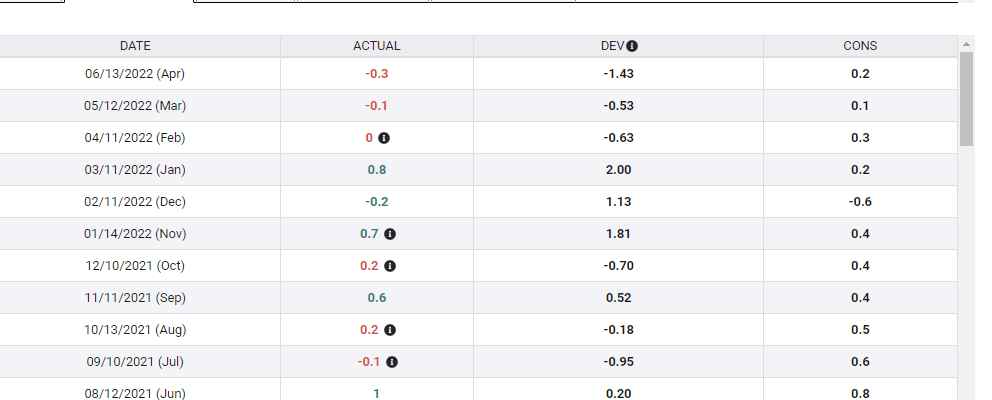
As mentioned earlier, the British economy last experienced economic growth in January. The most depressing figure is the latest one for April, which showed an outright contraction of 0.3%. Expectations stood at 0.1%. It is hard to see the "Old Lady" as the bank is known, conveying a hawkish message under theses circumstances. Andrew Bailey, Governor of the BOE, previously said a recession is a real probability.
No growth for three months:
Source: FXStreet
Will the pound rise if the BOE hikes rates by 50 bps? I think it will fall, perhaps even further. A faster rate increase would likely have two drivers. First, the BOE would try to catch up with other central banks such as US Federal Reserve. Markets would see through that and dismiss it as being disingenuous.
Secondly and more importantly, it would be an attempt to crush inflation while the BOE has room to move – before the recession strikes. In other words, it would be seen as increasing borrowing costs now to have more room to cut them later down the line.
Another reason to expect an adverse reaction from sterling is price action in response to previous hawkish surprises by central banks. The Reserve Bank of Australia's surprise 50 bps hike and that of central banks in the developing world failed to have a meaningful positive impact on their currencies. Hawkish surprises are the norm – not that surprising anymore.
This BOE meeting does not consist of the quarterly Monetary Policy Report (MPR) nor a press conference with top officials. The only pound-positive output would be if the Meeting Minutes show a large minority voting to raise rates by 75 bps. That is highly unlikely.
Final thoughts
The BOE is unfortunate to hold its rate decision a day after a dramatic Fed announcement and following an emergency meeting by the European Central Bank. It is hard to see how a hawkish surprise could lift sterling.
Author

Yohay Elam
FXStreet
Yohay is in Forex since 2008 when he founded Forex Crunch, a blog crafted in his free time that turned into a fully-fledged currency website later sold to Finixio.