What you need to know before markets open: Risk-off, GBP heavy funda, cold wars, Powell on TV
- It should be a risk-off start to the week.
- Hard Brexit, trade wars, COVID-19, cold wars and warnings from the Fed are all hot topics.

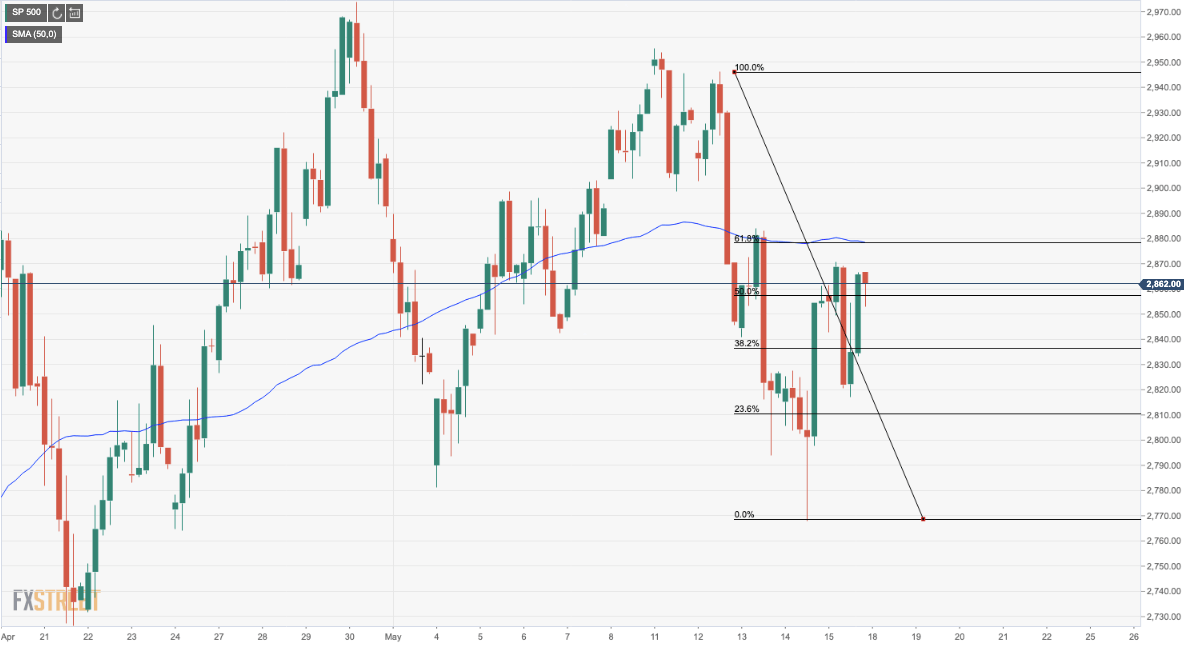
The markets are likely to start the week risk-off, although there is still some top side room in the benchmark indexes, with the S&P 500 close to the 61.8%. The DJIA has already reached its 61.8% retracement target. Meanwhile, for a quick recap of Friday's close and early weekend news, see here: Forex Today: King Dollar keeps leading.
Bearish pound headlines
For the open, there will be a focus on the pound. It was under pressure on Friday, the worst performer in fact, undermined by Brexit woes. The UK and the EU, both reported a deadlock in talks, amid disagreement on the EU’s demand for a level playing field. Andrew Haldane, Bank of England's Governor, said that “there are other options beyond that, or alongside that, that we're looking at as well,” when referring to negative interest rates. He also discussed the use of QE, although he later clarified that he was not implied policymakers are poised on any of those options – Forex Today: King Dollar keeps leading.
We have more recent weekend news and headlines which will be digested by the markets, here and here. The headlines are pertaining to the BoE considering negative rates and the Times reporting on hard-Brexit themed risks.
Deteriorating China and US headlines
We are seeing a war of words from the two most powerful economies in the world. Trade wars, COVID-19 backlash and now shows of muscle power on the nuclear arms front.
In more recent headlines on Monday, the South China Morning Post reports: "China hits back at America’s ‘unreasonable suppression’ of Huawei":
After Washington announces new restrictions on technology giant, Beijing says it will ‘firmly uphold Chinese firms’ legitimate and legal rights and interests’. Observers say China is likely to retaliate, but exactly how remains to be seen.
Fed's Powell will be aired on 60 minutes
Following Powell speech: Economy will recover 'steadily' through 2H 2020, we will hear more from the Chair of the Federal Reserve System, Jerome Powell, when appears on US TV show "60 Minutes". This will be aired from 7pm ET (2300GMT).
Meanwhile, Federal Reserve issued a stark warning on Friday that "stock and other asset prices could suffer significant declines should the coronavirus pandemic deepen, with the commercial real estate market being among the hardest-hit industries," Bloomberg News reports.
The Fed made the assertion in its twice-yearly financial stability report, in which it flags risks to the U.S. banking system and broader economy. The document highlighted the central bank’s race to intervene in markets and temporarily dial back regulations on financial firms in response to the Covid-19 crisis.
“Asset prices remain vulnerable to significant price declines should the pandemic take an unexpected course, the economic fallout prove more adverse, or financial system strains reemerge,” the Fed said in the report. It cited commercial real estate as being particularly susceptible to falling valuations because “prices were high relative to fundamentals before the pandemic,” and there have been severe disruptions in the hospitality and retail industries.
COVID-19 updates
US CDC reports 31,967 new coronavirus cases as of yesterday; total now 1,467,065 cases vs 1,435,098 in previous report on May 16.
US CDC reports 1,394 new deaths due to coronavirus as of yesterday; total now 88,709 deaths vs 87,315 in previous report on May 16.
Charts in focus
The S&P500 index is on track for a test of the 50-4-HR moving average that meets the golden 61.8% Fibonacci retracement target:
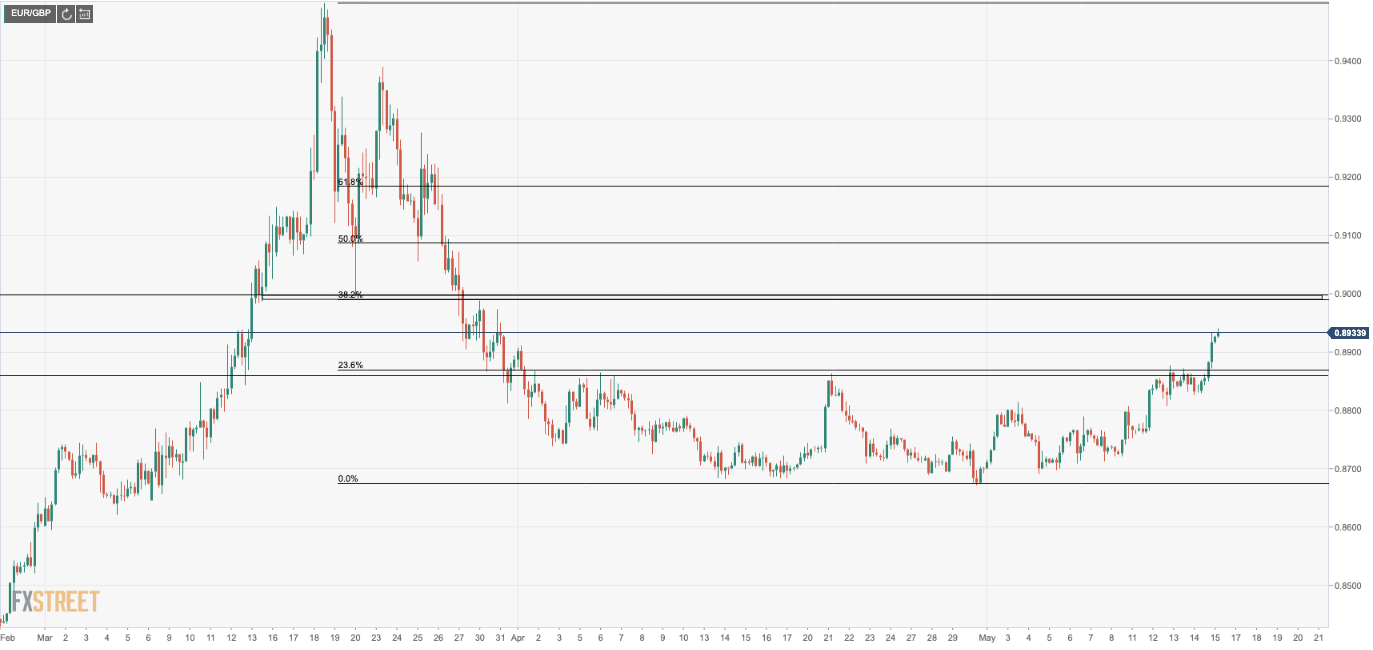
Meanwhile, the pound is in focus. See here for EUR/GBP analysis with bulls targeting the 0.90 handle:
Author

Ross J Burland
FXStreet
Ross J Burland, born in England, UK, is a sportsman at heart. He played Rugby and Judo for his county, Kent and the South East of England Rugby team.

















