|

USD/THB advances as US economy signals strength

  • The USD/THB bulls gain momentum, with the pair showing a 0.56% spike.
  • Favorable PMI data and stable unemployment figures, coupled with the Federal Reserve's unwavering stance favor the USD.
  • Markets are giving up their hopes of a cut in September by the Fed.

The USD/THB pair is gaining strength rising to 36.60 on Thursday due to the Federal Reserve's (Fed) persistent hawkish stance on maintaining high interest rates. This is backed by better-than-expected Manufacturing PMI data and low unemployment claims in the US, providing a favorable economic environment.

The latest US data showed a robust PMI reading for May, exceeding expectations with manufacturing PMI at 50.9, up from April's 50.0, and outpacing the forecast of 50.0. The Services PMI also saw an impressive surge, reaching 54.8 from April’s figure of 51.3, significantly beating a 51.3 forecast.

In addition, the US Labor Department declared a smaller-than-anticipated rise in unemployment benefits, which marked another positive note for the US economy. All these factors, combined with the Federal Reserve's steadfast commitment to high interest rates, benefited the Greenback against its peers on Thursday. In that sense, according to the CME FedWatch tool, markets have practically given up the hopes of a cut by the Fed until September. In that month’s meeting, investors now see just a 40% chance of the easing cycle starting.

USD/THB technical analysis

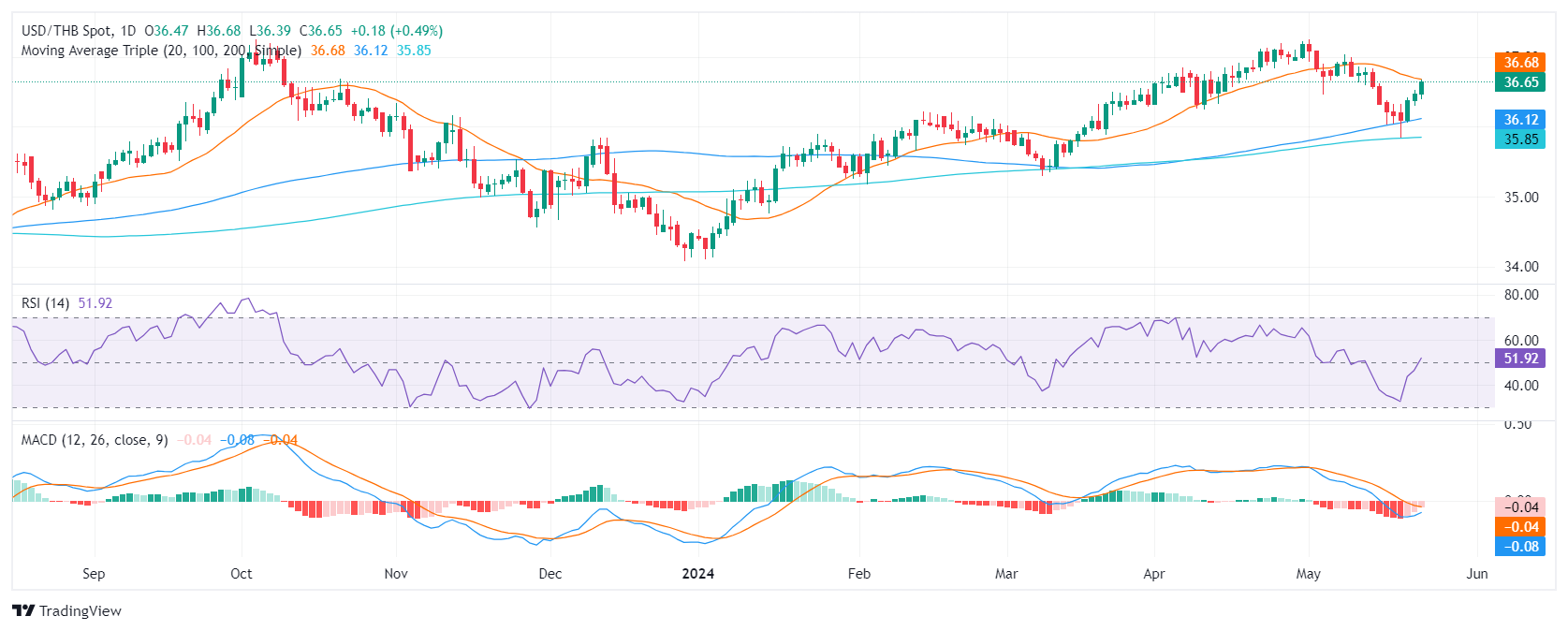
Within the daily view, the Relative Strength Index (RSI) shows a transition from negative to positive territory. The market dynamics quickly flipped from an oversold to a positive trend with the latest RSI reading standing above the mid-line. The buyers appear to have gained control, offsetting prior losses and establishing a more optimistic outlook.

Supporting this is the trend witnessed in the Moving Average Convergence Divergence (MACD) histogram, which displays declining red bars. This indicates a diminishing negative momentum, aligning with the bullish context presented by the RSI above.

USD/THB daily chart
Author

Patricio Martín

Patricio is an economist from Argentina passionate about global finance and understanding the daily movements of the markets.


More from Patricio Martín
Share:

Editor's Picks

GBP/USD flirts with tops near 1.3470

GBP/USD manages to regain composure and challenge the area of daily highs around 1.3470 on Friday. Cable picks up pace despite marginal gains in the Greenback in a context of swelling geopolitical tensions and rising global oil prices.

EUR/USD struggles above 1.1500 despite USD weakness

EUR/USD struggles with its recovery above 1.1500 in European trading on Monday, despite broad US Dollar weakness and improved risk sentiment. The USD loses traction following US President Trump's call off an attack on Iran and that talks between the two sides would happen on Monday. Traders will closely monitor the developments surrounding US-Iran negotiations and US ISM PMI data.

Gold extends range play below $4,100 as rebounding USD meets receding Fed hike bets

Gold struggles to capitalize on a modest weekly bullish gap opening, and remains below the $4,100 mark heading into the European session. The US Dollar stages a modest recovery from its lowest level since June 17, which is seen capping the upside for the commodity. The upside for the USD, however, seems limited amid renewed hopes for a US-Iran peace deal and receding US Fed rate-hike expectations.

Week ahead: US payrolls report and AI earnings to keep investors on edge

After the Fed decision, NFP report awaited for more rate hike clues. Employment also on the agenda in Canada and New Zealand. Chinese trade and Japanese wage data to be watched too. But Iran and AI headlines to remain in driver’s seat for risk sentiment.

Solana risks a steeper decline below $70 despite steady ETF inflows

Solana (SOL) is trading in the red, losing bullish momentum and remaining capped below its 50-day Exponential Moving Average at $75.68. SOL-focused Exchange Traded Funds show resilience with a monthly inflow of $14.62 million in July, while the near-term retail support wanes with the funding rate turning negative.

9-3: Is the Federal Reserve’s vote tally Warsh's new forward guidance?
The rate did not move. Neither did the statement, and that’s the more interesting fact. Set the July 29 Federal Open Market Committee (FOMC) statement beside the one issued on June 17, and the two documents are identical apart from a single verb and a paragraph at the bottom naming three dissenters.