|

US Pres. Trump to hold China news conference on Friday, risk-off themes will be in play

The US President Donald Trump will hold a news conference on China this Friday. This will likely include the president's opinions on COVID-19 and China's handling of it, trade relations, currency wars and the US administration's political response to China’s parliament approving a decision to go forward with national security legislation for Hong Kong. This was a move that has triggered widespread concern about democratic freedoms.

So far, we know that the US has already announced that it has cancelled visas for Chinese students with ties to military schools and that it has stripped Hong Kong of its special treaty status, certifying it as no longer autonomous.

Market implications

The ramifications for financial markets could be enormous. We have already seen the value of the CNY weaken vs. the USD which will likely raise concerns that China could be weaponising its currency to support external trade.

FX markets will be keeping a close eye on these developments and AUD, JPY, HKD, USD and CNH markets will all be responding in kind. Equities could also take a hammering, (S&P 500 losing 30 points on the announcement and DJIA has now fallen into negative territory for the day).

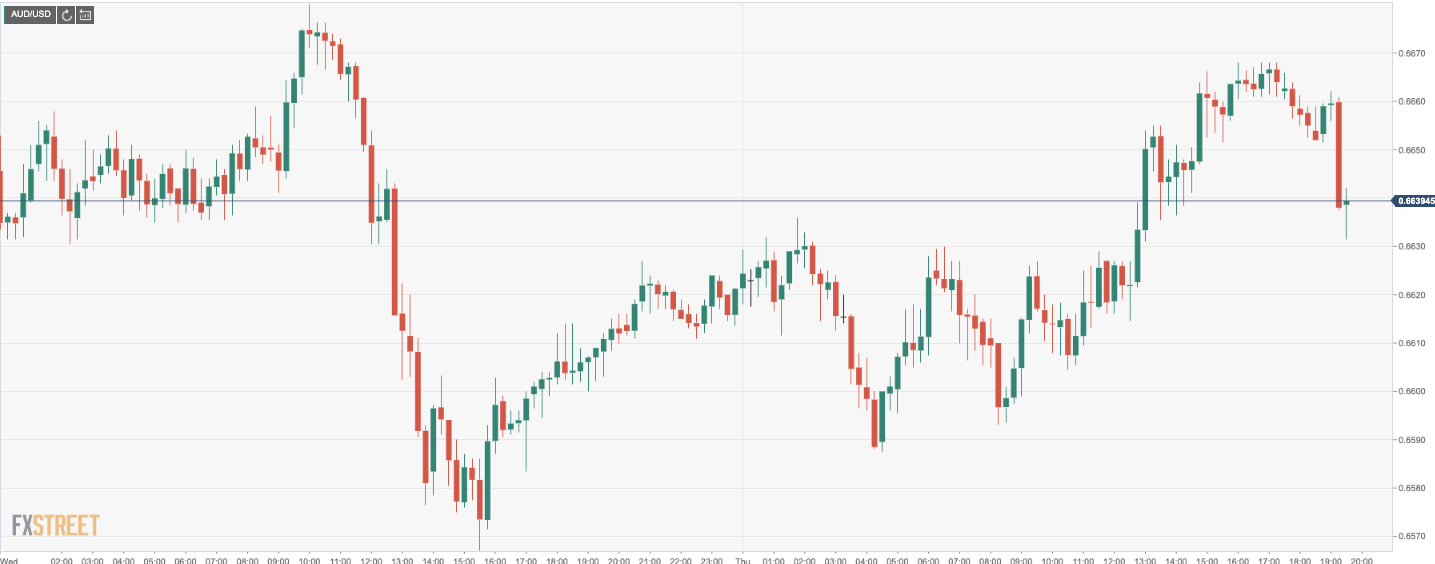
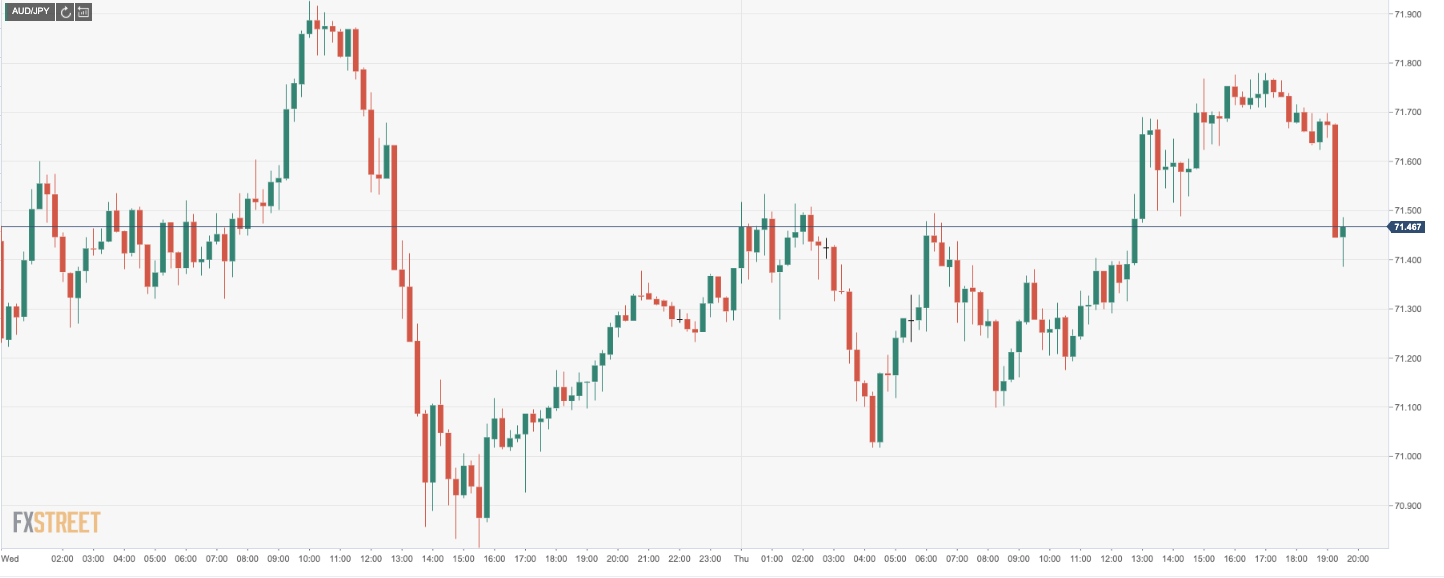
AUD/USD and AUD/JPY are already falling in anticipation as well:

AUD/USD 15 mins chart
AUD/JPY 15 mins charts
This is a theme that has been brewing since the start of this week. More on all of this in the following notes from earlier this week:

Author

Ross J Burland

Ross J Burland, born in England, UK, is a sportsman at heart. He played Rugby and Judo for his county, Kent and the South East of England Rugby team.


More from Ross J Burland
Share:

Editor's Picks

AUD/USD remains offered; supported by 0.7100

AUD/USD adds to Monday’s retracement, although it manages well to keep the trade above the 0.7100 yardstick ahead of the opening bell in Asia. Once again, the softer tone in spot follows decent gains in the Greenback amid rising bets for a Fed rate hike on Wednesday.

USD/JPY extends gains toward 155.00 amid USD resurgence

USD/JPY keeps pushing higher toward 155.00 early Tuesday, looking for more upside, as traders await the FOMC and BoJ meetings this week. Meanwhile, Fed rate-hike bets and oil-driven inflation risks keep US bond yields near multi-year highs, supporting the US Dollar and the pair. That said, a more hawkish repricing of the BoJ normalization path might continue to underpin the Japanese Yen and could limit USD/JPY's upside. .

Gold set to fall toward $4,000 as Warsh faces a Fed rate-hike dilemma

As the Federal Reserve monetary policy announcement approaches and the Middle East war intensifies, the US Dollar resumes its advance. Gold price posted a tepid attempt to recover its shine in early August, but with renewed USD demand, the bright metal faltered miserably and is now closer to the $4,000 mark than the encouraging $4,700 peak from a month ago.


Bitcoin pulls back as valuation ceilings hold while XAU weakness persists
Bitcoin (BTC) corrects alongside the broader cryptocurrency market on Tuesday as selling persists ahead of the United States (US) Federal Reserve (Fed) monetary policy decision. Market participants expect the central bank to raise interest rates to 3.75%-4.00% on Wednesday, potentially weighing on risk assets.
How Japan became the World's Banker and why that era may be ending

Japan's ultra-low interest rates helped finance trillions of dollars in global investments for more than a decade, making the Japanese Yen one of the world’s cheapest sources of funding. With the Bank of Japan expected to tighten policy again this week, that advantage may be entering a new phase. While most major economies raised interest rates, Japan remained the world's outlier.

Venezuela’s 65-billion-barrel Oil deal could reshape America’s inflation fight
The United States (US) has secured unprecedented access to part of Venezuela’s vast Oil reserves. The timing is particularly significant as the war with Iran is disrupting Middle Eastern supplies, keeping energy prices elevated and reviving concerns about inflation.