|

US Dollar Index technical analysis: DXY in wait-and-see mode, ending the day virtually unchanged near the 97.55 level

  • DXY has been directionless this Wednesday as the market is weighing the impact of the trade war on US interest rates. 
  • Wall Street indices are about to end the day near daily highs giving some support to the buck.
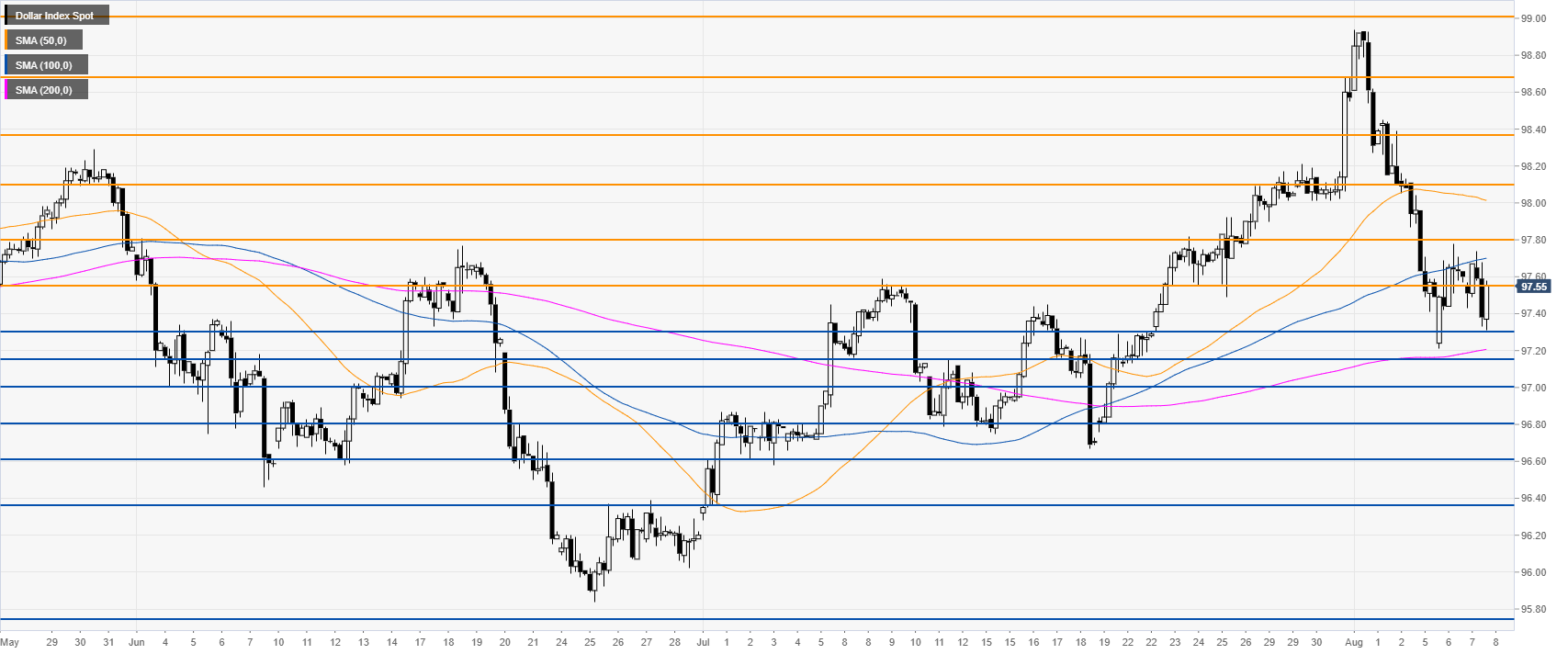
  • The level to beat for bulls are seen at 97.80, followed by 98.10 and 98.38 resistances. 



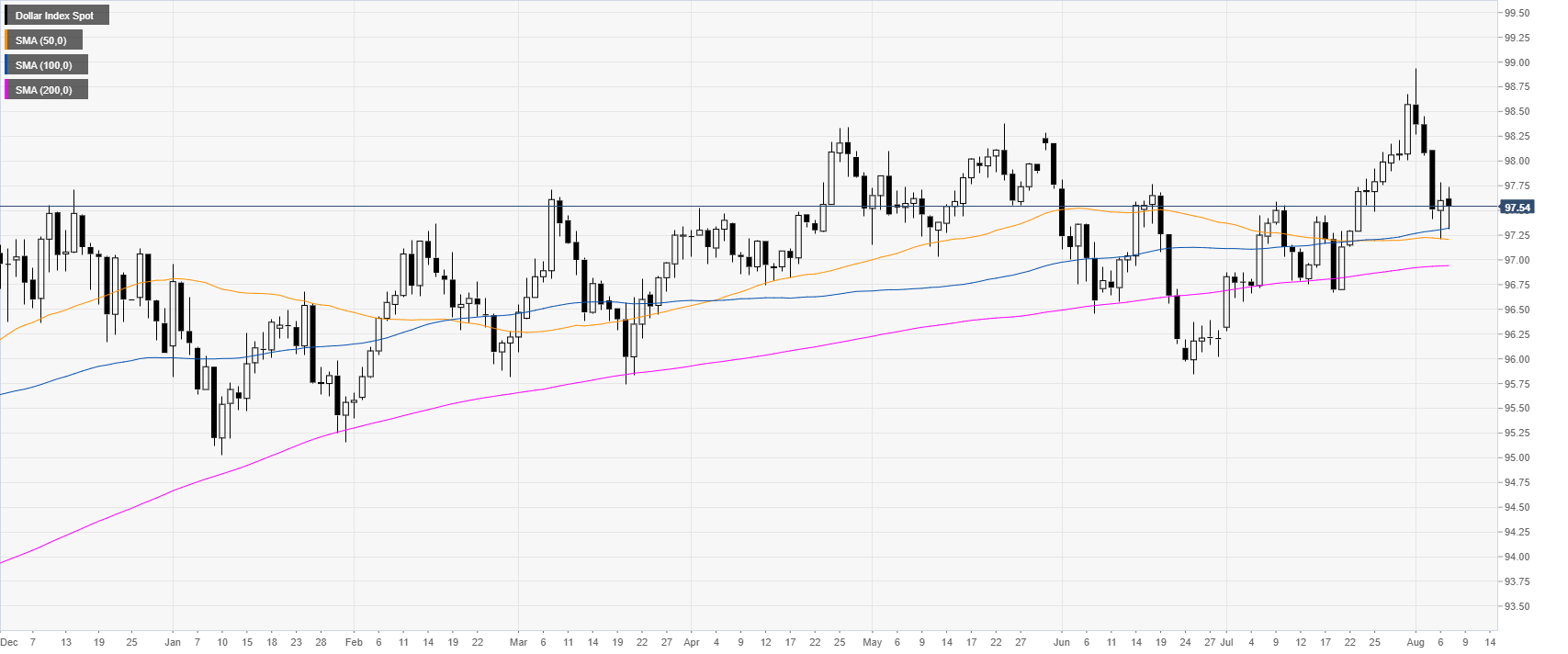
DXY daily chart

 
DXY (US Dollar Index) is trading in a bull trend above its main daily simple moving averages (DSMAs). The greenback remains fragile as the threat of the US-China trade war keeps looming. US stock indices are currently trading near their daily highs somewhat supporting DXY for the time being.
 

DXY 4-hour chart


DXY found support at the 96.30 support above the 200 SMA, creating a small double bottom. The bulls need a clear breakout above to 97.80 resistance to recapture the 98.10 level near the 50 SMA followed by 98.36 resistance.
 

DXY 30-minute chart

 
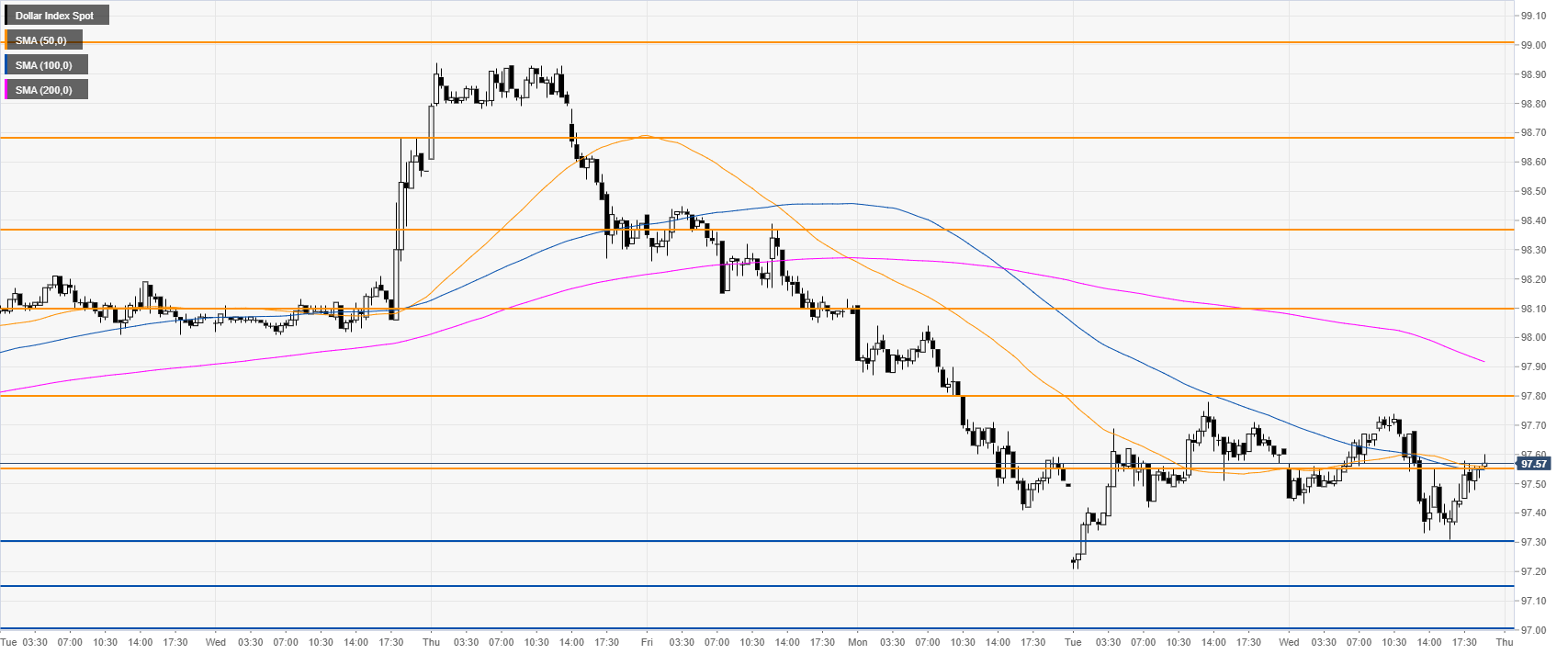
The greenback has been consolidating its recent losses for the second consecutive day. A daily close below 97.15 would be seen as a potential bearish continuation towards the 97.00 figure. 


Additional key levels

Dollar Index Spot

Overview
Today last price97.55
Today Daily Change-0.05
Today Daily Change %-0.05
Today daily open97.6
 
Trends
Daily SMA2097.56
Daily SMA5097.21
Daily SMA10097.31
Daily SMA20096.94
Levels
Previous Daily High97.78
Previous Daily Low97.21
Previous Weekly High98.94
Previous Weekly Low97.9
Previous Monthly High98.68
Previous Monthly Low96.28
Daily Fibonacci 38.2%97.56
Daily Fibonacci 61.8%97.43
Daily Pivot Point S197.28
Daily Pivot Point S296.96
Daily Pivot Point S396.71
Daily Pivot Point R197.85
Daily Pivot Point R298.1
Daily Pivot Point R398.42

Author

Flavio Tosti

Flavio Tosti

Independent Analyst


More from Flavio Tosti
Share:

Editor's Picks

EUR/USD rises to 1.1800 neighborhood amid renewed USD selling and trade uncertainties

The EUR/USD pair regains positive traction during the Asian session on Wednesday and jumps to the 1.1800 neighborhood in the last hour, reversing the previous day's modest losses. The intraday move up is sponsored by the emergence of fresh US Dollar, which continues to be weighed down by persistent trade-related uncertainties.

GBP/USD remains stronger above 1.3500 following Trump’s State of the Union

GBP/USD remains in the positive territory for the fourth successive session, trading around 1.3510 during the Asian hours on Wednesday. The pair appreciates as the US Dollar remains subdued following US President Donald Trump’s first State of the Union address of his second administration before a joint session of Congress.

Gold re-attempts $5,200 amid tariffs and geopolitical woes

Gold buyers are back in the game early Wednesday after seeing a correction from monthly highs on Tuesday. The US Dollar slips after Trump’s SOTU fails to impress and as AI-driven worries ease. Dovish Fed bets also weigh.  Gold looks north so long as the key 61.8% Fibo resistance at $5,142 holds on the daily chart.

Bitcoin, Ethereum and Ripple post cautious recovery amid downside risks

Bitcoin, Ethereum, and Ripple are posting a cautious recovery on Wednesday following a market correction earlier this week.  BTC is approaching a key breakdown level, while ETH and XRP are rebounding from crucial support levels.

The Citrini report: How a debatable AI narrative can shake Wall Street

That AI-related headline alone was enough to rattle investors.US stocks slid sharply on Monday after a widely circulated Citrini Research memo outlined a hypothetical “2028 Global Intelligence Crisis”, warning that rapid AI adoption could push US unemployment into double digits as early as by mid-2028.

XRP pressured by weak ETF flows and declining retail interest

Ripple (XRP) is edging lower, trading above its intraday low of $1.32 at the time of writing on Tuesday. The decline from its weekly opening of $1.39 reflects heightened volatility in the broader cryptocurrency market, accentuated by tariff-triggered uncertainty.