US Core PCE Preview: Forecasts from seven major banks, losing speed
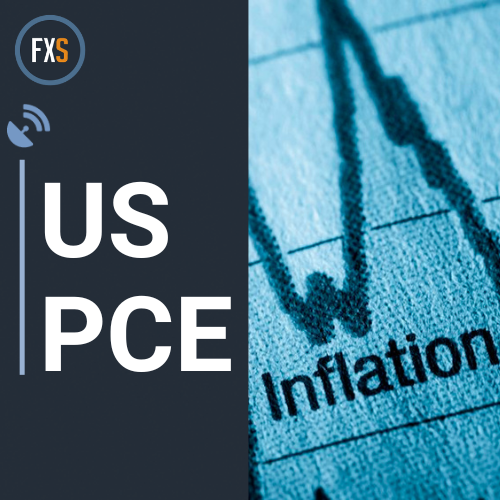
The Fed’s preferred inflation gauge, the Core Personal Consumption Expenditure (PCE), will be released by the US Bureau of Economic Analysis (BEA) on Friday, September 29 at 12:30 GMT and as we get closer to the release time, here are the forecasts of economists and researchers of seven major banks.
Core PCE is expected at 3.9% year-on-year vs. 4.2% in August. On a monthly basis, it is seen steady at 0.2%.
Deutsche Bank
We expect core PCE to hold on to +0.2% MoM gains, which would have the effect of lowering the YoY growth rate by a little over 30 bps (to 3.9%).
ING
We are also aware that the Fed’s favoured measure of inflation, the core PCE deflator, could come in a little higher than the market is forecasting. The core PCE deflator could come in a little higher than the market is forecasting. We look for a 0.3% MoM increase in prices, similar to the CPI report, whereas the consensus is for a more benign 0.2% MoM print.
TDS
We expect core PCE inflation to register a third consecutive 0.2% MoM increase in August; undershooting the core CPI's stronger 0.3% gain. The YoY rate likely also fell to 3.9%, while we expect the key core svcs ex-housing series to slow to 0.2% MoM following July's 0.5% surge.
NBF
The annual core PCE deflator may have progressed 0.5% in August, a result which should translate into a three-tick increase of the 12-month rate to 3.9%.
SocGen
We forecast a more modest decline in US core PCE to 3.9% YoY.
Citi
Elements of 0.28% MoM US core CPI in August but some softer details of PPI data lead Citi Research to forecast a more modest 0.14% MoM increase in core PCE inflation. Core services prices ex-housing, which rose a solid 0.37% MoM in CPI, should rise 0.17% MoM in PCE inflation while goods prices should decline modestly as in CPI. Shelter prices should continue to slow over the coming months, but this will have less of a disinflationary impact on PCE inflation than on CPI. Meanwhile, headline PCE inflation should rise 0.4% MoM due to higher energy prices and rebound modestly to 3.4% YoY.
Wells Fargo
We forecast the PCE deflator increased 0.4% in August, and the core PCE deflator rose 0.2%. This, along with our forecasts for personal income to rise 0.5% and personal spending to rise 0.5% in the month, should bring real disposable income growth back to the black.
Author

FXStreet Insights Team
FXStreet
The FXStreet Insights Team is a group of journalists that handpicks selected market observations published by renowned experts. The content includes notes by commercial as well as additional insights by internal and external analysts.