Bullock Speech: RBA Governor speaks on policy outlook after the expected interest rate hold
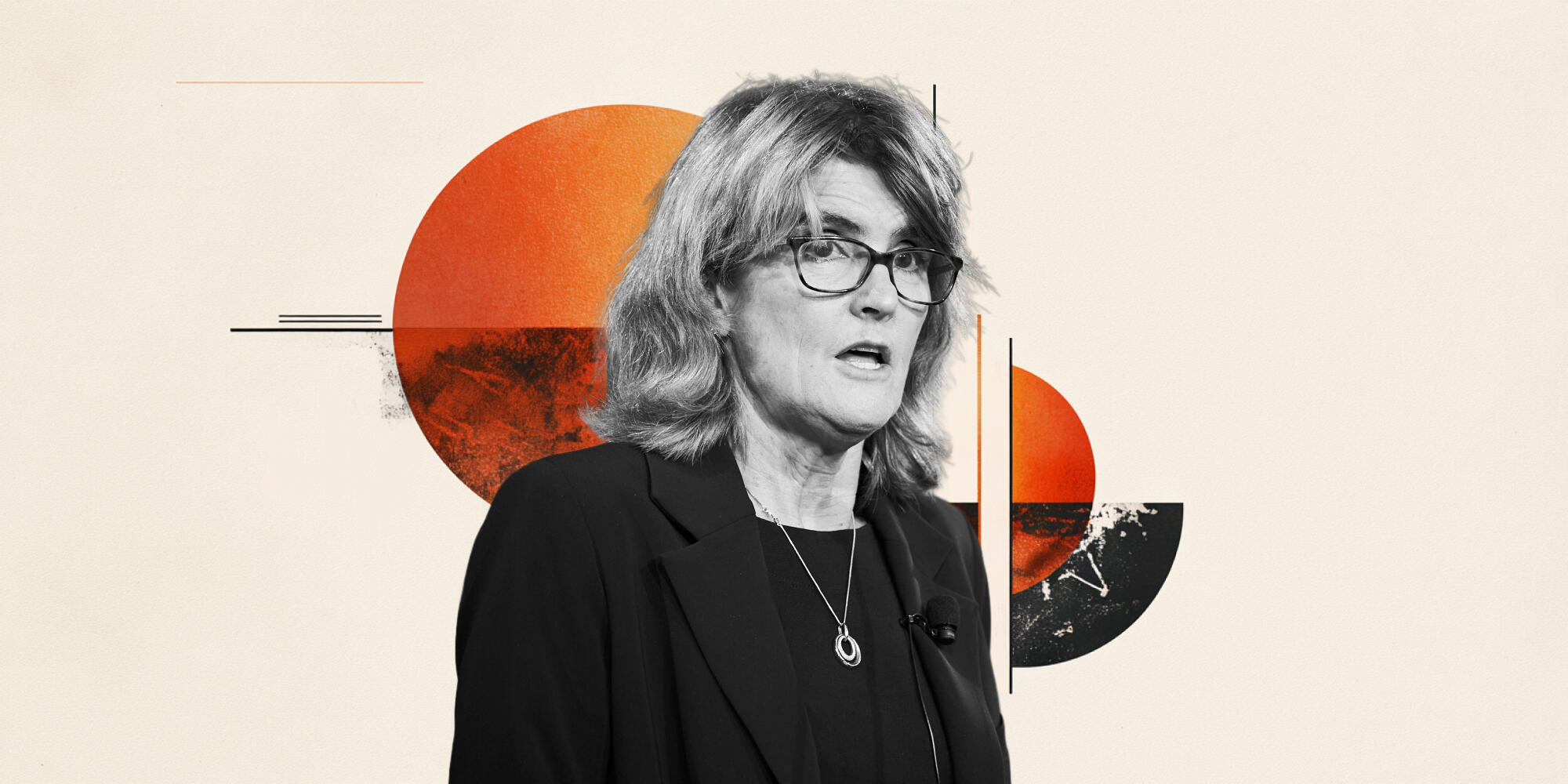
Reserve Bank of Australia (RBA) Governor Michele Bullock is addressing the press conference, explaining the reason behind leaving the key interest rate unchanged at 3.6% in the November policy meeting.
Bullock is taking questions from the press as part of a new reporting format introduced by the central bank this year.
Key quotes from the RBA press conference
Less easing may be needed in this round than in past.
Did not consider cutting rates.
Discussed holding and outlook for policy, being cautious.
Annual core inflation above 3% is not ideal.
Possible no more rate cuts, possible some more.
Best estimate unemployment rate will remain relatively stable.
Rate increase not contemplated.
There are mixed signals on the tightness of financial conditions.
We still got a little bit of tightness that will take a little bit of heat out of the economy to bring inflation back down.
It's an open question about whether there are many more rate cuts to come.
We do not give forward guidance.
There is still much uncertainty on inflation.
We are watching things very carefully.
We think we are close to neutral and will be going meeting by meeting to see if whether outlook is still reasonable.
The board does not have a bias on monetary policy.
Economic Indicator
RBA Interest Rate Decision
The Reserve Bank of Australia (RBA) announces its interest rate decision at the end of its eight scheduled meetings per year. If the RBA is hawkish about the inflationary outlook of the economy and raises interest rates it is usually bullish for the Australian Dollar (AUD). Likewise, if the RBA has a dovish view on the Australian economy and keeps interest rates unchanged, or cuts them, it is seen as bearish for AUD.
Read more.Next release: Tue Dec 09, 2025 03:30
Frequency: Irregular
Consensus: -
Previous: 3.6%
Source: Reserve Bank of Australia
This section below was published at 03:30 GMT to cover the Reserve Bank of Australia's monetary policy announcements and the initial market reaction.
The Reserve Bank of Australia (RBA) announced on Tuesday that it held the Official Cash Rate (OCR) steady at 3.6% after concluding the November monetary policy meeting.
The decision aligned with the market expectations.
Summary of the RBA monetary policy statement
Underlying inflation remains too high.
The cash rate remains unchanged to support inflation returning to target.
Expects trimmed mean inflation to average 3.2% through mid-2026, easing to 2.7% by December 2026 and 2.6% by the end of 2027.
Sees headline CPI peaking at 3.7% in June 2026, before moderating back within the 2–3% target band by late 2027.
The upward revisions reflect what the RBA described as a “hump” in inflation stemming from the Q3 CPI jump, which it expects to persist until mid-2026.
Policy assumptions underpinning the outlook include a cash rate of 3.6% through end-2025, drifting slightly lower to 3.4% in mid-2026 and 3.3% thereafter, suggesting the RBA expects to hold policy in mildly restrictive territory for longer.
Forecasts GDP expanding around 2% annually through 2027, with unemployment steady near 4.4% and wage growth easing from 3.4% in 2026 to about 3% by end-2027.
It noted that financial conditions have eased since the August rate cut, with policy now “closer to neutral” but still acting to contain demand.
AUD/USD reaction to the RBA interest rate decision
The Australian Dollar edges slightly lower in an immediate reaction to the RBA’s decision. The AUD/USD pair currently trades at 0.6522, down 0.23% on the day.
Australian Dollar Price This week
The table below shows the percentage change of Australian Dollar (AUD) against listed major currencies this week. Australian Dollar was the weakest against the US Dollar.
| USD | EUR | GBP | JPY | CAD | AUD | NZD | CHF | |
|---|---|---|---|---|---|---|---|---|
| USD | 0.16% | 0.06% | 0.02% | 0.36% | 0.29% | 0.62% | 0.56% | |
| EUR | -0.16% | -0.10% | -0.07% | 0.19% | 0.12% | 0.46% | 0.39% | |
| GBP | -0.06% | 0.10% | -0.12% | 0.29% | 0.22% | 0.56% | 0.50% | |
| JPY | -0.02% | 0.07% | 0.12% | 0.31% | 0.24% | 0.58% | 0.65% | |
| CAD | -0.36% | -0.19% | -0.29% | -0.31% | -0.13% | 0.24% | 0.21% | |
| AUD | -0.29% | -0.12% | -0.22% | -0.24% | 0.13% | 0.34% | 0.28% | |
| NZD | -0.62% | -0.46% | -0.56% | -0.58% | -0.24% | -0.34% | -0.06% | |
| CHF | -0.56% | -0.39% | -0.50% | -0.65% | -0.21% | -0.28% | 0.06% |
The heat map shows percentage changes of major currencies against each other. The base currency is picked from the left column, while the quote currency is picked from the top row. For example, if you pick the Australian Dollar from the left column and move along the horizontal line to the US Dollar, the percentage change displayed in the box will represent AUD (base)/USD (quote).
This section below was published on November 3 at 21:45 GMT as a preview of the Reserve Bank of Australia (RBA) policy announcements.
- The Reserve Bank of Australia is set to keep the interest rate steady at 3.60% in November.
- RBA Governor Michele Bullock’s press conference and updated economic forecasts will hold the key.
- The Australian Dollar could experience intense volatility on the RBA policy announcements.
The Reserve Bank of Australia (RBA) is widely expected to maintain the Official Cash Rate (OCR) at 3.6% after its November monetary policy meeting on Tuesday. The decision will be announced at 03:30 GMT.
The Monetary Policy Statement (MPS) will be accompanied by the quarterly economic forecasts, followed by RBA Governor Michele Bullock’s press conference at 04:30 GMT.
The Australian Dollar (AUD) remains at risk of experiencing intense volatility on any surprises in the central bank’s updated projections or Governor Bullock’s press conference.
RBA on-hold again, cautious on future rate cuts?
While speaking at the Australian Business Economists' Annual Dinner, in Sydney, on October 27, RBA Governor Bullock noted that “inflation is back in the target band and the Unemployment Rate is still pretty low, so still in good condition.”
Bullock said further that “we will have to decide whether a cut is needed to help the job market,” as “there's still a bit of tightness in the labor market.”
The Minutes of the RBA’s September monetary policy meeting also highlighted that “labor market is still a little tight,” and that “forward indicators are steady.”
Bullock’s words and the RBA Minutes clearly indicate that the central bank’s focus is on the labor market amid an impressive jump in the Australian Consumer Price Index (CPI) by the most in 2-1/2 years in the September quarter.
On October 29, the data released by the Australian Bureau of Statistics (ABS) showed the CPI rose 1.3% in the third quarter, beating the forecast of 1.1% growth.
The annual CPI inflation rate leaped to 3.2%, from 2.1%, breaking through the top end of the RBA's 2% to 3% target band.
Meanwhile, the Unemployment Rate jumped to an almost four-year high of 4.5% in September, according to the ABS data, topping the RBA’s peak forecast of 4.3%. However, employment increased by 14,900 people in September.
Amid red-hot inflation and a still healthy labor market, the RBA will likely hold its rein on further monetary easing, maintaining its cautious rhetoric.
Markets price in just an 8% chance that the RBA will lower the rate on Tuesday, down from 40% before the inflation data. The probability of a cut in December is now seen as less than 25%, per Reuters.
“Over the next 12 months, cash rate futures price in just one 25 basis points (bps) cut and the policy rate to bottom at 3.35%,” analysts at BBH noted.
That being said, the updated economic projections and the MPS will be closely scrutinized for fresh hints on the central bank’s path forward on rates.
How will the Reserve Bank of Australia’s decision impact AUD/USD?
The AUD is consolidating its correction from three-week highs of 0.6618 against the US Dollar (USD) heading into the RBA policy announcements.
If the RBA downgrades its inflation and growth forecasts, while flagging increased risks to employment, it could revive the odds of a 25 bps rate cut in December, triggering a fresh corrective decline in the AUD.
The Aussie could also regain downside traction if RBA Governor Bullock reveals that the board discussed a 25-bps rate cut at the meeting and some members dissent in favor of such a move.
On the other hand, if Bullock sticks with the bank’s cautious approach on further rate cuts, while sounding upbeat on the labor market, AUD/USD could see a fresh advance toward the multi-week highs.
Dhwani Mehta, Asian Session Lead Analyst at FXStreet, highlights key technical levels for trading AUD/USD following the policy announcement.
“AUD/USD has managed to defend the critical demand area near 0.6535, where the 100-day and 21-day Simple Moving Averages (SMA) align. The 14-day Relative Strength Index (RSI) holds its position just above the midline, currently near 51.50. These technical indicators suggest that buyers could retain control going forward.”
“The Aussie pair could stretch the recovery beyond the 50-day SMA at 0.6562 on a cautious hold decision. The next topside targets are seen at the three-week highs of 0.6618, followed by the 0.6650 psychological level. On the flip side, a sustained break of the abovementioned confluence support near 0.6535 could initiate a fresh downtrend toward the 200-day SMA at 0.6444,” Dhwani adds.
Interest rates FAQs
Interest rates are charged by financial institutions on loans to borrowers and are paid as interest to savers and depositors. They are influenced by base lending rates, which are set by central banks in response to changes in the economy. Central banks normally have a mandate to ensure price stability, which in most cases means targeting a core inflation rate of around 2%. If inflation falls below target the central bank may cut base lending rates, with a view to stimulating lending and boosting the economy. If inflation rises substantially above 2% it normally results in the central bank raising base lending rates in an attempt to lower inflation.
Higher interest rates generally help strengthen a country’s currency as they make it a more attractive place for global investors to park their money.
Higher interest rates overall weigh on the price of Gold because they increase the opportunity cost of holding Gold instead of investing in an interest-bearing asset or placing cash in the bank. If interest rates are high that usually pushes up the price of the US Dollar (USD), and since Gold is priced in Dollars, this has the effect of lowering the price of Gold.
The Fed funds rate is the overnight rate at which US banks lend to each other. It is the oft-quoted headline rate set by the Federal Reserve at its FOMC meetings. It is set as a range, for example 4.75%-5.00%, though the upper limit (in that case 5.00%) is the quoted figure. Market expectations for future Fed funds rate are tracked by the CME FedWatch tool, which shapes how many financial markets behave in anticipation of future Federal Reserve monetary policy decisions.
Author

FXStreet Team
FXStreet
Composed of a group of economic journalists and FX experts, the FXStreet content team produces and oversees all content published on FXStreet. It provides a purely journalistic approach to the Forex market.