Pound Sterling tumbles as US Dollar rebounds ahead of US NFP
- The Pound Sterling falls below 1.2500 despite the Fed’s guidance on interest rates was slightly less hawkish than expected.
- Fed’s Chair Jerome Powell said he is still confident about a reduction in interest rates this year.
- The BoE is expected to hold interest rates steady at 5.25% for the straight sixth time at its May 9 meeting.
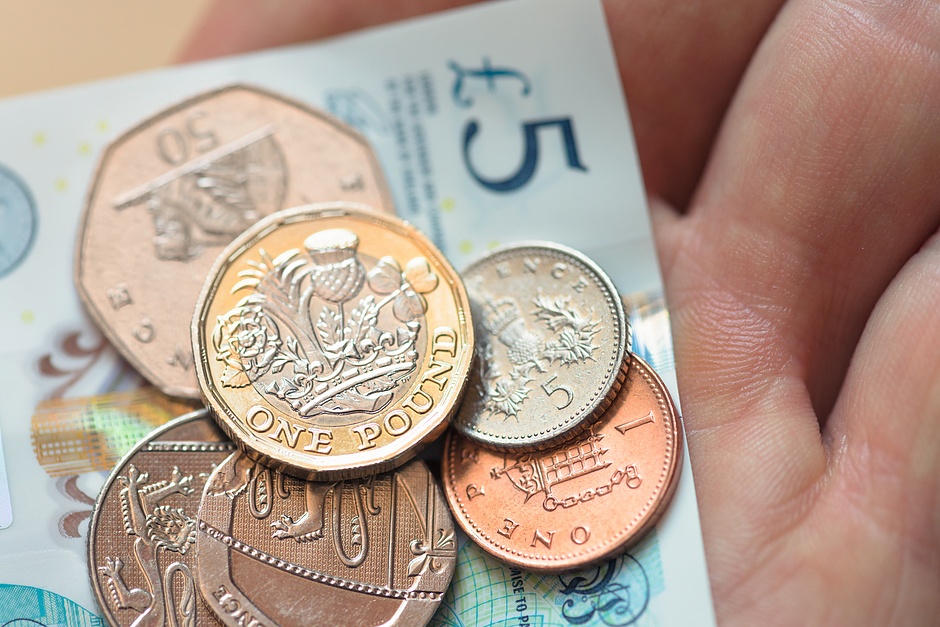

The Pound Sterling (GBP) fails to hold gains above the crucial resistance of 1.2500 in Thursday's early New York session amid uncertainty as investors pivot to the US Nonfarm Payrolls (NFP) data and ISM Services PMI report for April, which will be published on Friday.
Economists have forecasted that US employers hired 243K job-seekers in April, lower than the prior reading of 303K. The Services PMI is estimated to have increased to 52.0 from the prior reading of 51.4. The appeal for risk-perceived currencies is taking a hit as the labor market data will significantly influence market expectations for Fed rate cuts, which are currently anticipated from the September meeting.
On Wednesday, the indication from the Fed that it remains tilted towards unwinding quantitative tightening weighed heavily on the US Dollar and bond yields. Fed Chair Jerome Powell delivered less hawkish than feared guidance on interest rates, citing that more rate hikes are "unlikely" despite no progress in the disinflation process in the first quarter this year.
The US Dollar Index (DXY), which tracks the Greenback’s value against six major currencies, consolidates near 105.50 in the early New York session. The US Dollar remains steady despite weak Q1 Unit Labor Cost data and steady Initial Jobless Claims figure. Unit Labor Costs grew at a significantly slower pace of 0.3% from the consensus of 3.2%. Meanwhile, weekly Jobless Claims for the week-ending April 26 were steady at 208K, lower than the estimates of 212K.
Daily digest market movers: Pound sterling pares gains inspired by Fed's slightly less hawkish guidance
- The Pound Sterling is losing strength above the psychological resistance of 1.2500 against the US Dollar (USD). The GBP/USD pair is down below 1.2500. The Cable lost the strength that was driven by a weaker US Dollar, which was battered on Wednesday after the Federal Reserve’s (Fed) guidance on interest rates was less hawkish than feared, while keeping them unchanged for the sixth straight time.
- The commentary from Fed Chair Jerome Powell in the press conference after the monetary policy meeting showed that he still sees the central bank pivoting to interest rate cuts this year even though he remains worried over stalling progress in inflation declining to the 2% target. When asked about the Fed’s stance on interest rate cuts, Jerome Powell said that he expects inflation to fall over the course of the year, but that "my confidence in that is lower than it was."
- About the inflation outlook, Fed Chair Jerome Powell said that price growth “is still too high," adding that "further progress in bringing it down is not assured and the path forward is uncertain."
- Apart from the Fed’s less-hawkish outlook, the sharp decline in the pace of balance sheet tapering suggested that the central bank is still leaning towards quantitative easing.
- In the United Kingdom, investors shifted focus to the Bank of England’s interest rate decision, which will be announced on May 9. The BoE is expected to hold interest rates steady at 5.25% for the sixth time in a row. Investors will keenly focus on the inflation outlook and cues about when the BoE will start reducing interest rates.
Technical Analysis: Pound Sterling faces selling pressure above 1.2500
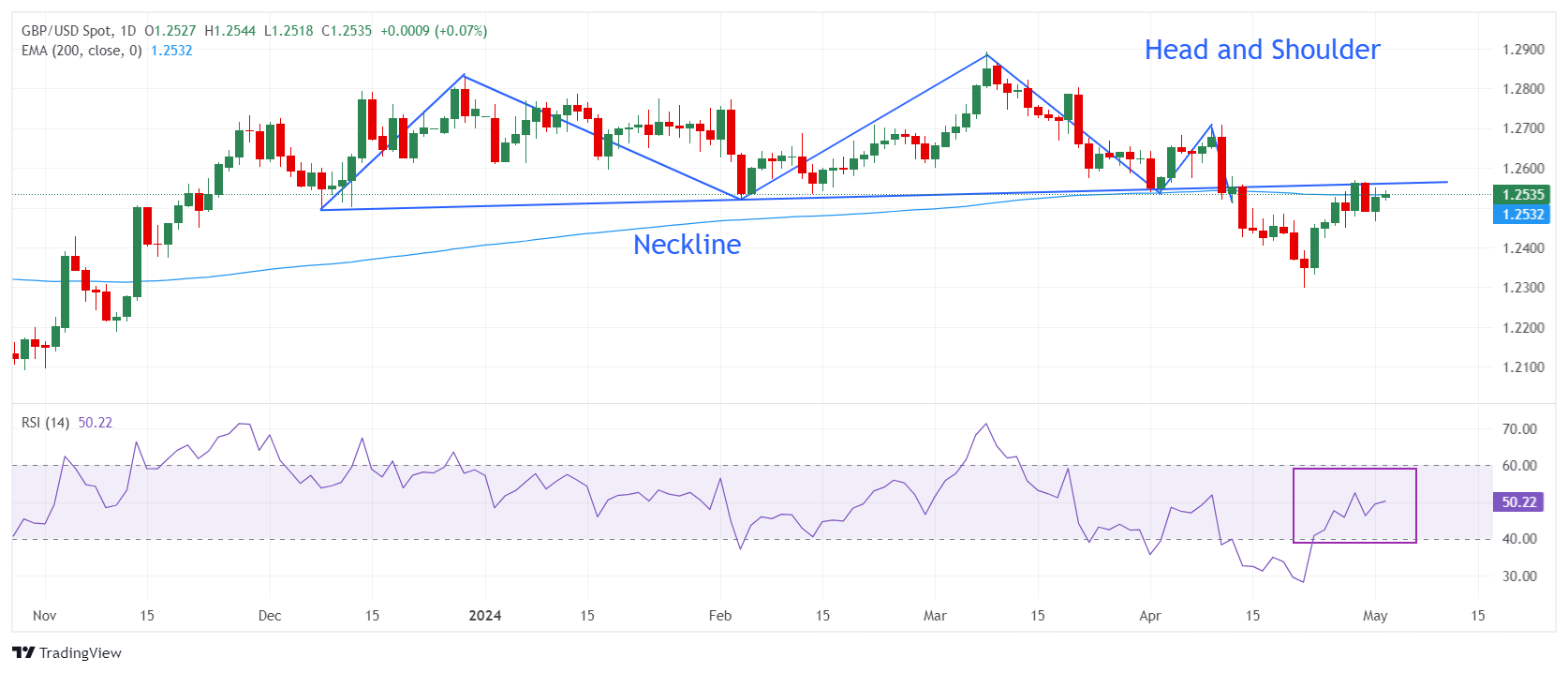
The Pound Sterling fails to hold an auction above 1.2500. The GBP/USD pair continues to face pressure near the neckline of the Head and Shoulder pattern. On April 12, the Cable experienced an intense sell-off after breaking below the neckline of the H&S pattern plotted from December 8 low around 1.2500.
The long-term outlook of the Cable is uncertain as it struggles to sustain above the 200-day Exponential Moving Average (EMA), which trades around 1.2530.
The 14-period Relative Strength Index (RSI) oscillates within the 40.00 to 60.00 range, suggesting indecisiveness among market participants.
Risk sentiment FAQs
In the world of financial jargon the two widely used terms “risk-on” and “risk off'' refer to the level of risk that investors are willing to stomach during the period referenced. In a “risk-on” market, investors are optimistic about the future and more willing to buy risky assets. In a “risk-off” market investors start to ‘play it safe’ because they are worried about the future, and therefore buy less risky assets that are more certain of bringing a return, even if it is relatively modest.
Typically, during periods of “risk-on”, stock markets will rise, most commodities – except Gold – will also gain in value, since they benefit from a positive growth outlook. The currencies of nations that are heavy commodity exporters strengthen because of increased demand, and Cryptocurrencies rise. In a “risk-off” market, Bonds go up – especially major government Bonds – Gold shines, and safe-haven currencies such as the Japanese Yen, Swiss Franc and US Dollar all benefit.
The Australian Dollar (AUD), the Canadian Dollar (CAD), the New Zealand Dollar (NZD) and minor FX like the Ruble (RUB) and the South African Rand (ZAR), all tend to rise in markets that are “risk-on”. This is because the economies of these currencies are heavily reliant on commodity exports for growth, and commodities tend to rise in price during risk-on periods. This is because investors foresee greater demand for raw materials in the future due to heightened economic activity.
The major currencies that tend to rise during periods of “risk-off” are the US Dollar (USD), the Japanese Yen (JPY) and the Swiss Franc (CHF). The US Dollar, because it is the world’s reserve currency, and because in times of crisis investors buy US government debt, which is seen as safe because the largest economy in the world is unlikely to default. The Yen, from increased demand for Japanese government bonds, because a high proportion are held by domestic investors who are unlikely to dump them – even in a crisis. The Swiss Franc, because strict Swiss banking laws offer investors enhanced capital protection.
Author
Sagar Dua
FXStreet
Sagar Dua is associated with the financial markets from his college days. Along with pursuing post-graduation in Commerce in 2014, he started his markets training with chart analysis.