MULN stock falls further after negative Hindenburg report
- MULN stock losing momentum rapidly as it closed down 10% on Thursday.
- Mullen Automotive down another 3% in Friday's premarket.
- MULN suffering as Hindenburg Research issued bearish report.

MULN stock shed a lot of ground on Thursday as the effects of a strongly bearish report from the Hindenburg report likely hit home with investors. Mullen Automotive shares fell by just over 10% to close out Thursday at $2.38. MULN stock had traded up to $4.18 just two weeks ago as the stock saw a frenzy of buying from retail traders.
Mullen Automotive is a start-up EV player based in the US. The CEO David Michery appeared at a Benzinga conference last week where he implied a large order from a Fortune 500 company was imminent. This sent MULN shares rocketing higher but now more and more questions are growing following the strongly negative Hindenburg report.
MULN stock news: Hindenburg vs Mullen
During the aforementioned interview Mullen CEO David Michery said that the company was looking to bring all of its manufacturing back to the US to try and avoid supply chain issues plaguing the industry.
Hindenburg Research says Mullen is importing vehicles from China and rebranding them with Mullen logos: "The two electric cargo vans that Mullen claims it will be manufacturing are Chinese EVs rebranded with a Mullen logo. Import records show the company recently imported two vehicles from China, one of each model".
Hindenburg also questions the battery technology which Mullen claims to the mastered: "Mullen recently press-released an update on its battery testing, sending its stock soaring 145% in a day. In reality, the “news” appears to be a rehash of testing the company had already announced in 2020. Mullen misrepresented the test results, according to the CEO of the company that performed the tests". The Hindenburg report also goes on to make other claims about the lack of EPA certification which is needed to sell vehicles in the US and also issues around Mullen's the DragonFly.
We should point out we have no way of verifying the claims made by Hindenburg, we are merely reporting them. As far as we know Mullen has not commented on the claims made by Hindenburg.
MULN stock forecast: Momentum keeps fading
Before this report came out we had already warned that the momentum for MULN stock was fading and it was likely time to get out. Most of these retail and meme stocks thrive on momentum and knowing when to get out is key. Once mentions fall on social media and the stock closes below its open then this is a warning sign. This is exactly what happened to MULN stock on March 31. The most recent spike was also not able to break the previous high at $4.21 which was another sign that this time momentum was not as strong. Now momentum is gone and the next target for bears is $2.06.
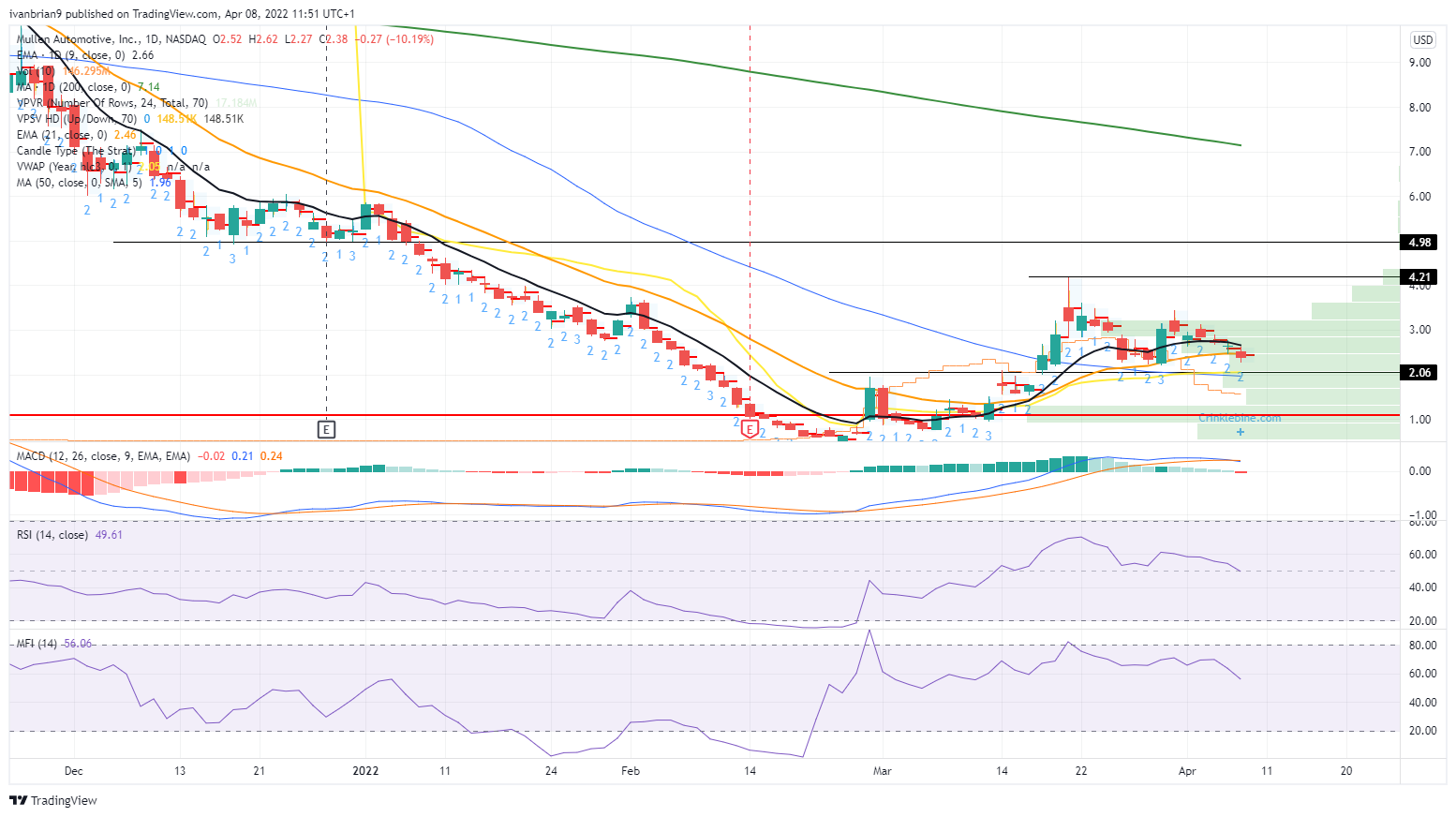
MULN stock chart, daily
Author

Ivan Brian
FXStreet
Ivan Brian started his career with AIB Bank in corporate finance and then worked for seven years at Baxter. He started as a macro analyst before becoming Head of Research and then CFO.
















