Make-up of ECB Council shifting to the hawkish side – Capital Economics
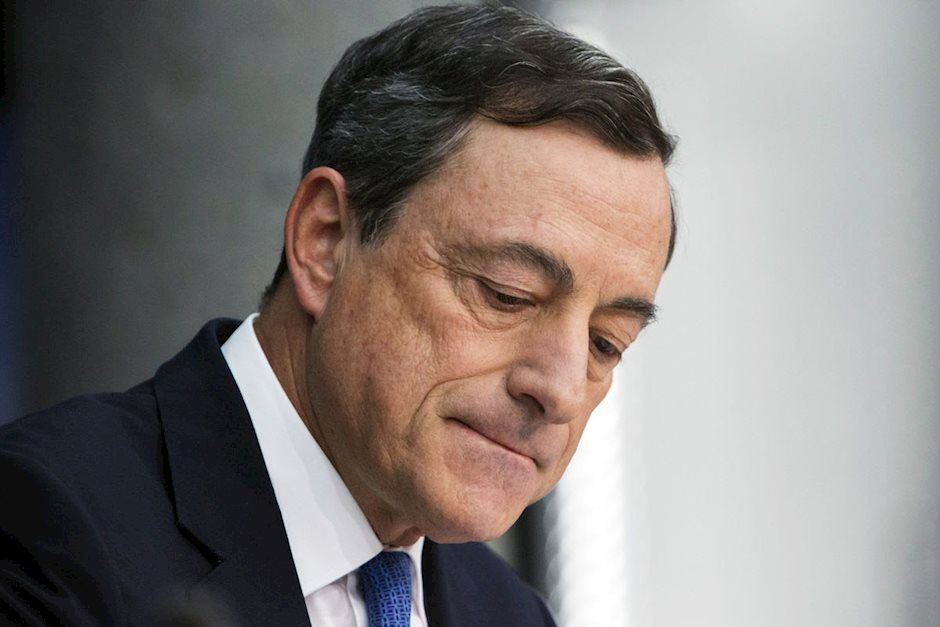

In view of Jennifer McKeown, Chief European Economist at Capital Economics, Luis de Guindos, who is set to replace Vítor Constâncio as the ECB’s Vice President this June, may well be less dovish than his predecessor.
Key Quotes
“What’s more, his appointment makes it more likely that arch-hawk Jens Weidmann will succeed Mario Draghi as President after his term ends next October.”
“The Eurogroup of euro-zone finance ministers has given its backing to Spanish Economy Minister Luis de Guindos to be the next Vice President of the ECB. The candidacy of his only opponent, Irish central bank Governor Philip Lane, was withdrawn just ahead of the decision. So while Mr de Guindos must still be officially appointed by the European Council after it meets on 22nd/23rd March, this looks like a formality.”
“Mr de Guindos might seem like a relatively dovish appointment since he is from one of the economies where monetary policy support is needed the most. Indeed, due to the significant spare capacity in the Spanish economy and the fact that inflation is further below the ECB’s 2% target than the euro-zone average, appropriate monetary policy for Spain is arguably looser than for the region as a whole.”
“But while their background might influence their views, Governing Council members are explicitly required to consider what is best for the euro-zone altogether and not to pursue national interests. Moreover, Mr de Guindos’ key role in Spain’s post-crisis fiscal austerity as Economy Minister suggests that he will not be particularly dovish as a monetary policymaker. This could be a stark contrast to Mr Constâncio, who is widely considered to be one of the most dovish members of the Governing Council.”
“Two other doves are set to leave the six-member Executive Board (EB) by the end of next year: Chief Economist Peter Praet and President Mario Draghi. The former role is likely to go to Philip Lane, whose stance is not yet clear, but he seems unlikely to be as dovish as Mr Praet. As for the Presidency, having another Southern European as Vice President makes it all the more likely that Bundesbank President and arch-hawk Jens Weidmann will succeed Mario Draghi when his term ends in October 2019 to become the first ever German ECB President. That decision will probably be announced around June 2019.”
“This is not a foregone conclusion, for several reasons. Mr Weidman’s forceful opposition to the ECB’s asset purchases makes him a controversial choice. And precedent suggests that his appointment might require the only female member of the EB, Sabine Lautenschläger, to step down to avoid having two members of the same nationality. This would defy the European Parliament’s demand for more women on the EB.”
“But Mr Weidmann has toned down his anti-QE rhetoric recently, and the fact that policy normalisation is likely to be underway anyway by the time Mr Draghi leaves makes him seem more appropriate for the role. Various women are in the running to join the Executive Board in future, including Sylvie Goulard (now Deputy Governor of the Banque de France), perhaps when Benoît Cœuré’s term ends next year.”
“In all, the Governing Council looks set to look a bit more hawkish by the end of 2019. This lends some support to our view that while interest rates will begin to rise later than markets envisage, the pace of tightening may be a bit quicker than the gradual upward profile that is now priced in.”
Author
Sandeep Kanihama
FXStreet Contributor
Sandeep Kanihama is an FX Editor and Analyst with FXstreet having principally focus area on Asia and European markets with commodity, currency and equities coverage. He is stationed in the Indian capital city of Delhi.