Gold pullbacks on rising US yields, buoyant US Dollar as inflation heats up
- Gold dips sharply to $2,296 in response to US data showing an increase in employment costs, indicating persistent inflationary pressure.
- A stronger US Dollar and higher Treasury yields contribute to XAU/USD decline as market anticipates cautious Fed approach to rate adjustments.
- Upcoming economic events, including ISM Manufacturing PMI and Fed's policy decision are highly anticipated by traders for further market direction.
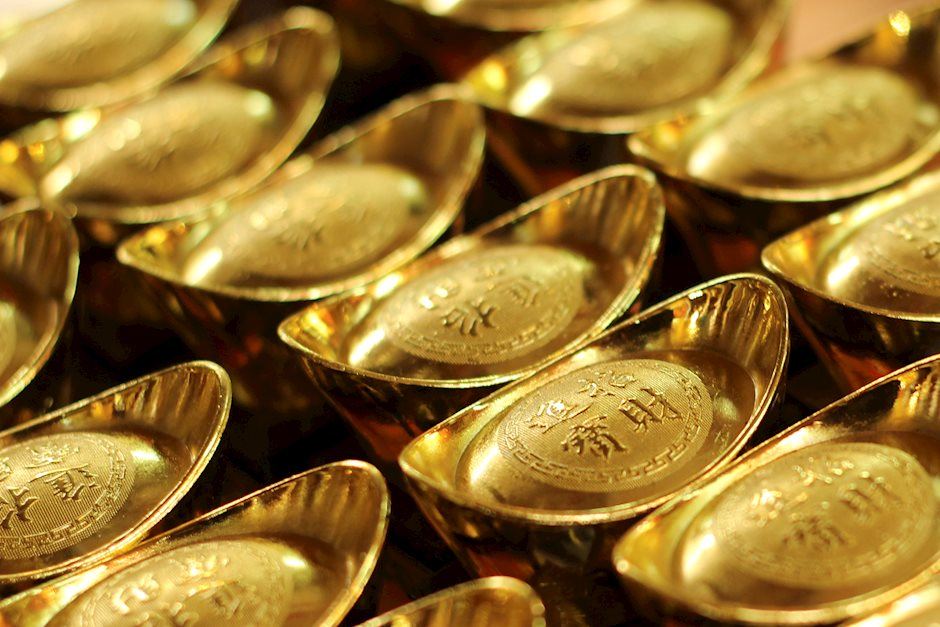

Gold prices drop below the $2,300 threshold on Tuesday as data from the United States (US) show that employment costs are rising, thus putting upward pressure on inflation. Consequently, the US Federal Reserve (Fed) would need to be patient when lowering rates as stated two weeks ago by Fed Chair Jerome Powell.
XAU/USD trades at $2,296, down by more than 1.50% on Tuesday, amid rising US Treasury bond yields and a stronger US Dollar. Data from the US Bureau of Labor Statistics (BLS) witnessed a jump in the Employment Cost Index (ECI) in April. Besides that, American consumer sentiment deteriorated further, as revealed by the Conference Board in its April report.
Ahead of the week, the US economic docket will remain busy. Still, traders will focus mainly on the ISM Manufacturing PMI, the Fed’s monetary policy decision, and the US Nonfarm Payrolls report.
Daily digest market movers: Gold price creeps lower on high US Treasury yields, strong USD
- Gold’s drop is courtesy of the jump in US Treasury bond yields, a soft US Dollar. The US 10-year Treasury bond yield has risen five basis points (bps) to 4.665%, a headwind for the golden metal. At the same time, the Greenback, as measured by the US Dollar Index (DXY), has reclaimed the 106.00 milestone, up 0.52% to trade at 106.48.
- US Employment Cost Index (ECI), a measure of wages and benefits, increased by 1.2% QoQ after rising 0.9% at the end of 2023, exceeding forecasts of 1%, according to the Bureau of Labor Statistics (BLS). That would keep the Fed on its holding pattern as fears of inflation reaccelerating loom.
- US Conference Board (CB) Consumer Confidence dropped in April from 103.1 to 97, its lowest level since mid-2022, as Americans’ view of the job market and the outlook for the economy deteriorated.
- US economy continues to print mixed readings. Last week, the Gross Domestic Product (GDP) missed the mark. Still, inflationary data linked to the first quarter of 2024 sounded the alarm that the price trend is shifting to the upside, which might deter the Federal Reserve from easing policy sooner than expected.
- On May 3, the US Bureau of Labor Statistics (BLS) is expected to reveal April’s Nonfarm Payrolls figures, which are expected to come at 243K, below March’s 303K. The Unemployment Rate is estimated to stay at 3.8%, while Average Hourly Earnings would likely remain unchanged at 0.3% MoM.
- Data from the Chicago Board of Trade (CBOT) suggests that traders expect the fed funds rate to finish 2024 at 5.035%, down from 5.050% last Friday.
Technical analysis: Gold price slides beneath $2,300, eyes on $2,223
Gold price uptrend remains intact, though diving below the $2,300 mark could open the door for a deeper correction. If sellers keep XAU/USD prices below the April 23 daily low of $2,291, that will clear the path to challenge the next cycle high turned support at $2,223. Once those levels are cleared, up next would be $2,200.
On the way up, if XAU/USD reclaims $2,300, that would open the door to challenge the April 26 high of $2,352, so they can remain hopeful of challenging higher prices. The next resistance would be the $2,400 mark, followed by the April 19 high at $2,417 and the all-time high of $2,431.

Gold FAQs
Gold has played a key role in human’s history as it has been widely used as a store of value and medium of exchange. Currently, apart from its shine and usage for jewelry, the precious metal is widely seen as a safe-haven asset, meaning that it is considered a good investment during turbulent times. Gold is also widely seen as a hedge against inflation and against depreciating currencies as it doesn’t rely on any specific issuer or government.
Central banks are the biggest Gold holders. In their aim to support their currencies in turbulent times, central banks tend to diversify their reserves and buy Gold to improve the perceived strength of the economy and the currency. High Gold reserves can be a source of trust for a country’s solvency. Central banks added 1,136 tonnes of Gold worth around $70 billion to their reserves in 2022, according to data from the World Gold Council. This is the highest yearly purchase since records began. Central banks from emerging economies such as China, India and Turkey are quickly increasing their Gold reserves.
Gold has an inverse correlation with the US Dollar and US Treasuries, which are both major reserve and safe-haven assets. When the Dollar depreciates, Gold tends to rise, enabling investors and central banks to diversify their assets in turbulent times. Gold is also inversely correlated with risk assets. A rally in the stock market tends to weaken Gold price, while sell-offs in riskier markets tend to favor the precious metal.
The price can move due to a wide range of factors. Geopolitical instability or fears of a deep recession can quickly make Gold price escalate due to its safe-haven status. As a yield-less asset, Gold tends to rise with lower interest rates, while higher cost of money usually weighs down on the yellow metal. Still, most moves depend on how the US Dollar (USD) behaves as the asset is priced in dollars (XAU/USD). A strong Dollar tends to keep the price of Gold controlled, whereas a weaker Dollar is likely to push Gold prices up.
Author
Christian Borjon Valencia
FXStreet
Markets analyst, news editor, and trading instructor with over 14 years of experience across FX, commodities, US equity indices, and global macro markets.