GBP/JPY rises after UK inflation data beats analysts’ estimates
- GBP/JPY pushes higher after UK inflation data comes out above analysts’ estimates.
- The data could delay when the BoE cuts interest rates – a supportive factor for GBP.
- GBP/JPY may have seen gains capped after Japanese bond yields broke above 1.0% for the first time in over a decade.

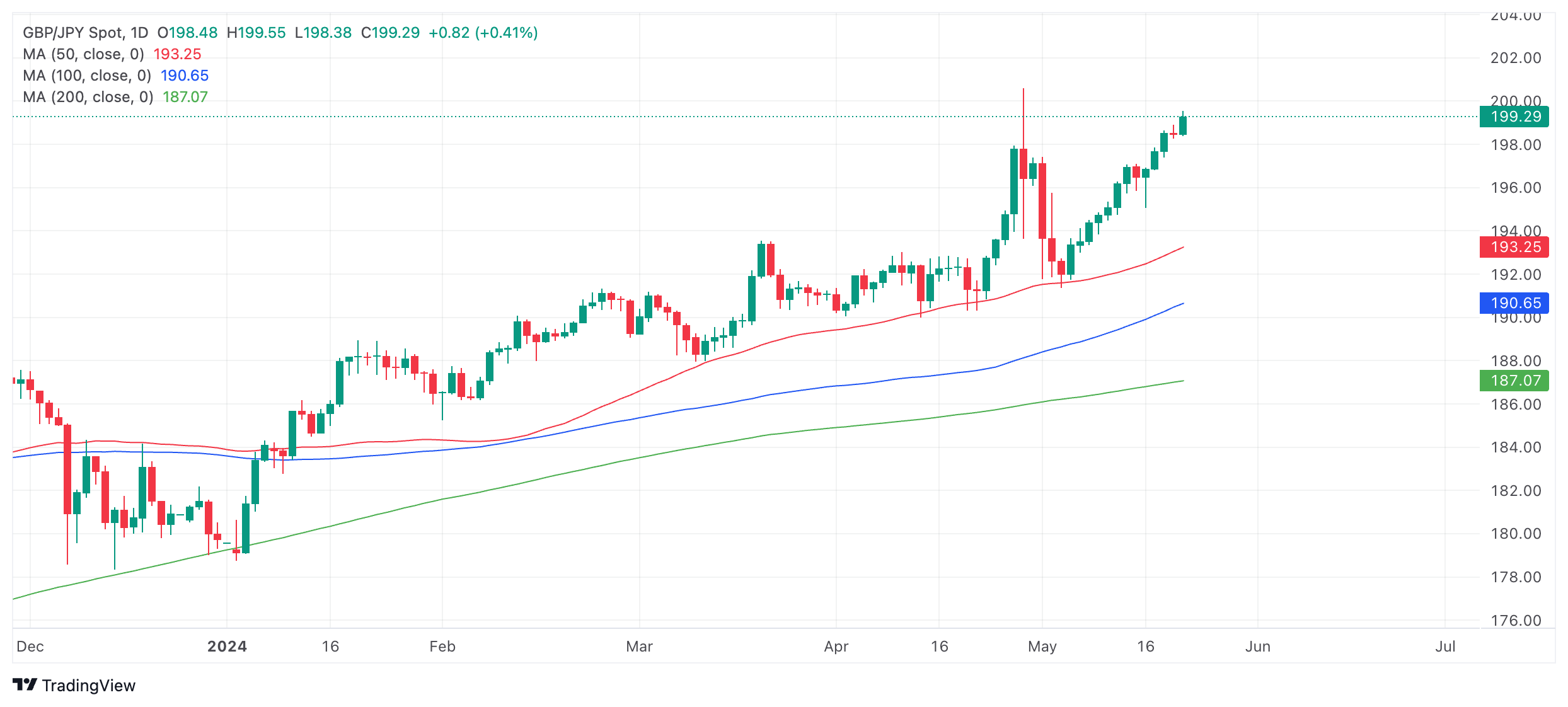
GBP/JPY rises to the 199.20s on Wednesday after UK inflation data comes out higher than economists had predicted. The data suggests the Bank of England (BoE) could delay cutting interest rates which would be positive for the Pound Sterling (GBP).
Although higher inflation has traditionally been associated with currency devaluation, the advent of globalization and the relatively free flow of capital means that investors can now move their capital to countries with higher interest rates. This leads to an increase in demand for those countries' currencies. Since higher inflation tends to beget higher interest rates it also therefore appreciates currencies.
The UK headline Consumer Price Index (CPI) in April rose by 2.3% year-over-year. Although inflationary pressures within the economy waned compared to the previous month’s 3.2% reading, it did not fall as much as the 2.1% economists predicted.
It was a similar story for the core CPI which rose by 3.9% versus the 3.6% estimated, but below the 4.2% of March, according to the Office of National Statistics (ONS).
The data brings the rate of inflation closer to the BoE’s 2.0% target but because it was higher than economists had expected, GBP actually rose in most pairs, including GBP/JPY.
GBP/JPY Daily Chart
Japanese Yen gains support after bond yields break above 1.0%
Despite weakening against the stronger GBP on Wednesday, the Japanese Yen (JPY) probably saw some underlying support after the news that 10-year Japanese Government Bond (JGB) yields had risen above 1.0% for the first time since 2012.
The positive correlation between yields and the Yen suggests this may have helped the Yen. Yields usually rise as a result of higher inflation expectations and the rise fueled expectations that the Bank of Japan (BoJ) might increase interest rates again sooner than had previously been thought. Another reason for the rise was put down to weak demand from buyers at an auction of 40-year JGB bonds, since yields move inversely to bond prices.
Meanwhile, traders remain cautious about pushing the Yen to new lows amid a risk the authorities could directly intervene to prop up the currency. It is believed intervention was behind the Yen’s recovery between April 29 and May 3 when JPY experienced volatile gains despite no obvious fundamental catalysts for the moves.
More recently, Japanese Finance Minister Shunichi Suzuki once again expressed concerns about the negative impact of a weak currency on wage rises, suggesting he was still willing to press the button on intervention if the Yen continues weakening.
On the economic front, the latest data out of Japan showed the trade deficit widened in April, machinery orders unexpectedly increased in March and business sentiment among large manufacturers remained steady in May.
Author

Joaquin Monfort
FXStreet
Joaquin Monfort is a financial writer and analyst with over 10 years experience writing about financial markets and alt data. He holds a degree in Anthropology from London University and a Diploma in Technical analysis.

















