|

AUD/USD retraces daily gains as shift in Fedspeak strengthens greenback

  • Greenback buyers emphasize the NY Fed’s statements pouring cold water on the President Williams dovish comments.
  • The US-China diplomats are likely to meet in-person, the US tech firms also exert pressure on the Trump administration to remove Huawei ban.
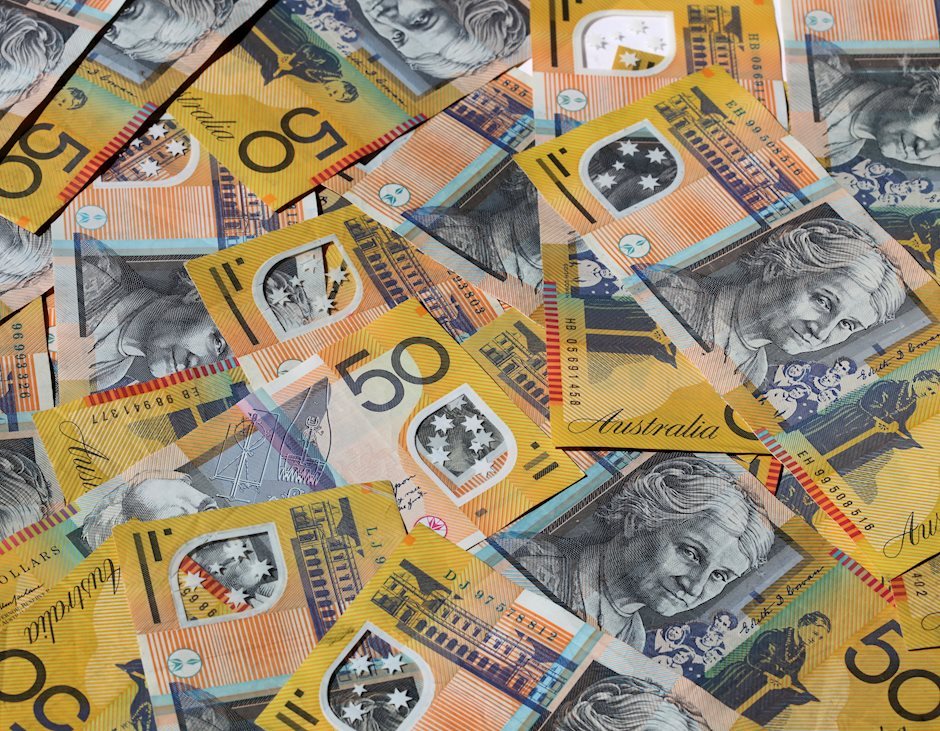
AUD/USD fails to extend its recent upward trajectory as it trades near 0.7070 heading into the Europe market open on Friday.

While dovish Fedspeak and domestic employment data pleased the Aussie buyers to clock in the best G10 pair status on Thursday, the early Friday statements from the New York Fed nullified effects of the President John Williams comments favoring 50 basis points (bps) Fed rate cut.

The US and Chinese trade negotiations are likely to be fast-tracked, as per Reuters, whereas American Tech giants’ pressure to remove the ban on selling equipments to China’s Huawei also spreads trade optimism.

On the negative side, the US recently said that it downed Iran’s drone and Iran is also complaining to the United Nations (UN) about the UK Navy seizing its oil tanker could weigh on the global risk sentiment.

While the Asian stocks benefited from the recent market recovery, the US 10-year treasury yield clings to yesterday’s close of 2.04% by the press time.

Moving on, second-tier data from the US and final round of Fedspeak, before the policymakers sneak in the blackout period, could keep traders on edge while US-China developments will also contribute towards busy Friday.

Technical Analysis

A bullish Marubozu candle formed yesterday continues to favor the pair’s run-up towards 200-day exponential moving average (EMA) level of 0.7100 unless the quote slips beneath 0.7050/45, which in turn could recall 0.7000 back to the chart.

Author

Anil Panchal

Anil Panchal

FXStreet

Anil Panchal has nearly 15 years of experience in tracking financial markets. With a keen interest in macroeconomics, Anil aptly tracks global news/updates and stays well-informed about the global financial moves and their implications.


More from Anil Panchal
Share:

Editor's Picks

EUR/USD clings to gains around 1.1800

EUR/USD manages to regain composure and retests the 1.1800 region in quite a positive start to the week. The pair’s bounce follows the US Dollar’s offered stance post-SCOTUS ruling ahead of important US data and Fedspeak on Tuesday.

GBP/USD treads water near 1.3500 as BoE-Fed divergence debate stalls

GBP/USD spent Monday spinning in place as market participants await a fresh catalyst to break the pair out of its recent range. The BoE's February hold came with a surprisingly dovish 5-4 split, and UK Consumer Price Index data last week showed inflation easing to 3.0%, reinforcing the case for earlier rate cuts, with most economists now looking to April or March for the next move. 

Gold climbs above $5,200 on geopolitical tensions, trade uncertainty

Gold price jumps to around $5,230 during the early Asian session on Tuesday. The rally of the precious metal is bolstered by heightened geopolitical tensions and global trade uncertainty following US tariff decisions. Traders brace for the US January Producer Price Index report on Friday for fresh impetus. 

Solana DeFi platform Step Finance to close operations following treasury hack

The Solana based decentralized finance platform Step Finance announced it will end all operations effective immediately following a breach that drained its treasury.

Supreme Court nixes tariffs, Trump teases 15% global tariff

On February 20th, the Supreme Court ruled that Trump’s global tariffs under IEEPA authority were unconstitutional, effectively nullifying the framework. However, the relief was short-lived. Within hours, Trump floated a 15% blanket tariff under an alternative legal authority.

XRP recovers slightly as bearish sentiment dominates crypto market

Ripple is rising above $1.40 at the time of writing on Monday amid fresh tariff-triggered headwinds in the broader cryptocurrency market. The sell-off to $1.33, the token’s intraday low, can be attributed to macroeconomic uncertainty, geopolitical tensions and risk-averse sentiment among other factors.