|

AUD/USD Price Analysis: Bulls going against the grain to M-formation neckline target

  • AUD/USD bulls step in and target the daily M-formation neckline as the greenback slides.
  • DXY is testing 96 the figure ahead of the Fed.

As per prior analysis at the start of the week, AUD/USD Price Analysis: Bears move the Aussie to the edge of the abyss, the price has advanced towards an identified daily target area in recent trade.

AUD/USD, prior analysis

It was started that ''AUD/USD's M-formation on the daily chart is a compelling chart pattern for the week ahead.''
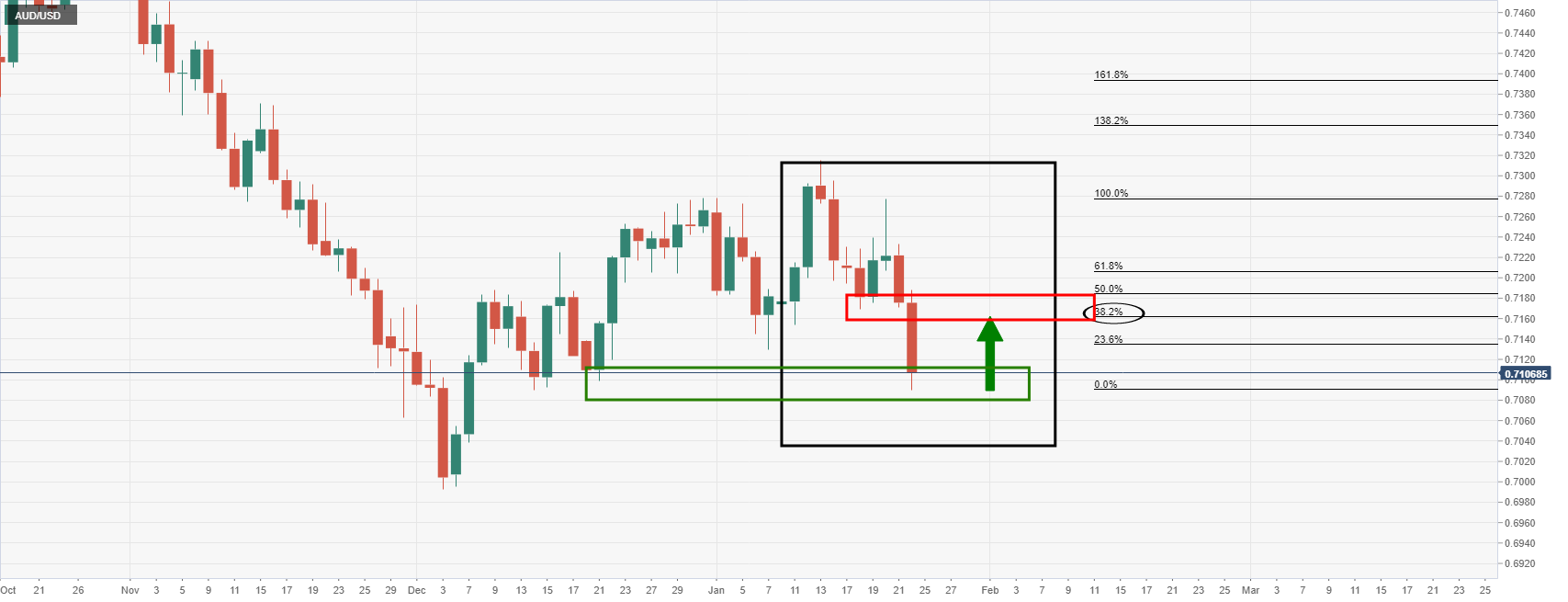
AUD/USD live chart
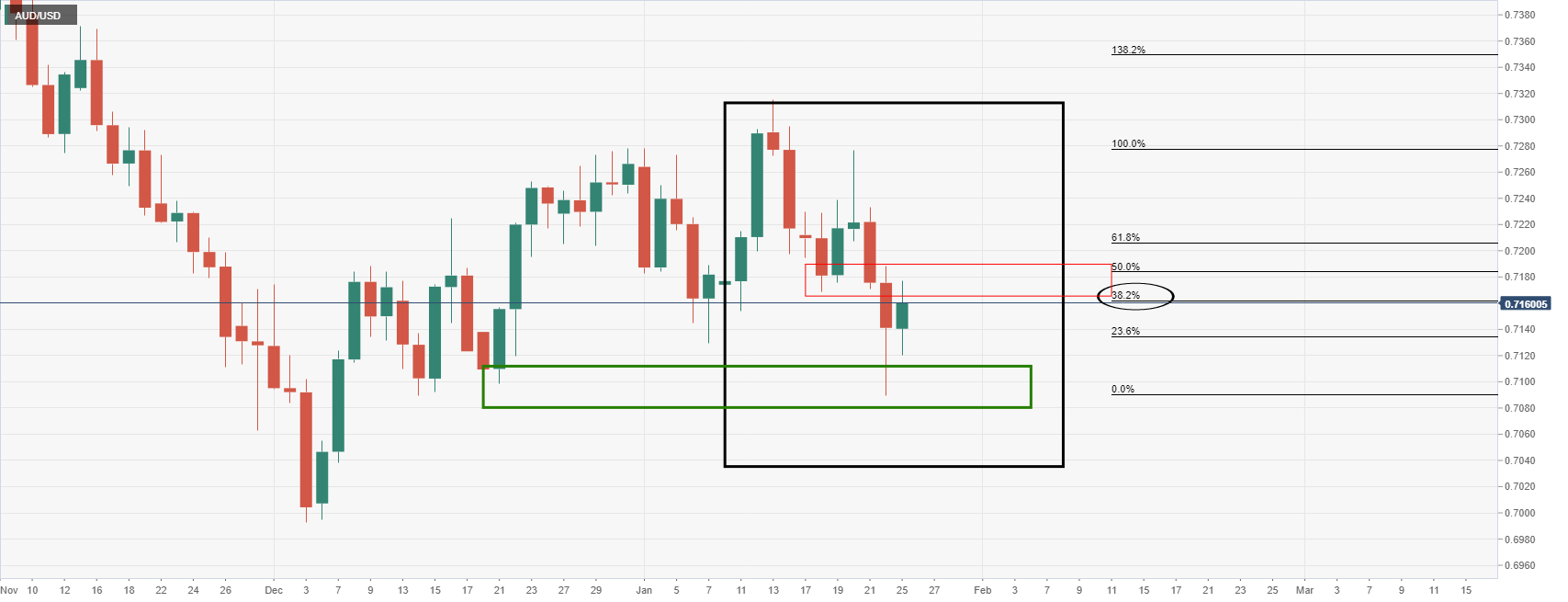
As illustrated, the bulls have homed in n the neckline of the M-formation in trade today. This has occurred in a sharply hourly bullish impulse as follows:
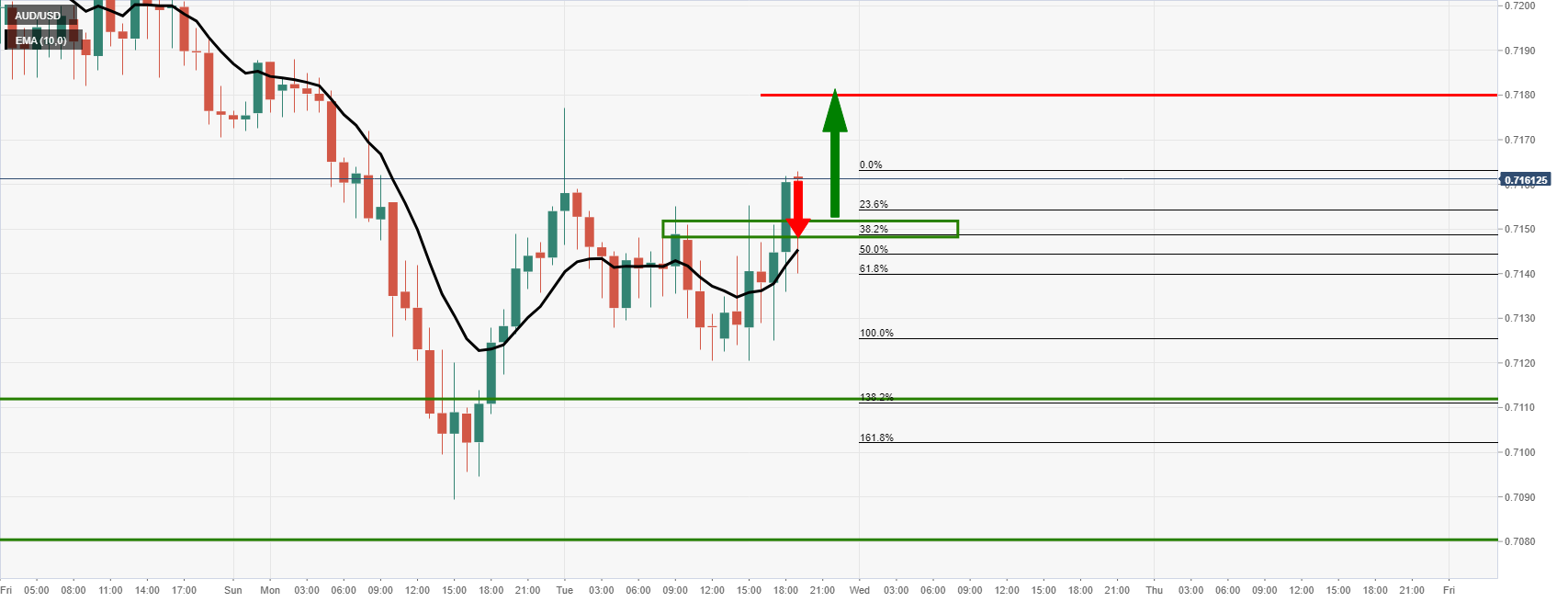
The bullish impulse may not be over yet, but a correction could be in order back towards the prior resistance that has a confluence with the 38.2% Fibonacci retracement of the recent rally that meets with the 10-EMA. 

The move has occurred as the US dollar sinks to test deeper liquidity and 96 the figure in the DXY index, breaking prior resistance and support as follows: 
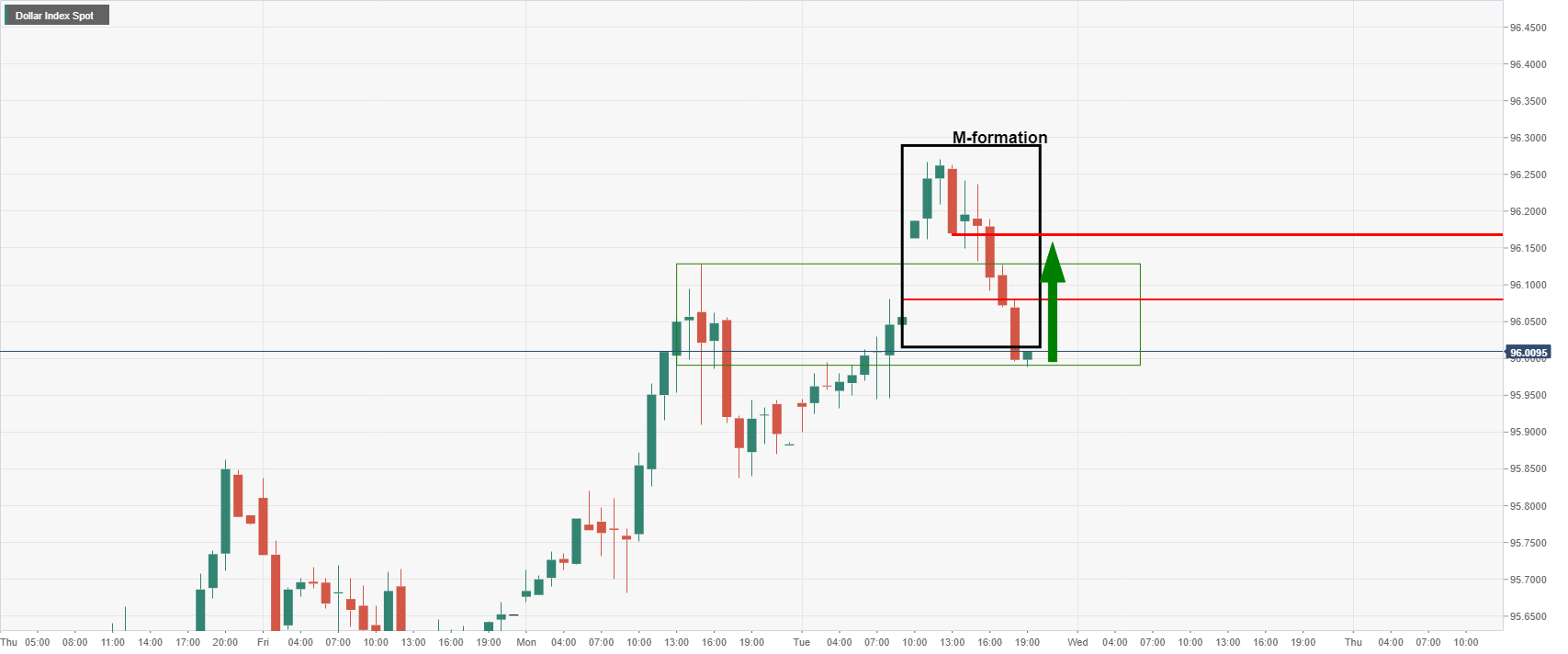
However, considering how fluid geopolitics are, if there is a Russian invasion of Ukraine, the US dollar would be expected to continue higher.  In turn, this would be taking the Aussie down with it for a test of bullish commitments in the lower end of the 0.70 areas. 

Additionally, the M-formation is a reversion pattern, so a move higher in the greenback could infold in coming hours as markets get set for the Federal Reserve. 

Author

Ross J Burland

Ross J Burland, born in England, UK, is a sportsman at heart. He played Rugby and Judo for his county, Kent and the South East of England Rugby team.


More from Ross J Burland
Share:

Editor's Picks

AUD/USD sticks to neutral bias above 0.7100 amid cautious markets

AUD/USD holds steady above 0.7100 in the Asian session on Monday as the US Dollar stalls its modest pullback from the highest level since late July amid persistent geopolitical uncertainties. The PBOC status quo on Loan Prime Rates also weighs on the Aussie. However, bets on another RBA rate hike continue to underpin the Australian Dollar ahead of the Trump-Xi Summit.

USD/JPY eases below 157.00 amid looming intervention risks

USD/JPY is easing back below 157.00 in Asia on Monday, undermined by modest Japanese Yen strength amid looming intervention risks after Friday's BoJ rate check. A Japanese holiday also keeps traders on edge amid escalating geopolitical tensions between Russia and Ukraine and in the Middle East. As a result, the US Dollar pauses its pullback, limiting the pair's downside.

Gold remains depressed around $4,350 amid rate jitters, modest USD strength

Gold maintains its offered tone through the first half of the European session, and currently trades around $4,350, down over 0.50% for the day. The commodity, however, holds comfortably above a six-week low, touched last Wednesday as traders await further developments around the Middle East crisis and their implications for inflation. This, in turn, would influence interest rate expectations and, in turn, drive the non-yielding bullion.

Bitcoin hits $85,000 for the first time in eight months
Bitcoin price reclaims $85,000 on Monday, advancing last week’s 5% recovery toward an eight-month high. The recovery in King Crypto aligns with renewed institutional demand, with Exchange Traded Funds (ETFs) recording $433 million in inflows on Friday.
The week ahead: Fuel prices in focus as we lead up to key eco releases

Financial markets are in a strange position as we move to the final weeks of Q3, uncertainty and volatility continue to grip markets, but the oil price is falling; and European and US stocks are poised to open higher later on Monday. Market stresses are concentrated in sovereign bonds, and European and US yields had another scare late on Friday, and moved higher.

BoJ Recap: Not as hawkish as expected

The Bank of Japan (BoJ) raised its short-term interest-rate target to 1.25% from 1.00% in a 7-2 vote, marking another step in the normalisation of monetary policy and widely matching what everyone has been expecting for weeks.