When do you have edge?

  1. When you take uncrowded trades (opposite to the crowd).
  2. That exploit price inefficiencies. 

Okay, but aren't markets efficient? Yes and No. The majority determines fair price. But sometimes price trades at a discount or premium to its fair price due to events such as:

  • A change in the fundamentals (e.g. interest rate increase)
  • An absence of traders due to a regional holiday (e.g. Chinese New Year)
  • Illiquidity due to traders waiting for the release of critical data (e.g. CPI)

When something is expensive or cheap relative to its fair value, it doesn't remain so long. Because traders quickly act on inefficiencies to make a profit. But here's the deal: the biggest inefficiencies occur in the shortest periods. Or another way to say this is your largest edge trades happen in the smallest time windows.

Look at the "Market Wizards" (Famously reported in books of the same name). The best traders are wrong half the time. So how are these traders so successful? It's in their nuance of time and monetary risk relative to relative to trades that are working. The following will break it down for you:

How much 'heat'?

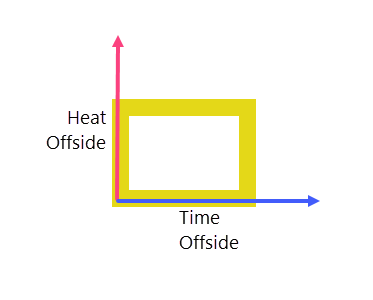
Heat refers to your position trading at a worse price than your entry.

The diagram has two axis time and heat. The "taller" the box, the greater heat a trade takes. The "wider" the box, the longer the trade takes heat. 
fxsoriginal

Do you like taking heat on trades? No, of course not. Well then: if unfair prices only last for a moment, trading unfair prices means you won't take heat for more than a moment. And if you enter at an unfair price, you know the market will act immediately, and the price won't continue getting less and less fair.

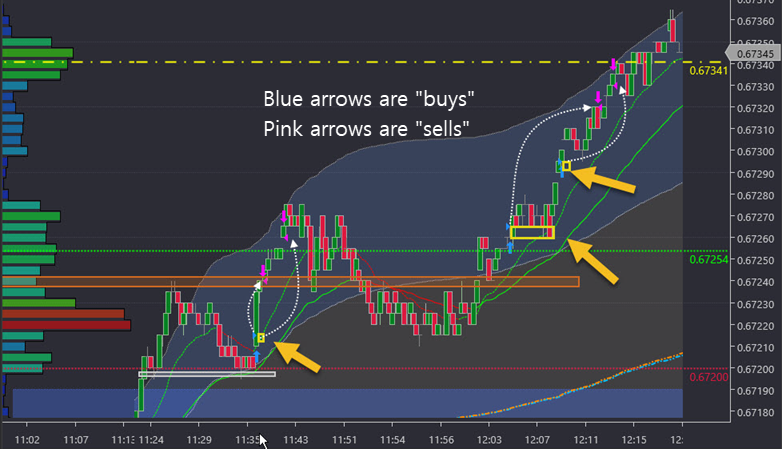
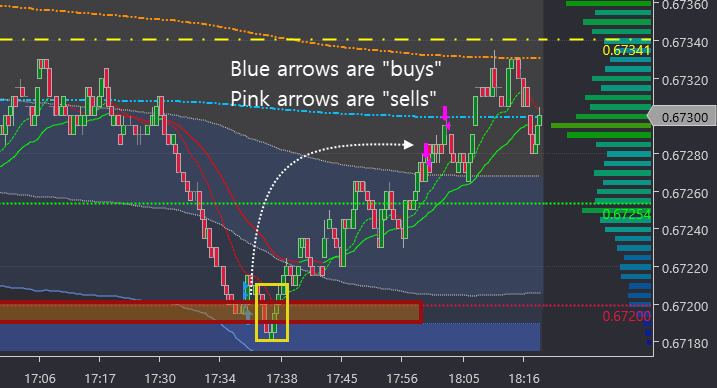
To illustrate using recent trades, the yellow boxes show you how much heat the trade took for how long the trade took heat.

Example 1
Example 2
Ask yourself: What would it do for you if you took as little heat for as little time when you trade?

  • Would your losses no longer exceed your gains?
  • Would you trade consistently?
  • Would you feel confident?
  • Would you feel a greater sense of well-being knowing you've moved on from trading that's painful?

When trading as a business (for cash flow), can you see how short-term price inefficiencies offer you a tremendous edge? The payoff versus the risk is outstanding because the risk is miniature.

Here's the good news: Half the time you're wrong. It could be your timing or a miscalculation. But the market is quick to act on genuine inefficiencies. So if that's not what's occurring, then you know you've made an error. And there's no need to experience more than a paper cut loss.

Okay, sounds great; what's the catch? There is no catch. Competency is transferrable. The right quality and quantity of guidance have you replicating this. And it takes far less time than spending years and years under your own steam.


Forex and derivatives trading is a highly competitive and often extremely fast-paced environment. It only rewards individuals who attain the required level of skill and expertise to compete. Past performance is not indicative of future results. There is a substantial risk of loss to unskilled and inexperienced players. The high degree of leverage can work against you as well as for you. Before deciding to trade any such leveraged products you should carefully consider your investment objectives, level of experience, and risk appetite. The possibility exists that you could sustain a loss of some or all of your initial investment and therefore you should not invest money that you cannot afford to lose. You should be aware of all the risks associated with trading on margin, and seek advice from an independent

Editors’ Picks

EUR/USD drops to daily lows near 1.1630

EUR/USD drops to daily lows near 1.1630

EUR/USD now loses some traction and slips back to the area of daily lows around 1.1630 on the back of a mild bounce in the US Dollar. Fresh US data, including the September PCE inflation numbers and the latest read on December consumer sentiment, didn’t really move the needle, so the pair is still on course to finish the week with a respectable gain.

GBP/USD trims gains, recedes toward 1.3320

GBP/USD trims gains, recedes toward 1.3320

GBP/USD is struggling to keep its daily advance, coming under fresh pressure and retreating to the 1.3320 zone following a mild bullish attempt in the Greenback. Even though US consumer sentiment surprised to the upside, the US Dollar isn’t getting much love, as traders are far more interested in what the Fed will say next week.

Japanese Yen refreshes three-week high vs USD; seems poised to appreciate further

Japanese Yen refreshes three-week high vs USD; seems poised to appreciate further

The Japanese Yen retains bullish bias as BoJ rate hike bets offset dismal Household Spending data. Dovish Fed expectations fail to assist the USD in attracting buyers and keep a lid on the USD/JPY pair. Traders keenly await the US PCE Price Index for Fed rate-cut cues and a fresh directional impetus.


Editors’ Picks

EUR/USD drops to daily lows near 1.1630

EUR/USD drops to daily lows near 1.1630

EUR/USD now loses some traction and slips back to the area of daily lows around 1.1630 on the back of a mild bounce in the US Dollar. Fresh US data, including the September PCE inflation numbers and the latest read on December consumer sentiment, didn’t really move the needle, so the pair is still on course to finish the week with a respectable gain.

GBP/USD trims gains, recedes toward 1.3320

GBP/USD trims gains, recedes toward 1.3320

GBP/USD is struggling to keep its daily advance, coming under fresh pressure and retreating to the 1.3320 zone following a mild bullish attempt in the Greenback. Even though US consumer sentiment surprised to the upside, the US Dollar isn’t getting much love, as traders are far more interested in what the Fed will say next week.

Gold makes a U-turn, back to $4,200

Gold makes a U-turn, back to $4,200

Gold is now losing the grip and receding to the key $4,200 region per troy ounce following some signs of life in the Greenback and a marked bounce in US Treasury yields across the board. The positive outlook for the precious metal, however, remains underpinned by steady bets for extra easing by the Fed.

Crypto Today: Bitcoin, Ethereum, XRP pare gains despite increasing hopes of upcoming Fed rate cut

Crypto Today: Bitcoin, Ethereum, XRP pare gains despite increasing hopes of upcoming Fed rate cut

Bitcoin is steadying above $91,000 at the time of writing on Friday. Ethereum remains above $3,100, reflecting positive sentiment ahead of the Federal Reserve's (Fed) monetary policy meeting on December 10.

Week ahead – Rate cut or market shock? The Fed decides

Week ahead – Rate cut or market shock? The Fed decides

Fed rate cut widely expected; dot plot and overall meeting rhetoric also matter. Risk appetite is supported by Fed rate cut expectations; cryptos show signs of life. RBA, BoC and SNB also meet; chances of surprises are relatively low.

RECOMMENDED LESSONS

5 Forex News Events You Need To Know

In the fast moving world of currency markets where huge moves can seemingly come from nowhere, it is extremely important for new traders to learn about the various economic indicators and forex news events and releases that shape the markets. Indeed, quickly getting a handle on which data to look out for, what it means, and how to trade it can see new traders quickly become far more profitable and sets up the road to long term success.

Top 10 Chart Patterns Every Trader Should Know

Chart patterns are one of the most effective trading tools for a trader. They are pure price-action, and form on the basis of underlying buying and selling pressure. Chart patterns have a proven track-record, and traders use them to identify continuation or reversal signals, to open positions and identify price targets.

7 Ways to Avoid Forex Scams

The forex industry is recently seeing more and more scams. Here are 7 ways to avoid losing your money in such scams: Forex scams are becoming frequent. Michael Greenberg reports on luxurious expenses, including a submarine bought from the money taken from forex traders. Here’s another report of a forex fraud. So, how can we avoid falling in such forex scams?

What Are the 10 Fatal Mistakes Traders Make

Trading is exciting. Trading is hard. Trading is extremely hard. Some say that it takes more than 10,000 hours to master. Others believe that trading is the way to quick riches. They might be both wrong. What is important to know that no matter how experienced you are, mistakes will be part of the trading process.

Strategy

Money Management

Psychology

Best Brokers of 2025