A healthy challenge yes, but trading a struggle? No that’s not the way [Video]
![A healthy challenge yes, but trading a struggle? No that’s not the way [Video]](https://editorial.fxstreet.com/images/Psychology/relaxed-businesswoman-49825824.jpg)
Imagine you're a new trader at a professional firm. Are you struggling? You look around at your also new colleagues. Are they struggling? You know they're not.
But WHY will surprise you
If you're looking at charts, lines, indicators, footprints, volume, market profiles, patterns, VWAP, Time & Sales, the DOM (draws breath)... For your reason to take a trade. You finally find something that seems it's working. Phew!
And then without warning you're shaken up realising it's no longer working.
It's back to square one, and trading feels like a struggle
Agree? so why's it happening? Can you put an end to it?
Remember the movie The Matrix? The main character Neo is a computer programmer who awakens to the world he's known is an . Turns out he's living in a virtual world. What he thought was a city he was walking through:
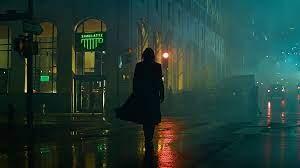
Is really some sort of simulation.
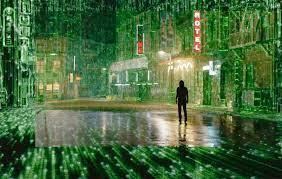
And there's a similar in trading. You sit down at your screens to trade and you see 'this stuff'.
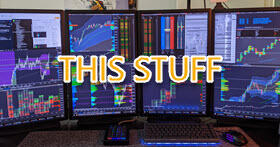
Tell me: How many 100's - 1000's of hours have you painstakingly looked at this stuff:
-
Comparing different time settings.
-
Zooming in, zooming out.
-
Drawing channels or support lines.
-
Adding indicators.
-
Maybe some order flow stuff.
-
And so on.
Right? Okay try this:
Imagine you're sitting at your screens. You lean in, squint your eyes and really concentrate. Here's a visual:

It's a big crowd of people?
Yes.
It's clear in the 3-minute video:
In a trading nutshell
Professional traders see who the other people trading are, how they trade and what makes them tick. The stuff on the charts are tools to monetise knowing who's doing what and why in the markets.
What about when something was working? People come and go and the reasons why they're trading change. Agree? Mess about enough (those hundreds or thousands of hours), and you randomly stumble upon monetising the current who and what they're up to in the market. Make sense?
But it's short-lived, spectacular trade example
One of the best trades ever was when China retaliated against former Prime Minister Scott Morrison's call for an inquiry into the origin of COVID and China's subsequent handling of it.
Quick refresher: China increased tariffs on a range of Australian exports even banning some altogether.
What didn't make it into the news: Massive aggressive short positions hit the bid in the Australian dollar futures during the Asian stock market hours.
It created the of a whale getting short. And thinking - "that's some massive institution who knows something we don't" - speculators joined in. Now how else do you hurt Australia's export market? By increasing the price of AUD.
Those significant sell positions were a combination of red herrings and or profit-taking on long positions accumulated at lower prices but done so more evasively. When enough copycat traders were short the prominent selling would disappear. At the flick of a switch the artificial price ceiling on AUD evaporated.
Ever seen footage of a damn wall break? The sudden release of all that built-up pressure creates a canon-like explosion of water firing through the break. It's what happened in the AUD.
An eruption of vertical price moves aka 'short squeezes' caused by short traders urgently exiting - fighting it out amongst each other to escape rapidly escalating losses.
Now the trader who derives their trading from stuff on a chart (lines, indicators, etc) isn't going to know when the jig is up.
So if they were fortunate enough to stumble on a way to monetise that event - - they'll give it all back, continuing to do the same thing once the people in the market responsible for that move have long vanished.
Back to traders who avoid the struggle
It's true: Combining all the jigsaw pieces to uncover the above trade is more advanced. Hold that thought for a moment.
A reputable firm or mentor gives you a war chest of ideas to trade based on how different people behave in markets and how you can monetise them. Trading this way is a healthy challenge. It's not a struggle.
Establish this baseline, and you can naturally evolve to uncovering and taking more advanced trades, leading to greater rewards. The sooner you start, the sooner you see exponential growth.
Author

Adam Fiske
Boss Trading
Adam is an industry-trained trader with 19 years of professional trading experience.