SEC reveals the technique hackers used to post the fake spot Bitcoin ETF approval on X
- SEC says its telecom carrier was at the core of fake new announcement about Bitcoin's ETF approval.
- Hackers used a "SIM swap" attack to transfer the regulator's X-authorized phone number to another phone.
- Bitcoin price rallied 7% following the fake ETF approval and has not noted a rise as significant since then.

The Securities and Exchange Commission (SEC) has revealed details of how hackers managed to take over its X account and post a fake spot Bitcoin ETF approval tweet. The regulator had received considerable flak over the gaff and bagan an investigation to get to the bottom of the matter. As a result it now claims the attack was not its fault.
SEC sheds blame
In a statement on Monday, the regulatory body stated that the hack that occurred on January 8 was the result of a "SIM swap" attack. A SIM swap attack occurs when a hacker tricks a telecom provider into transferring a victim's phone number to a new SIM card under the attacker's control. This allows the attacker to intercept sensitive information, such as two-factor authentication codes, and gain unauthorized access to the victim's accounts and data.
"Access to the phone number occurred via the telecom carrier, not via SEC systems. SEC staff have not identified any evidence that the unauthorized party gained access to SEC systems, data, devices, or other social media accounts."
Generally, social media accounts are protected by a feature known as multi-factor authorization (MFA), which prevents hacking via a simple password reset. The SEC had disabled this owing to access issues back in July 2023 and only enabled it following the hack. Had this been done beforehand, the market would have been saved from the millions of dollars of liquidations it witnessed.
Bitcoin price still awaiting bullish catalyst
Bitcoin price shot up by close to 7% on January 8, the day when the SEC's X account was hacked and the false spot Bitcoin ETF tweet was posted. After realizing the situation, the market practiced caution over the next couple of days, barely reacting on the day when the ETFs were officially approved by the regulator on January 10.
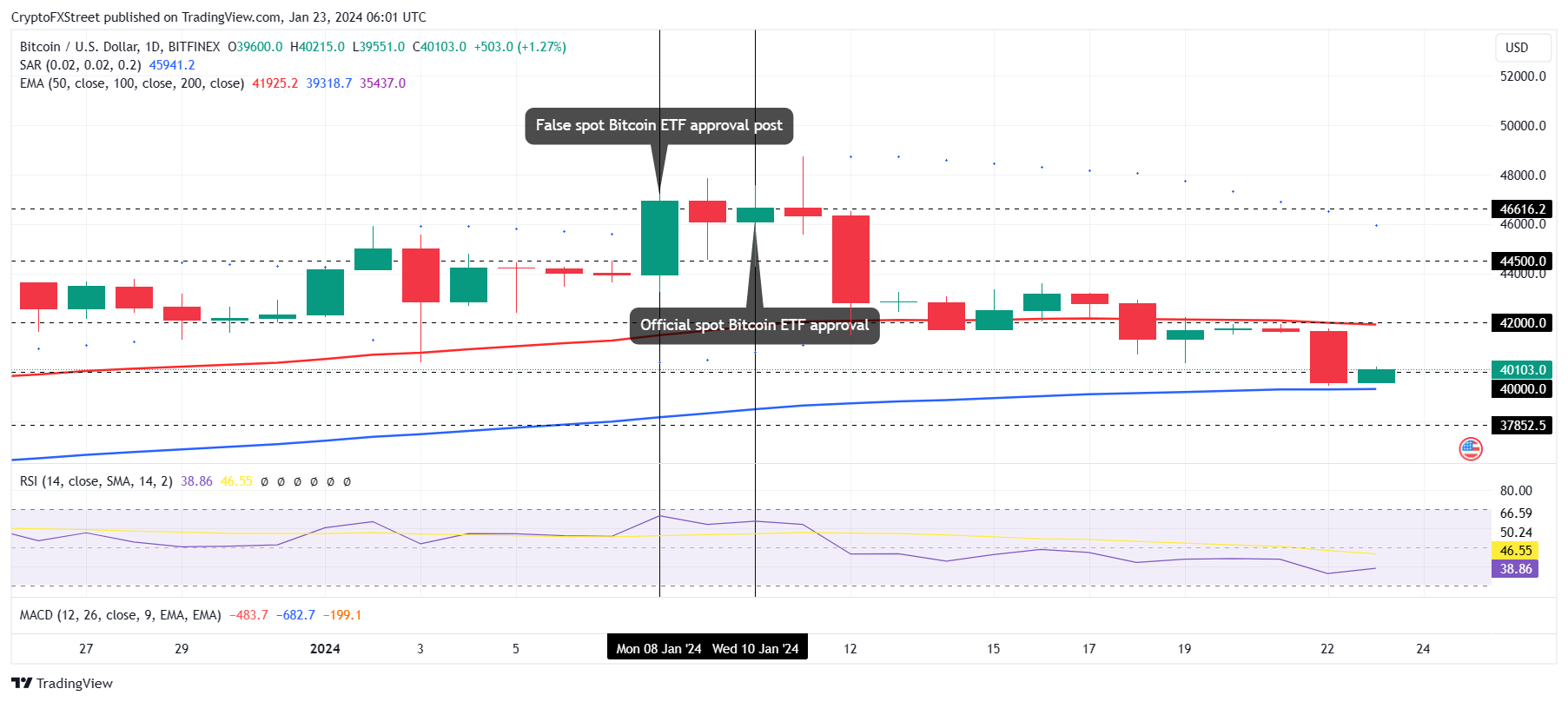
BTC/USD 1-day chart
BTC has not seen a rally since then; instead, most of the price action has been concentrated toward a decline, and the cryptocurrency is currently hovering around $40,000, awaiting a strong bullish catalyst to push Bitcoin back up toward $47,000.
Author

Aaryamann Shrivastava
FXStreet
Aaryamann Shrivastava is a Cryptocurrency journalist and market analyst with over 1,000 articles under his name. Graduated with an Honours in Journalism, he has been part of the crypto industry for more than a year now.