USD/CAD Canadian Dollar Drops After BoC Keeps Rate Unchanged Signals Caution

The Canadian dollar depreciated on Wednesday after a wait-and-see statement from the Bank of Canada (BoC) and falling oil prices. The BoC kept its benchmark interest rate unchanged at 1.00 percent. The central bank did mention a strong job growth and rising inflation signalling that the next move could be a rate hike, but the timing of the monetary policy decision is up in the air. The fate of the NAFTA negotiations is still uncertain and with such a large portion fo the economy tied to the outcome it would be premature for the BoC to speculate on something so outside its control, but very much a factor on its mandate.
The statement from the BoC acknowledges that higher rates will be required over time, but its commitment to caution was read by the market as dovish and the loonie paid the price. The Canadian economy has slowed down from its blistering pace in the second quarter, but still posted a decent 1.7 percent growth in GDP in the third quarter but with rising headwinds NAFTA and the fragility of the OPEC led production cut agreement Governor Poloz is keeping his options open until more unknowns become knowns until a decision had to be made. The most likely scenario from analysts is that NAFTA will continue even if a renegotiation does not bear meaningful fruit and oil prices will remain rangebound which would leave the BoC decision to rely on fundamental data.
The US Tax reform optimism remains as Congress and the Senate will work together to reconcile the two versions that have already passed. Geopolitics remain a big driver of market sentiment with the Trump Administration finally nearing a win since so many previous setbacks.
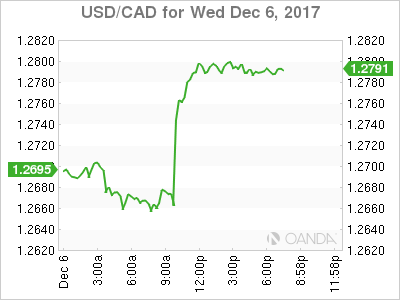
The USD/CAD gained 0.80 percent on Wednesday. The currency pair is trading at 1.2787 after the Bank of Canada (BoC) kept rates unchanged at 1.00 percent and communicated it would remain cautious going forward. The first of the employment release this week dropped with the publication of the ADP private payrolls report. US private employers added 190,000 jobs, 5,000 more than expected on the way to Friday’s U.S. non farm payrolls (NFP) which is forecasted to add 198,000 jobs in November.
The decision by the BoC to keep the benchmark rate at 1.00 percent and their dovish language was reflected in the drop in rate hike probabilities in the January meeting. The chances fell from 41 percent to 26 after the statement was released. The Canadian economic calendar has little on offer for the remainder of the week. Building permits and the purchasing mangers index (PMI) on Thursday will be highlights but the majority of market moves will be dictated by geopolitics (Washington and Brexit developments) and US employment data with an emphasis on wage growth ahead of the U.S. Federal Reserve December monetary policy meeting next week.
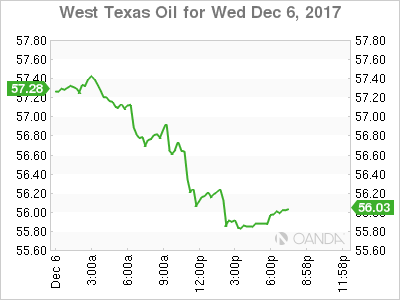
Oil prices fell 3 percent in the last 24 hours. The price of West Texas Intermediate is trading at 55.84 after the Energy Information Administration (EIA) weekly inventory data confirmed the API numbers. Crude stocks fell by more than expected at 5.6 million barrels, but it was the rise of gasoline inventory to 6.8 million barrels that sent a signal to the market that demand for energy might not be as strong as estimated. Despite the seasonal rise in gasoline inventories the data is pointing to a higher than average hoarding in the last five years.
With the Organization of the Petroleum Exporting Countries (OPEC) meeting in the rearview the softening of energy demand in the US knocked prices back down. The showdown between rising US production and the coordinated efforts of the OPEC and other major producers will continue in 2018 as prices are more stable, but the downside risk remains if there is no improvement for the global appetite for the black stuff.
Market events to watch this week:
Thursday, December 7
8:30am USD Unemployment Claims
11:00am EUR ECB President Draghi Speaks
Friday, December 8
4:30am GBP Manufacturing Production m/m
8:30am USD Average Hourly Earnings m/m
8:30am USD Non-Farm Employment Change
8:30am USD Unemployment Rate
*All times EDT
Author

Alfonso Esparza
MarketPulse
Alfonso Esparza specializes in macro forex strategies for North American and major currency pairs.