UK inflation outlook brightens as expectations drop


The UK is no longer an outlier when it comes to inflation. This week has given a ray of hope that the Bank of England will cut rates in the first half of this year as both wages dropped, and there was a significant decrease in the UK 1-year ahead inflation expectations. The Bank of England/ IPSOS inflation expectations survey for the next 12 months fell to 3% in February down from 3.3% in January. This is the lowest level since November 2021, and UK inflation expectations are now at the same level as the US.
UK inflation expectations could fall below the US
Later on Friday, there is a chance that US inflation expectations could rise above the UK’s level. The University of Michigan will publish the 1-year ahead inflation expectations for March, and this is expected to rise to 3.1%. Thus, for the first time in 4 months, the US is expected to have higher inflation expectations than the UK. Any concerns that UK inflation rates would be higher than the rest of the G7 seems to be put to bed right now. However, this does not mean that the UK is doing significantly better on the inflation front compared to its peers, more that it has rejoined the pack and is no longer an outlier.
UK CPI data now in focus
The inflation expectations survey comes ahead of next week’s CPI data for February and the Bank of England meeting on Thursday. UK CPI is expected to have fallen sharply last month, the headline rate is expected to fall to 3.5% from 4% in January, and the core rate is expected to moderate to 4.5% from 5.1%. This is still above the US rate of inflation, but if inflation does fall to 3.5% in February, it would be the lowest level since September 2021, and it would also buck the trend in the US for price increases in February.
Will the BoE have to revise down their inflation expectations?
Weaker inflation expectations will be noted by the Bank of England, since they have been hiking interest rates in an effort to anchor inflation expectations, since expectations can feed into inflation down the line. While inflation expectations at 3% are still higher than the BOE’s 2% target rate, they are not that much higher, and they have fallen considerably, which makes it easier for the BOE to loosen monetary policy. Right now, the market is pricing a fine line between a rate cut in June or August, however, if inflation continues in this downward path, then CPI could be below the BOE’s forecast rate for Q1, which was just below 4%.
The BOE expects UK inflation to fall to the 2% target rate in Q2 this year, however, if inflation surprises to the downside next week, this could come sooner than the BOE expects.
Overall, the inflation expectations data released today suggests that the deflation trend in the UK continues to gather pace, which makes next week’s BOE meeting interesting, and makes the path easier for the Bank of England to signal a rate cut is coming in the next few months. The market reaction to the inflation expectations data has been fairly muted. UK 2-year Gilt yields have backed off recent highs, after climbing more than 15 basis points this week and following US Treasuries higher. GBP/USD is clawing back earlier losses, after falling more than 130 points so far this week. A lower inflation impulse in the UK relative to the US may continue to weigh on sterling especially vs. the USD.
Rate cut expectations could give the FTSE 250 a boost
The FTSE 100 is slightly higher today, although European stock markets are mostly treading water. The FTSE 250 is mostly stable after this reading, although this index remains close to its highest level in a year, as signs that interest rate cuts could come as soon as June spark interest in UK mid-caps. Overall, while a rate cut can give the UK economy a cyclical boost, it is unlikely to repair its structural problems, for example weak productivity etc. Those problems will have to be dealt with by the next government, however, we will have to wait for that also after Rishi Sunak ruled out a May 2nd general election.
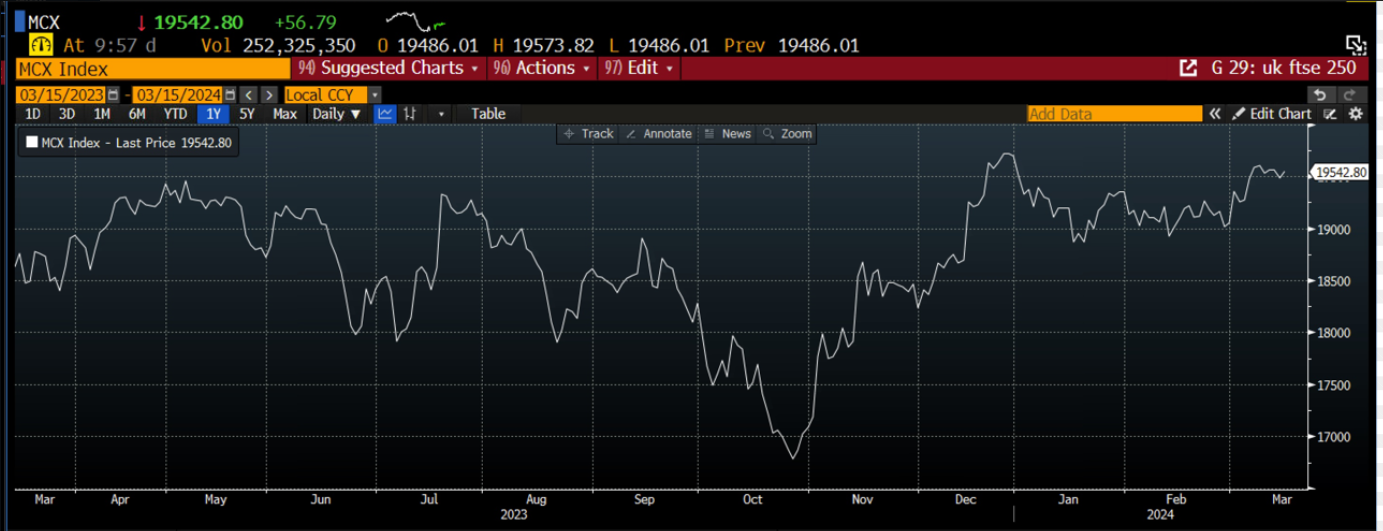
Chart: XTB and Bloomberg
Author
Kathleen Brooks
XTB UK
Kathleen has nearly 15 years’ experience working with some of the leading retail trading and investment companies in the City of London.

















