|

Swiss franc continues to rise

June rollercoaster ride for Swissie

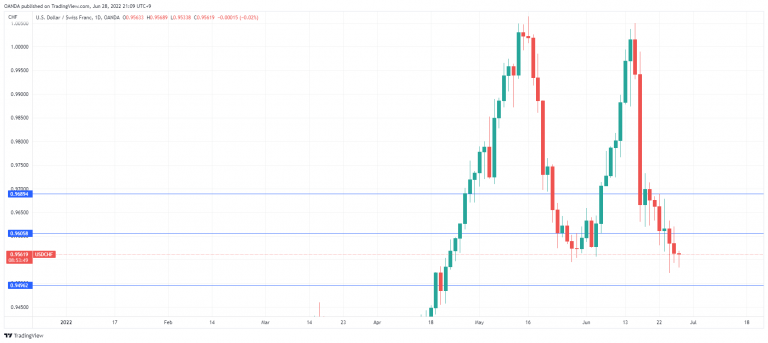
It has been a tale of two Junes for the Swiss franc. USD/CHF rose about 400 points in the first half of the month and breached above the parity line. Since then, it has surrendered almost all of those gains. The highlight was the SNB shocker on June 16th, when the central bank raised rates from -0.75% to -0.25%, a huge move that was totally unexpected. The rate hike predictably sent the Swiss franc sharply higher, and the currency has continued to strengthen in the second half of June. On Friday, USD/CHF fell as low as 0.9521, its lowest level since April 21st.

The reason that the SNB raised rates in such dramatic fashion was to keep inflation at bay. Inflation rose to 2.9% YoY in May. This is much lower compared to the US or UK, but marked Switzerland’s highest inflation rate since 1993. The Bank’s rate statement said that further hikes could be implemented in order to stabilize inflation.

The SNB, unlike most major central banks, intervenes in currency markets as it sees fit. The SNB carefully monitors the exchange rate and has intervened in the past when it deemed the Swiss franc’s value as too high, which is detrimental to Switzerland’s export-reliant economy. The SNB decided that the priority was to curb rising inflation, knowing that a sharp rise in interest rates would cause the Swiss franc to dramatically appreciate.

SNB President Thomas Jordan said last week that economic data indicated a need to continue to tighten monetary policy, but said it was unclear when this would occur. The SNB may not be embarking a rate-hike cycle anytime soon, but with a potential rate hike on the table, the Swiss franc has upside risk.

USD/CHF technical

  • USD/CHF has support at 0.9496 and 0.9412.

  • There is resistance at 0.9605 and 0.9689.
USDCHF

Author

Kenny Fisher

Kenny Fisher

MarketPulse

A highly experienced financial market analyst with a focus on fundamental analysis, Kenneth Fisher’s daily commentary covers a broad range of markets including forex, equities and commodities.


More from Kenny Fisher
Share:

Editor's Picks

EUR/USD climbs to two-week highs beyond 1.1900

EUR/USD is keeping its foot on the gas at the start of the week, reclaiming the 1.1900 barrier and above on Monday. The US Dollar remains on the back foot, with traders reluctant to step in ahead of Wednesday’s key January jobs report, allowing the pair to extend its upward grind for now.

GBP/USD hits three-day peaks, targets 1.3700

GBP/USD is clocking decent gains at the start of the week, advancing to three-day highs near 1.3670 and building on Friday’s solid performance. The better tone in the British Pound comes on the back of the intense sekk-off in the Greenback and despite re-emerging signs of a fresh government crisis in the UK.

Gold treads water around $5,000

Gold is trading in an inconclusive fashion around the key $5,000 mark on Monday week. Support is coming from fresh signs of further buying from the PBoC, while expectations that the Fed could turn more dovish, alongside concerns over its independence, keep the demand for the precious metal running.

Crypto Today: Bitcoin steadies around $70,000, Ethereum and XRP remain under pressure 

Bitcoin hovers around $70,000, up near 15% from last week's low of $60,000 despite low retail demand. Ethereum delicately holds $2,000 support as weak technicals weigh amid declining futures Open Interest. XRP seeks support above $1.40 after facing rejection at $1.54 during the previous week's sharp rebound.

Japanese PM Takaichi nabs unprecedented victory – US data eyed this week

I do not think I would be exaggerating to say that Japanese Prime Minister Sanae Takaichi’s snap general election gamble paid off over the weekend – and then some. This secured the Liberal Democratic Party (LDP) an unprecedented mandate just three months into her tenure.

Ripple exposed to volatility amid low retail interest, modest fund inflows

Ripple (XRP) is extending its intraday decline to around $1.40 at the time of writing on Monday amid growing pressure from the retail market and risk-off sentiment that continues to keep investors on the sidelines.