SPY Flirting With Near-Term Sell Signal


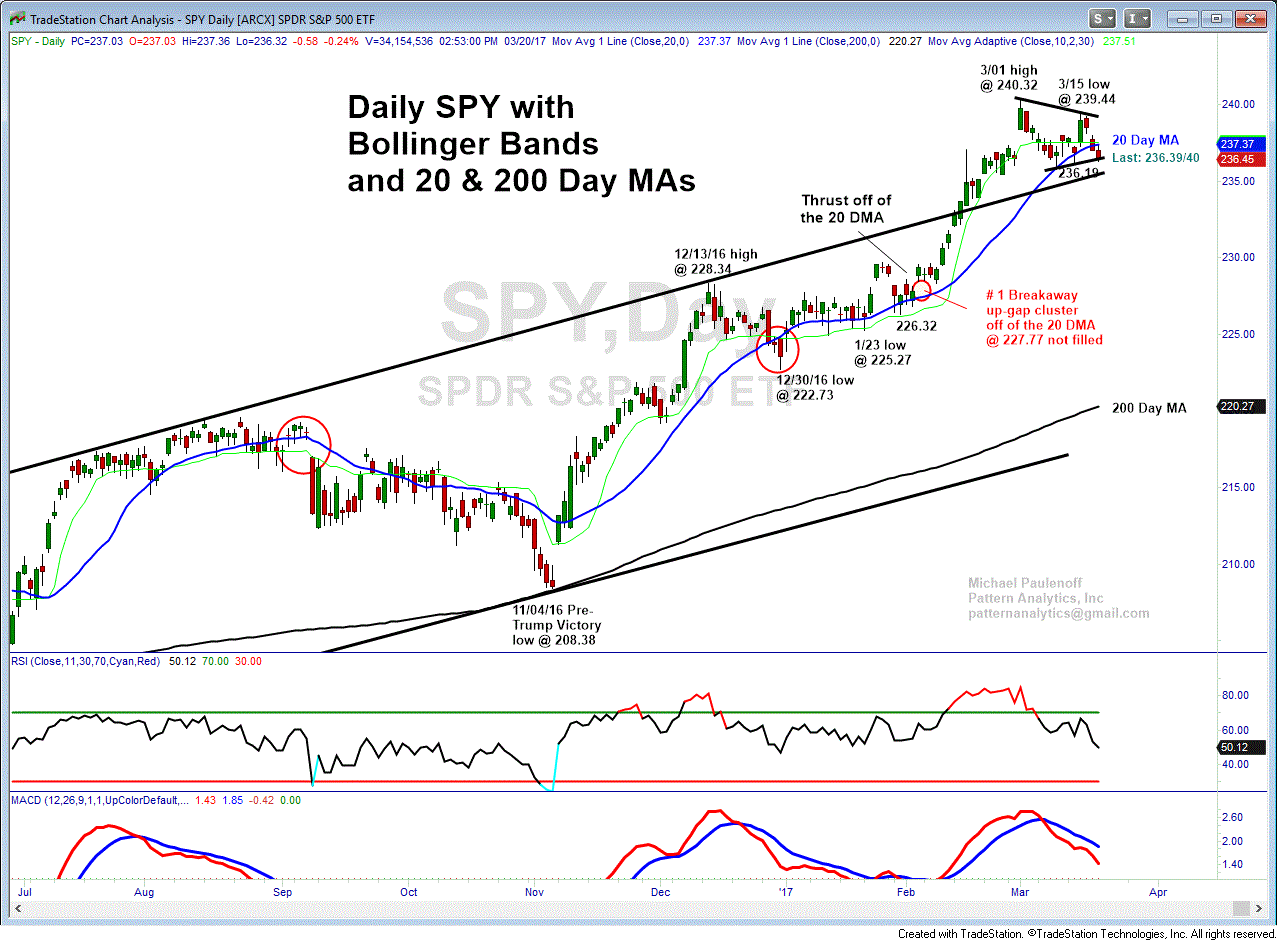
On Friday, the SPY closed beneath its 20-day moving average (DMA) for the first time since the Dec 28 close at 224.40, which triggered a very minor bout of weakness for two days into a Dec 30 low at 222.73 (0.93%).
Purely from a technical perspective, when the SPY closes beneath the 20 DMA, the ensuing weakness is dependent on the slope of the moving average (MA) at the time. If the MA is sloping upward, then the likelihood is that SPY will endure just a brief, shallow correction prior to a resumption of the underlying uptrend.
Conversely, when the MA slope is horizontal or negative, then the SPY is vulnerable to a much deeper correction. The last time that happened was in September 2016 in the vicinity of 217-218, which led to a bout of weakness into the 209-108 area, or -4.5%.
Monday represented the second session that the SPY was trading below its 20 DMA (237.37), amid a flattening 20 DMA that has transpired during the high-level churning price action since the Mar 1 all-time high.
The longer the SPY remains beneath the 20 DMA, the more likely the 20 DMA will roll over from flat to negatively-sloped, thereby increasingly the potential for a meaningful correction (5% off of the Mar 1 high at 240.32 projects into the 228.50/00 target zone).
With the SPY unable to claw its way back above 237.37 at the close on Monday, we should not be surprised if selling pressure intensifies in the hours and days immediately ahead.
Author
Mike Paulenoff
MPtrader
Michael Paulenoff has been a student of and a participant in the world financial markets for the past 26 years, since his graduation from the Georgetown University School of Foreign Service in 1979.