Pound yawns on mixed Retail Sales

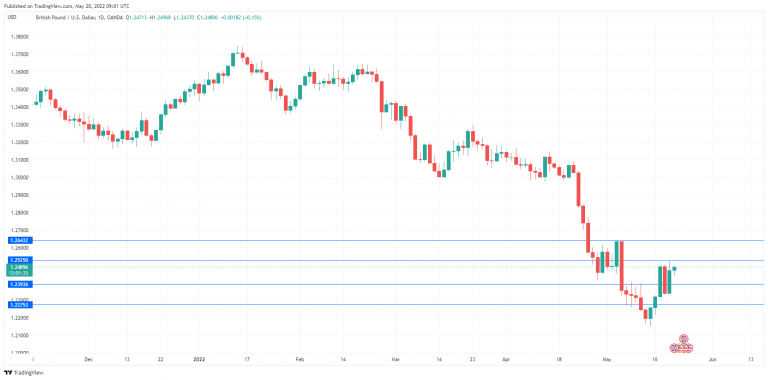
The British pound is drifting on Friday, after showing unusually strong volatility this week. The pound rebounded on Thursday, racking up gains of 1.06% and briefly breaking above the symbolic 1.25 line.
UK retail sales showed a strong gain in April, with a gain of 1.4% MoM. This followed a decline of 1.2% in March. However, on a yearly basis, sales volumes were 4.9% lower, as the broader picture looks grim. The monthly gain for March may have been a blip, as consumers were hit with higher household energy costs as well as an increase in taxes. Add into the mix inflation at 9.0% and possibly heading into double-digits, and it’s difficult to envision retail sales moving higher.
Consumer confidence hits record low
The GfK consumer confidence index remains deep in negative territory. The index dropped to -40 in May, down from -38 in April. How pessimistic are consumers about the economy? The previous record of -39 was set in July 2008, at the height of the global financial crisis. Consumer confidence is considered an early, reliable signal of economic activity, and these massively poor numbers could well indicate that the UK economy is falling into recession. A GfK note summed up the grim situation, saying that the BoE is pessimistic about inflation, consumer confidence is gloomy, and there aren’t any reasons for optimism anytime soon. This certainly does not bode well for the British pound, which has plunged over 7% since the start of the year.
The BoE finds itself playing catch-up with the inflation curve. There have been voices calling for more aggressive rate hikes than the 25-bps increments we’ve seen over the past three meetings, especially with inflation hitting 9%. The central bank has a daunting challenge, as it must raise rates to curb inflation but also needs to be mindful that the economy is still recovering from Covid and could tip into a recession due to high interest rates.
GBP/USD technical
-
1.2393 has switched back to support. Below, there is support at 1.2275.
-
There is resistance at 1.2525 and 1.2643.
Author

Kenny Fisher
MarketPulse
A highly experienced financial market analyst with a focus on fundamental analysis, Kenneth Fisher’s daily commentary covers a broad range of markets including forex, equities and commodities.