Gold Weekly Forecast: XAU/USD to stay in consolidation ahead of Jackson Hole
- Gold recaptures its status as a safe haven.
- XAU/USD is likely to continue to move sideways between clearly defined technical levels.
- Investors’ focus shifts to Chairman Powell’s speech at Jackson Hole Symposium.

Despite the broad-based USD strength, gold managed to stay resilient throughout the week with the risk-averse market environment allowing the precious metal to find demand. After edging higher toward $1,800 during the first half of the week, the XAU/USD pair edged lower on Thursday and ended up closing the week virtually unchanged a little above $1,780.
What happened last week
The disappointing data from China, which showed that Retail Sales and Industrial Production expanded at a softer pace than expected in July, weighed on market sentiment at the start of the week. Additionally, escalating geopolitical tensions between the US and China alongside the increasing number of coronavirus Delta variant cases globally forced investors to seek refuge in safe-haven assets. Although the USD outperformed its rivals on Monday, gold didn’t have a difficult time limiting its losses.
On Tuesday, the US Census Bureau reported that Retail Sales declined by 1.1% on a monthly basis in July to $617.7 billion. With this print coming in worse than the market expectation for a decrease of 0.3%, the market mood remained sour. On a positive note, the Federal Reserve’s monthly publication showed that Industrial Production rose by 0.9%, compared to analysts’ estimate of 0.4%, but this reading failed to help the sentiment improve.
On Wednesday, the FOMC’s minutes of its July policy meeting revealed some policymakers saw it appropriate to start preparing for asset tapering soon. "A few participants expressed concerns that maintaining highly accommodative financial conditions might contribute to a further buildup in risk to the financial system,” the publication further read. The initial market reaction caused the greenback to weaken modestly against its rivals but the US Dollar Index (DXY) regained its traction on the Fed’s policy tightening prospects and extended its rally to a fresh 2021 high of 93.72 on Friday.
The US Department of Labor announced on Thursday that the Initial Jobless Claims fell to the lowest level since March 2020 at 348,000. Nevertheless, this data was largely ignored by market participants.
In the absence of high-tier data releases on Friday, the DXY staged a correction to mid-93s but rose more than 1% for the week.
Next week
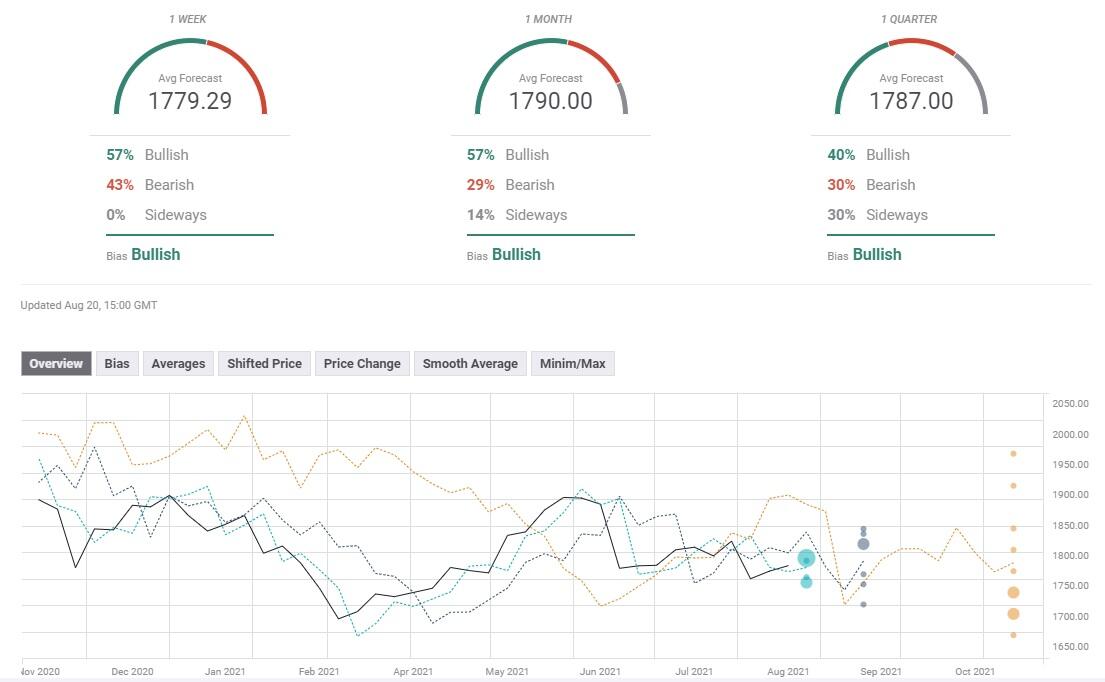
IHS Markit will release the preliminary August Manufacturing and Services PMI reports for Germany, the euro area and the US on Monday. Investors expect the economic activity in the US manufacturing and service sectors to continue to expand at a robust pace but they will be paying close attention to underlying details on input price pressures. In case those reports confirm that inflation will remain high for longer than expected, the USD could preserve its firm footing.
On Wednesday, July Durable Goods Orders data from the US will be looked upon for fresh impetus ahead of Thursday’s weekly Initial Jobless Claims report. Additionally, the US Bureau of Economic Analysis will release its second estimate of the second-quarter GDP growth, which is unlikely to receive a noticeable market reaction.
Finally, the Personal Consumption Expenditures (PCE) Price Index, the Fed’s preferred gauge of inflation, will be featured in the US economic docket. On a yearly basis, the Core PCE Price Index, which excludes volatile food and energy prices, is forecast to inch higher to 3.6% in July from 3.5% in June. More importantly, FOMC Chairman Jerome Powell will deliver his prepared speech at the Jackson Hole Symposium at 1400 GMT, suggesting that the market reaction to the PCE inflation report is likely to remain short-lived.
Investors will look for fresh clues regarding the timing of the beginning of reductions in the Fed’s asset purchases. Currently, markets seem to have already priced in the expectations of tapering before the end of the year. In case Powell adopts a cautious tone and reassures markets that the dovish outlook will remain intact for the rest of the year, the USD could come under strong bearish pressure and fuel a rally in XAU/USD. On the other hand, the pair’s downside could remain limited even if Powell refrains from changing the perception on the policy outlook.
Gold technical outlook
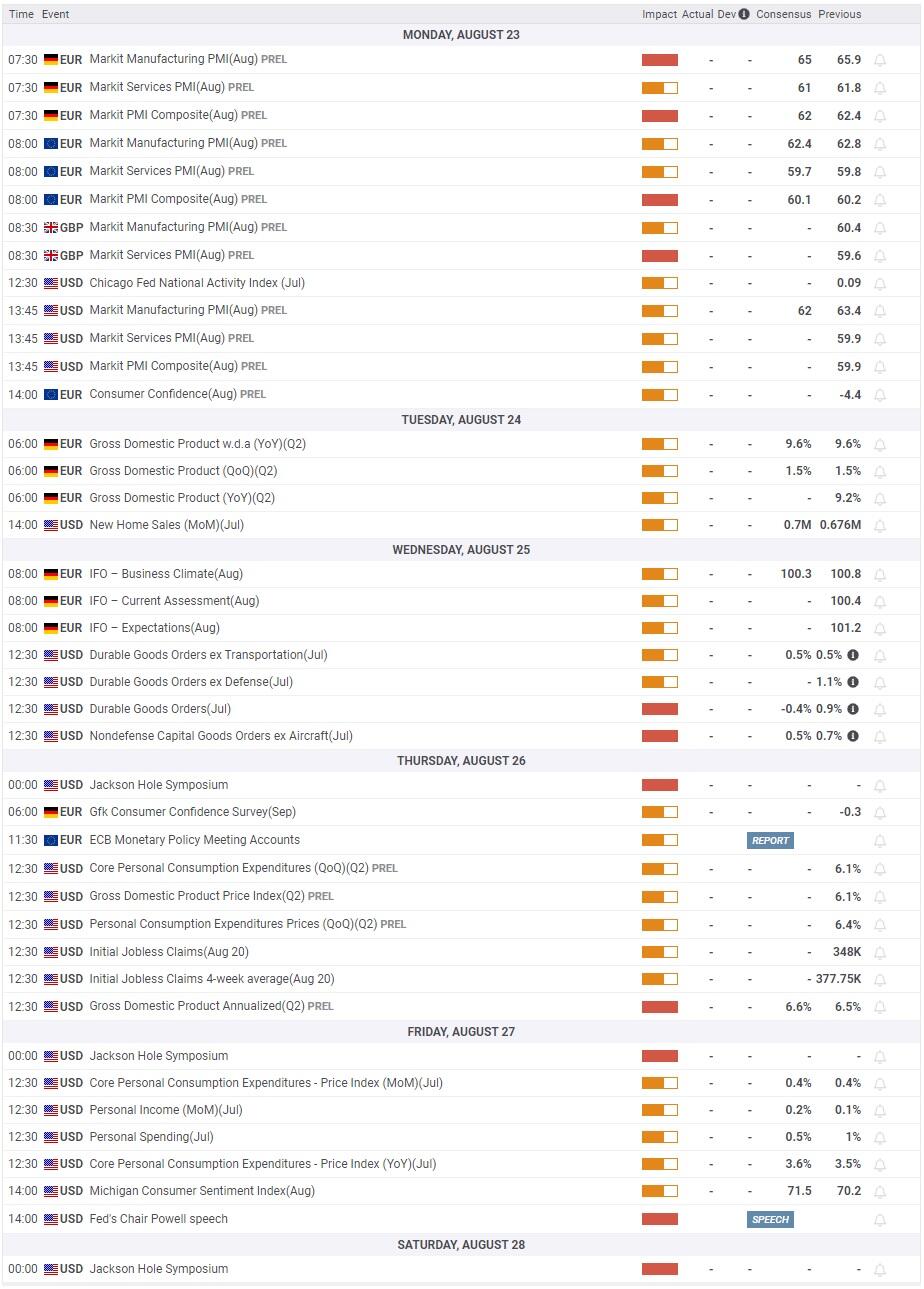
The Relative Strength Index (RSI) indicator on the daily chart continues to move sideways near 50, confirming gold’s indecisiveness in the short-term. On the upside, interim resistance seems to have formed at the $1,790/93 area (static level, 50-day SMA). A daily close above this level could open the door for additional gains toward $1,800 (psychological level) and $1,810 (100-day SMA, 200-day SMA).
On the downside, static supports are located at $1,770, $1,760 and $1,750. Among these levels, the second one seems to be particularly significant with gold having suffered heavy losses the last time it broke below it on August 9.
Gold sentiment poll
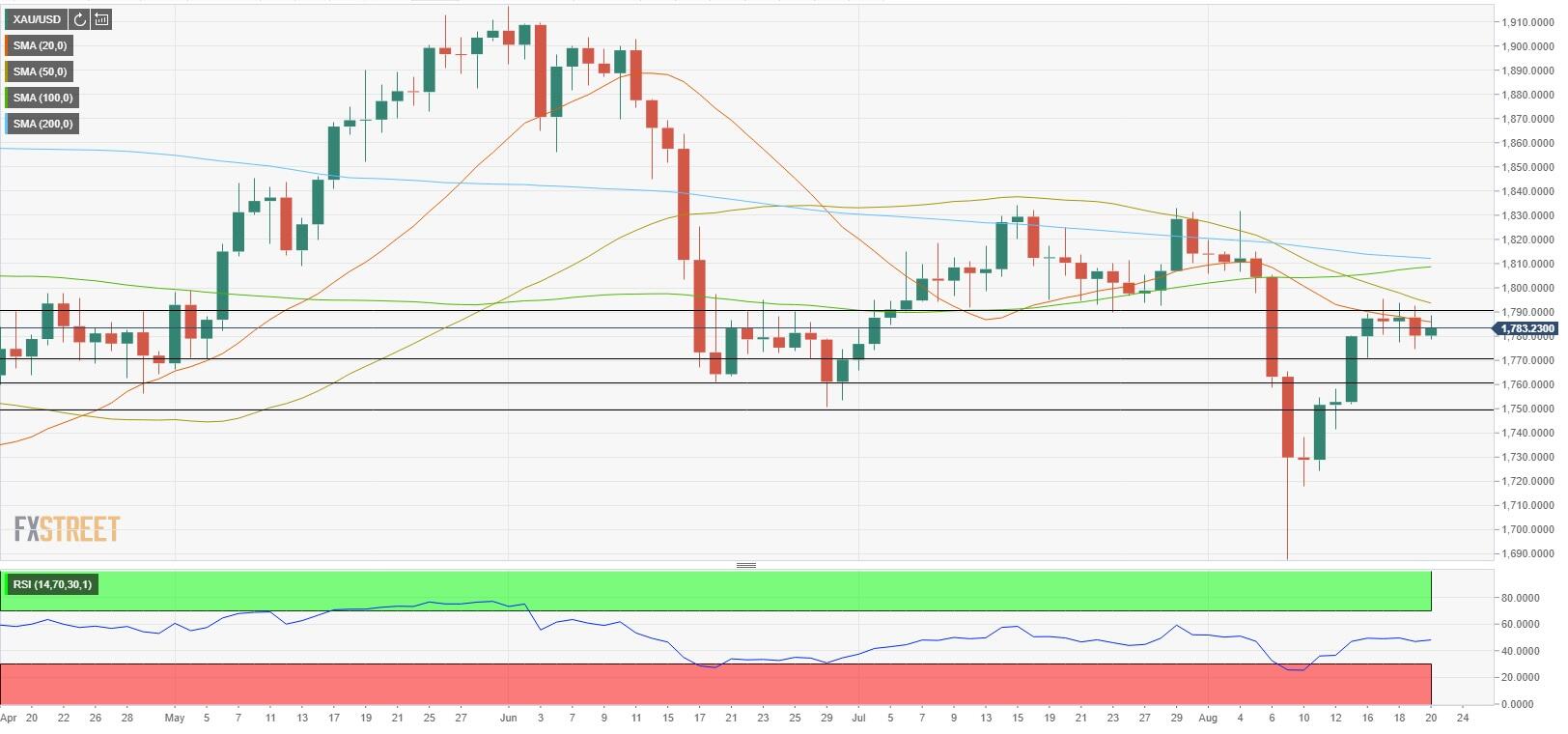
The FXStreet Forecast Poll confirms gold’s near-term neutral outlook with the one week view pointing to an average target of $1,779. Despite the fact that 57% of experts are bullish in the one month view, compared to 29% bearish, the average target of $1,790 suggests that the beginning of an uptrend is unlikely.
Author

Eren Sengezer
FXStreet
As an economist at heart, Eren Sengezer specializes in the assessment of the short-term and long-term impacts of macroeconomic data, central bank policies and political developments on financial assets.