Gold consolidates recent gains, defies stronger dollar


After several months during which gold moved almost entirely in reverse fashion to the dollar, ignoring other developments and barely acting as the haven asset it’s considered to be, this dynamic may be changing. Demand for the yellow metal seems to be picking up amid broader uncertainty in markets, evident by bullion prices remaining resilient lately even in the face of a soaring dollar.
While fluctuations in gold prices have traditionally been driven by changes in investors’ risk appetite, given the metal’s safe-haven status, that much has not been evident in recent months. Instead, price action in gold has been a mirror reflection of movements in the US dollar. Since gold is denominated in dollars, a stronger US currency renders the metal more expensive for investors using foreign currencies, thereby weighing on its demand – and vice versa. Hence, the surge in the dollar since April has been the primary factor that has pushed gold lower overall, even amid mounting uncertainties around global trade.
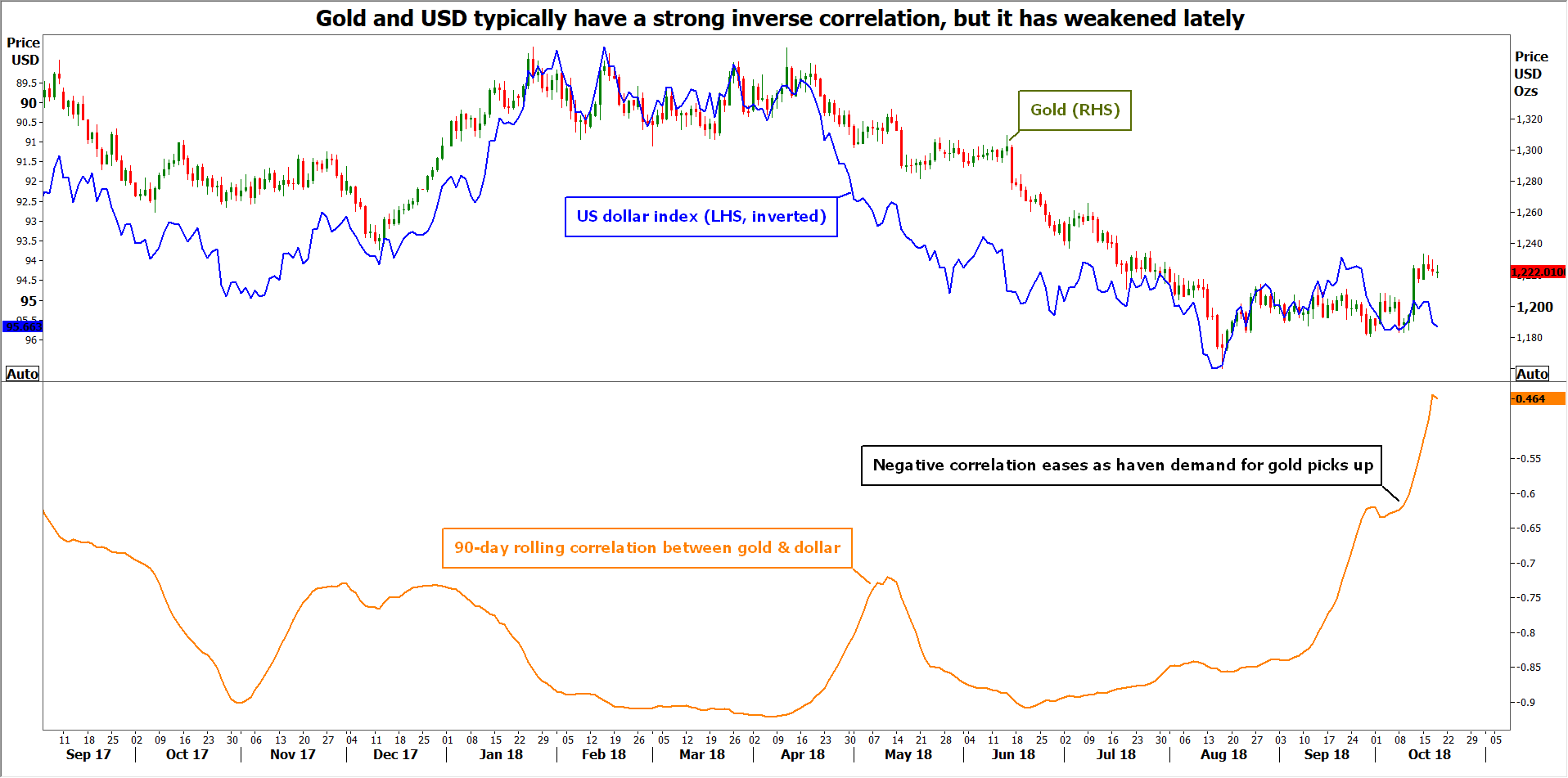
Yet, this pattern has shown signs of abating in recent trading sessions, with bullion finally responding to developments outside of the greenback. Specifically, the yellow metal surged last week to break above the narrow range it had traded in since mid-August, buoyed by a major selloff in equity markets that led investors to assume a more defensive stance, diverting some funds back to haven assets like gold. In another encouraging sign for the bulls, bullion prices barely declined on Wednesday, on a day when the dollar soared – aided by a hawkish tone in the latest Fed minutes. In other words, gold fell by much less than one would have expected given the magnitude of the dollar’s rise, which implies haven-demand for the metal is slowly picking up.
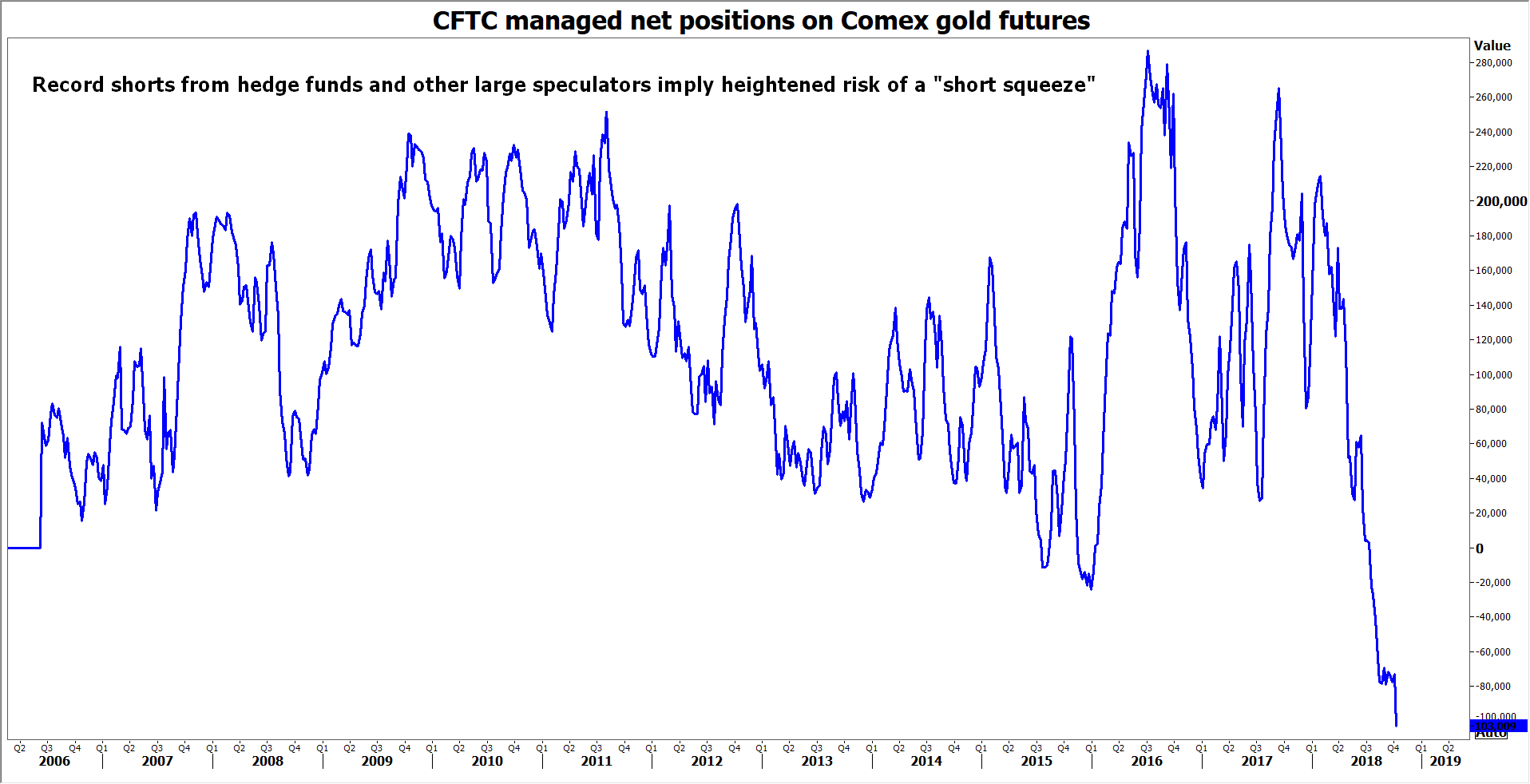
What’s behind this gradual shift? While trade risks evidently weren’t enough for gold to attract demand, jitters in equity markets were. Bullion really started shining again only when stocks started to drop in a meaningful manner, generating concerns that an even larger rout may be looming before long. Another point is the speculative positioning on gold, which remains at record-short levels. This implies that any piece of gold-friendly news could lead to an outsized rally in bullion, as numerous investors rush to cover or unwind their prior bearish bets, triggering a so-called short squeeze.
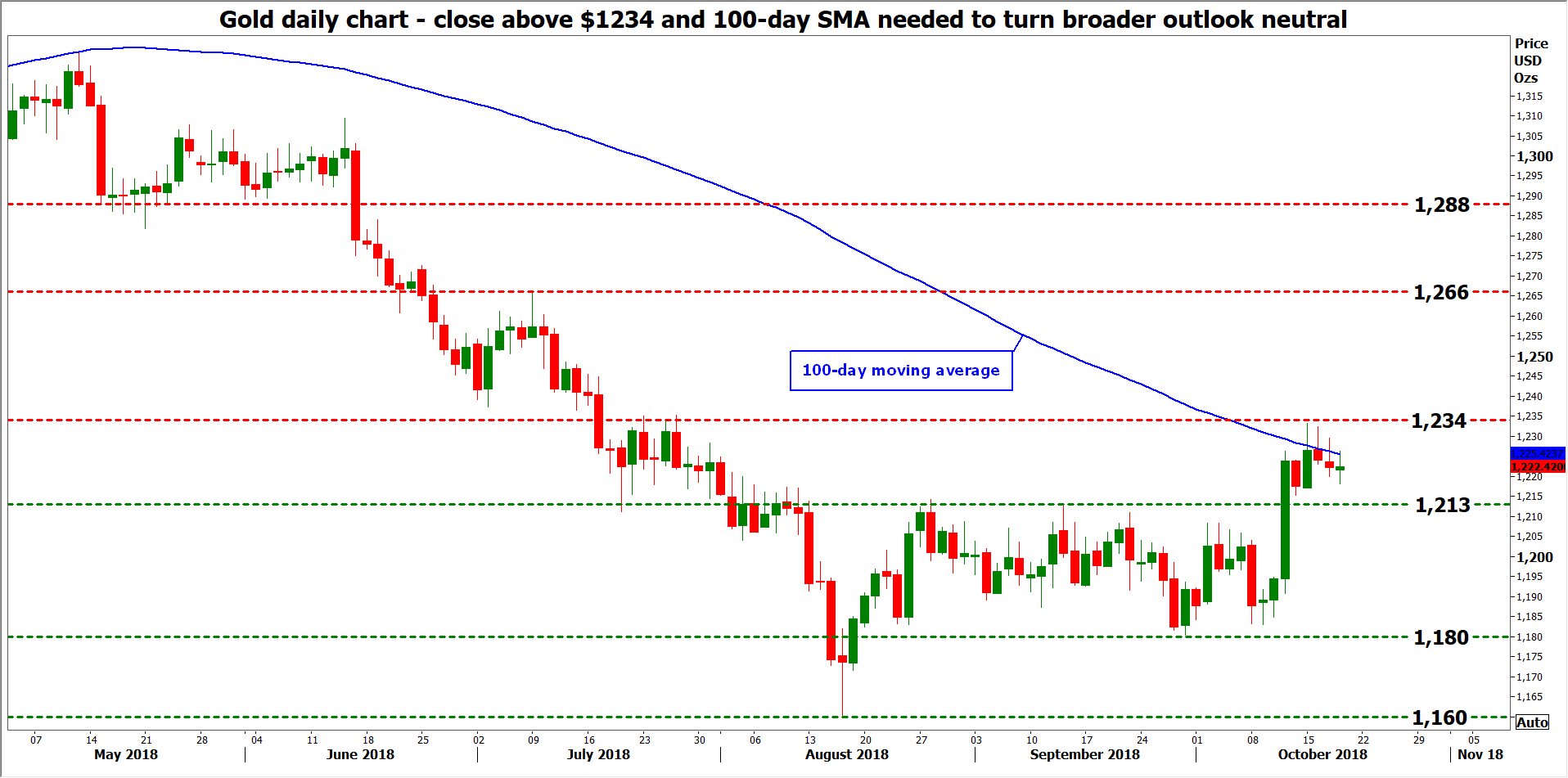
On a different note, the technical picture has improved markedly lately. After touching a 22-month low back in August, the yellow metal entered a narrow trading range, between $1180 and $1213. The stabilization was itself a sign that the broader downtrend was weakening, but following the upside break above that range last week, the short-term outlook has turned back to positive. Moreover, prices are currently testing the 100-day moving average, and a potential close above it – as well as the $1233 mark – could signal that the bigger trend is back to neutral, from negative currently. All in all, these moves support the view that gold’s lows for 2018 are likely in already.
Of course, a lot is going to depend on how global risk appetite evolves, and whether equity investors will maintain a defensive stance going forward, leading them to consider adding gold to their portfolios as a hedge against the turmoil. Beyond risk sentiment, the direction of the dollar will – as always – be crucial for bullion prices.
Finally, another factor worth contemplating is that a rising interest rate environment – such as the one right now – is typically negative for gold. Not only does bullion not pay any yield, it also carries storage costs, making it much less attractive to hold as interest rates and bond yields rise. Put differently, the opportunity cost of holding gold over bonds increases the higher yields go. That said, it may not be all doom-and-gloom, because rising bond yields are also painful for stocks as was evident by the latest selloff. The implication is that while a further rise in bond yields may be negative for gold, to the extent that such a rise hurts stocks as well and risk aversion intensifies, the safe-haven demand that results for bullion could well eclipse worries around rising rates.
Author
Marios graduated from the University of Reading in 2015 with a BSc in Economics and Econometrics. Prior to joining XM as an Investment Analyst in December 2017, he was providing financial analysis, reporting and consulting service