|

Gold back to inflection point

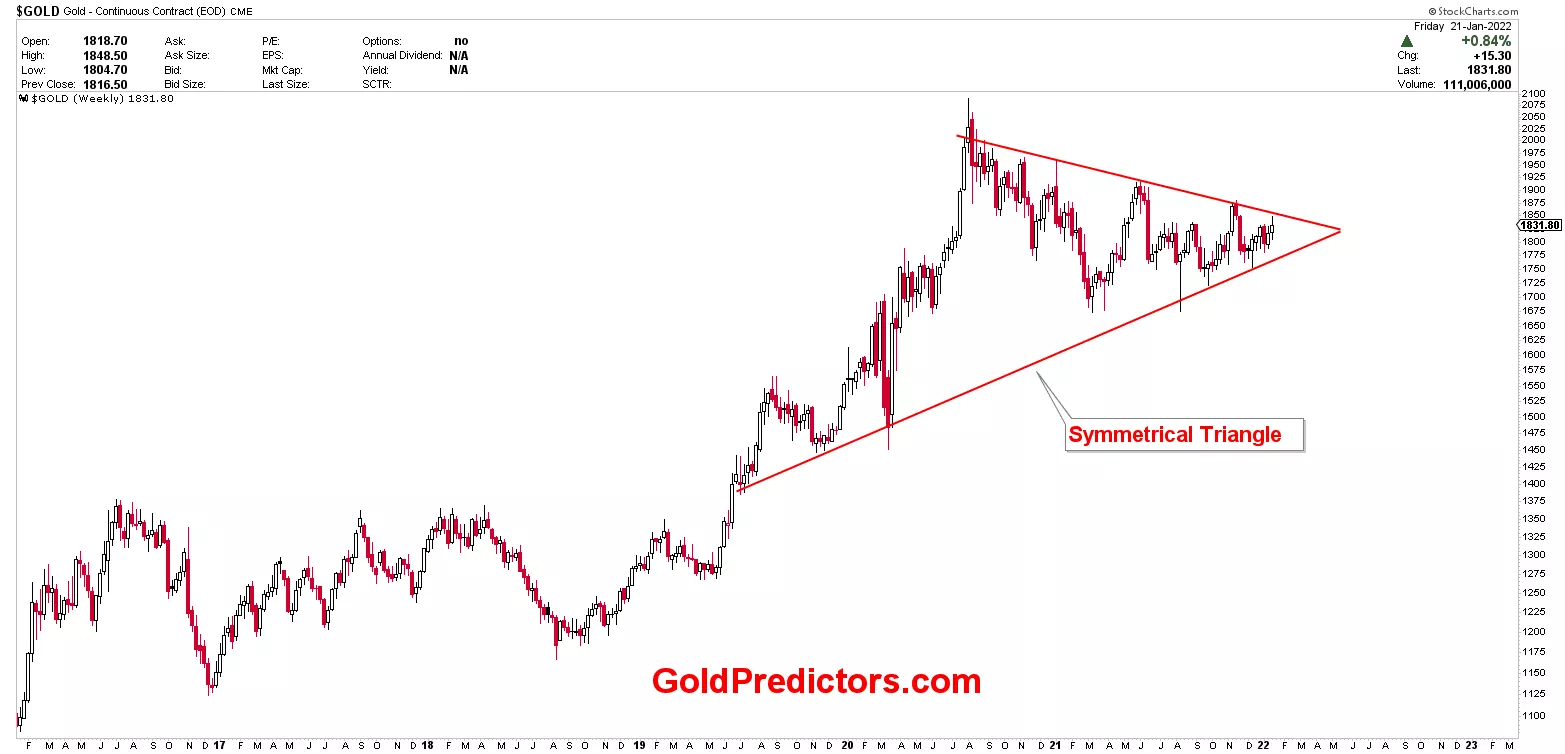
Precious metals, stocks, and forex instruments were expected to experience unprecedented volatility, by the end of 2021 and the start of 2022. So far, there have been no surprises or disappointments. Last week, Nasdaq experienced the biggest selloff and then recovered sharply within a day. The same thing happened in gold markets, where prices fell from $1,850 to $1,780 support. The recent drop in gold was not unexpected since it had been well anticipated and managed. It was a clear warning to members and social media about the upcoming drop. Technically, this drop can be viewed as the strong resistance juncture of a symmetrical triangle, as shown in the chart below.
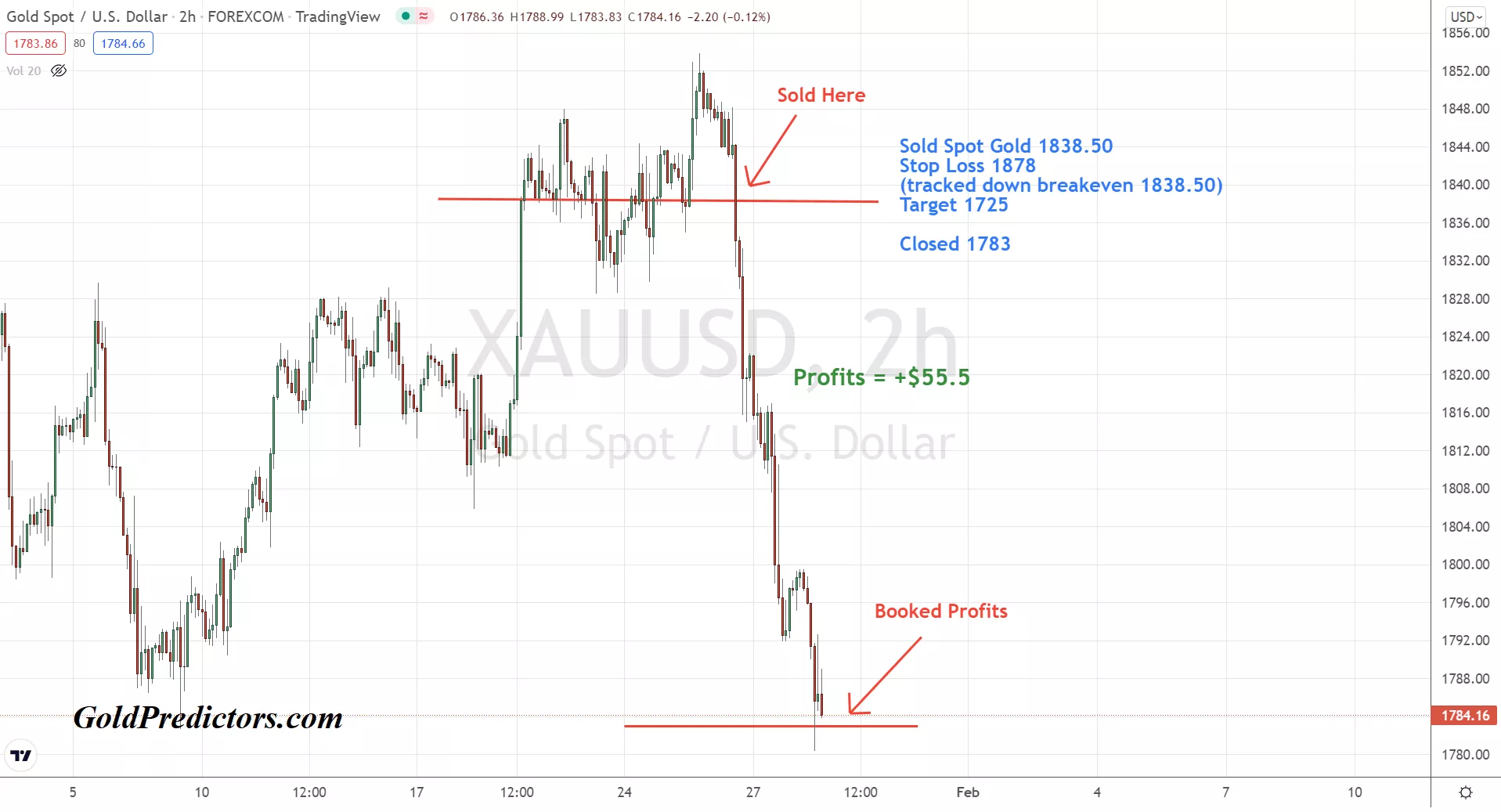
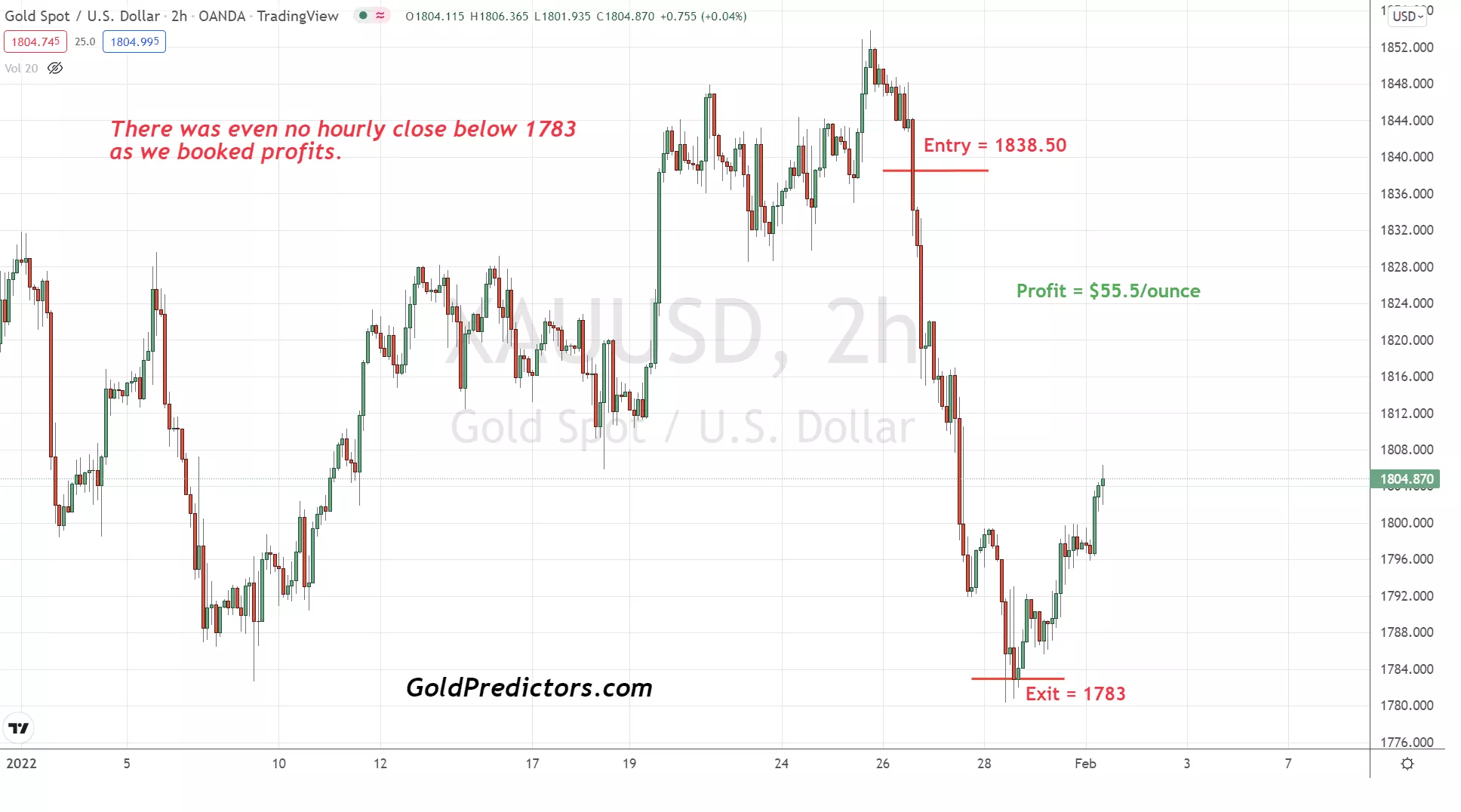
The trading environment for precious metals, particularly gold and silver markets, has been extremely volatile and risky. There has been no direction, and prices are moving in congested areas while waiting for the big decision to be made in the FEB/MAR timeframes. We sold the rally at $1,838.50 and booked profits at $1,783, as shown in the chart below. After profits were taken, gold prices produced a bottom in $1,780 and began to rally from there. This was the first biggest trade of 2022, and it appears that the trading environment will provide some genuine direction in the first quarter of 2022.
Bounce after profit taking

Gold prices have currently hit the edge of a symmetrical triangle at $1,780, where we booked profits, and are now bouncing back towards the congestion zones, as shown in the chart below. This article will go over the upcoming scenarios, pivots, and inflection points to help you make some trading decisions. Due to the strong consolidation, trading activity has been muted.
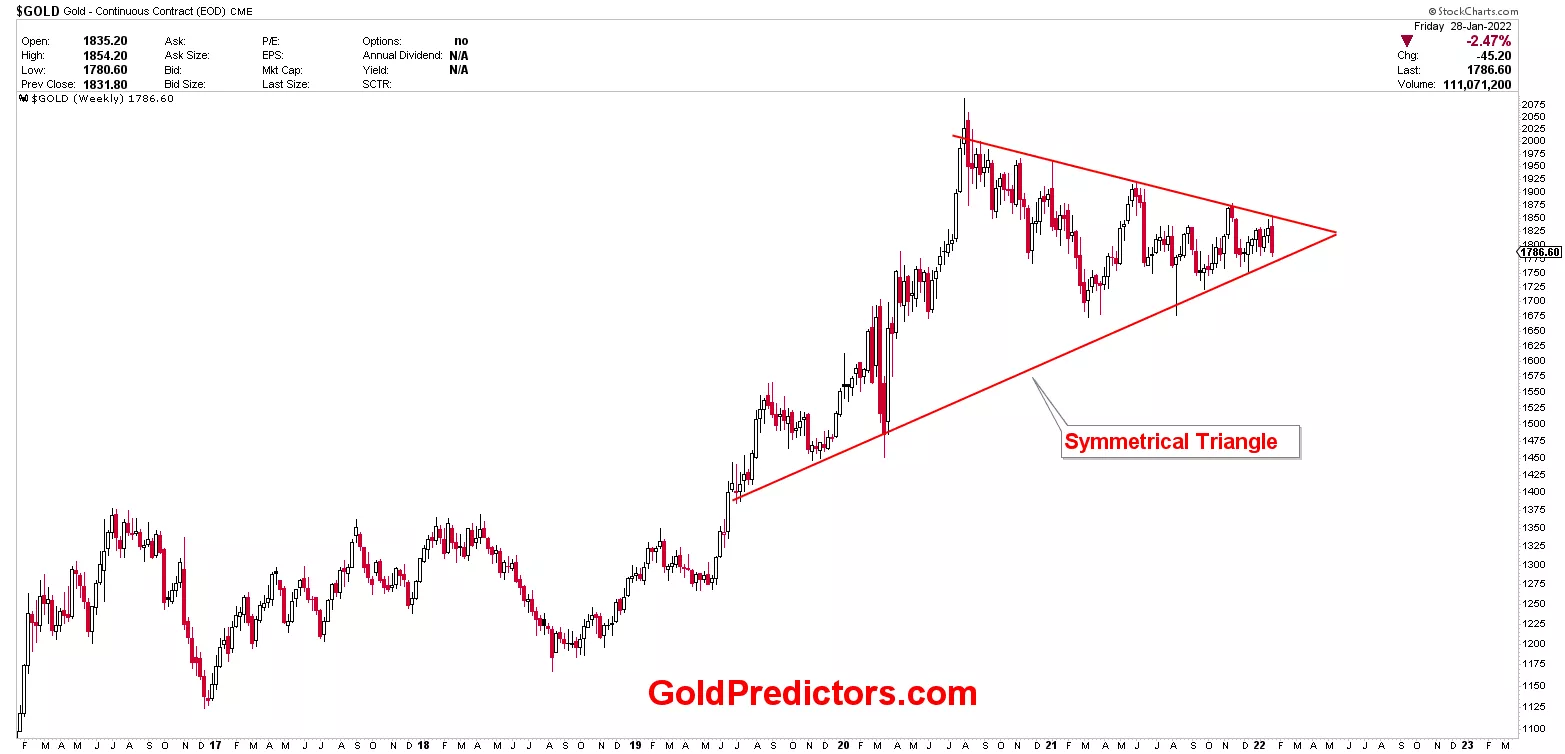
Edge of Symmetrical Triangle

The dollar recently caught a bid near the bottom of a trading range. In anticipation of the upcoming carnage in the asset markets, the US dollar may experience a “flight to safety.” However, this may only be a short-term flight, and long-term trends remain bearish. 


Unlock exclusive gold and silver trading signals and updates that most investors don’t see. Join our free newsletter now!

Author

Muhammad Umair, PhD

Muhammad Umair, PhD

Gold Predictors

Muhammad Umair is a financial markets analyst and investor who focuses on the forex and precious metals markets.


More from Muhammad Umair, PhD
Share:

Editor's Picks

AUD/USD bulls regain control above 0.6950 amid USD retreat

AUD/USD regains traction and extends the previous day's bounce from the weekly low, aiming for 0.7000 in Asia on Friday. The overnight pullback in US bond yields keeps the US Dollar below an 18-month high, which in turn offers some support to the pair. Meanwhile, hawkish RBA expectations also keep the major underpinned.

USD/JPY holds gains near 158.00 after Japan's weak Household Spending data

USD/JPY clings to gains around 158.00 after data showed on Friday that Japan's Household Spending fell for the ninth straight month, undermining the Japanese Yen. Meanwhile, the US Dollar remains depressed as the overnight fall in US bond yields counters a hawkish Fed and geopolitical uncertainties, could cap any downside in the pair.

Gold remains range-bound below $4,200

Gold has given up some ground after an initial bullish attempt to reach weekly highs, returning to below the $4,200 mark per troy ounce on Friday. The US Dollar’s strong upside momentum, combined with rising US Treasury yields across the curve, seems to keep further gains in the yellow metal under scrutiny.

Has Bitcoin really escaped the macro forces it was built to fight?
Over 17 years ago, Satoshi Nakamoto designed Bitcoin (BTC) on the back of a global financial crisis as an alternative to the global monetary system outside the control of central banks, governments and traditional intermediaries. This raises a key question: has Bitcoin really become independent of the macroeconomic forces it was built to challenge?
The Euro is not the sick man of Europe. France's bond market is
EUR/USD remains under pressure, near the 17-month low of 1.1161 reached on Monday. The pair has lost more than 7% since its yearly peak, as concerns over France's public finances increasingly weigh on the single currency. But behind the weakness of the Euro (EUR), the problem does not necessarily lie with the European economy as a whole.
Has Bitcoin really escaped the macro forces it was built to fight?
Over 17 years ago, Satoshi Nakamoto designed Bitcoin (BTC) on the back of a global financial crisis as an alternative to the global monetary system outside the control of central banks, governments and traditional intermediaries. This raises a key question: has Bitcoin really become independent of the macroeconomic forces it was built to challenge?














