GBP/USD: UK imposes new restrictions and BoE may slow interest rate hikes
GBP/USD, H4
Pound sterling fell yesterday to a new yearly low of 1.3160 after Prime Minister Boris Johnson enacted a “Plan B” that includes advice to work from home and the use vaccination certificates for large-volume events. The announcement comes after the number of reported cases of Covid-19 this week rose to the highest since January, with 568 cases of the Omicron variant reported in the UK so far already. The resurgence of the virus ahead the December 16 meeting of the Bank of England (BoE) means there is a high possibility that the central bank will keep interest rates on hold. BoE policymaker Michael Saunders, who voted to raise interest rates at last month’s meeting, said on Friday he would like to wait for more information on the impact of the omicron strain before deciding to vote at next week’s meeting.
The Pound’s depreciation coincided with 10-year British gilt yields that hit their lowest point since early September at below 0.7% (now at 0.76% ) as the BoE may delay further interest rate hikes.
From the central banks’ point of view, the Fed could be moving more importantly and faster at next week’s meeting. According to Fed Chair Powell, he has signaled to consider reducing QE and raising interest rates sooner than expected. That means pound sterling may continue to be pressured.
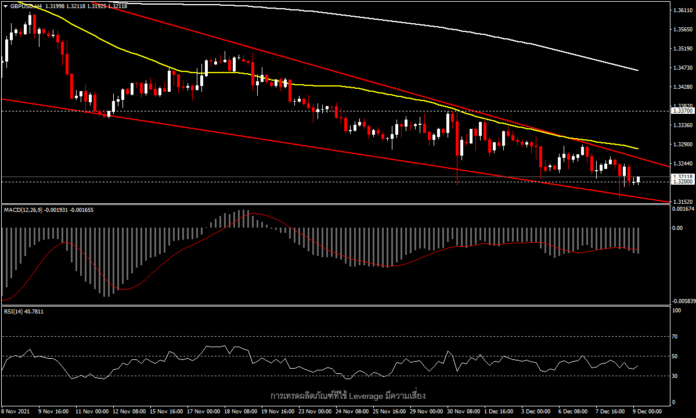
However, from a technical point of view, we are beginning to see a trend reversal of a falling wedge pattern on the key support 1.3200 (Fibo 161.8 zone), where if the price breaks above the upper band line and rises above the MA50, this could be a confirmation of the falling wedge pattern and the price may turn into a short-term uptrend. The next target is 1.3370. While the short-term outlook is bearish, the MACD is still moving below the 0 line as well as the RSI moving below the 50 level at the 40 level if the price breaks down 1.3200. Again, there will be the next support at the same low at 1.3160.