|

GBP/USD maintains post-BoE gains despite US CPI uptick

It has been quite a volatile day in the markets, with the pound taking centre stage on the back of a hawkish Bank of England policy statement. While only two MPC members voted for a rate rise, the Bank noted that the market is under-pricing the risk of a rate rise and that the majority of MPC members see scope for some reduction in stimulus in the coming months. That is provided that the economy “continues to follow a path consistent with the prospect of continued erosion of slack and a gradual rise in underlying inflationary pressure.”

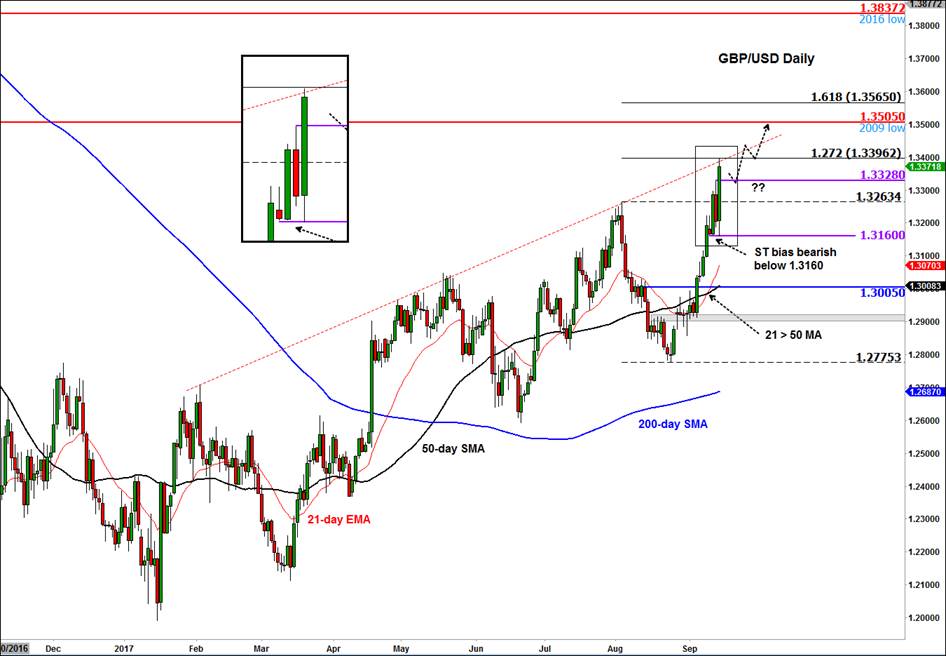
Interestingly, the US dollar failed to rally much despite news US CPI rose by 0.4% month-over-month, which lifted the year-over-year rate to 1.9%. In fact, the GBP/USD pair hit a new session high of nearly 1.34 after the release of US inflation figures, which goes to show strength of the pound’s rally. As before, we continue to expect the GBP/USD will reach 1.35 in the coming days.

But understandably, the cable does look a little overbought in the short-term so a small pullback wouldn’t come as surprise to us now. In fact, the GBP/USD has hit one of our bullish targets at just shy of 1.34. As can be seen, it has reached the 127.2% Fibonacci extension level of the last corrective swing. The 161.8% extension level comes in at 1.3565, which sits 60 pips above the next key target at 1.3500/05 area. This psychologically important level was also the low from the year 2009. Once support, it could offer some resistance.

Meanwhile on the downside, we expect the broken resistance levels to turn into support, starting with 1.3325/30 level. But any move below 1.3160 – support and today’s low – would mark the end of the current uptrend.

Figure 1:
GBPUSD

Author

Fawad Razaqzada

Fawad Razaqzada

TradingCandles.com

Experience Fawad is an experienced analyst and economist having been involved in the financial markets since 2010 working for leading global FX, CFD and Spread Betting brokerages, most recently at FOREX.com and City Index.


More from Fawad Razaqzada
Share:

Editor's Picks

GBP/USD off highs, back to 1.3620

GBP/USD remains slightly on the defensive at the end of the week, receding to the low 1.3600s after hitting fresh tops past 1.3670 earlier in the day. Cable’s correction comes after two daily gains in a row and amid a tepid advance in the Greenback, while poor UK data also accompany the downside.

EUR/USD treads water below 1.1700

EUR/USD now trades with modest losses around 1.1670 following another unsuccessful atempt to advance past 1.1700 the figure in a convincing fashion. The pair’s decline follows a maginal rebound in the US Dollar as market participants continue to assess recent US data as well as developments from the US bond market.

Gold trims gains, recedes to the sub-$4,600 area

Gold rapidly leaves behind Thursday’s inconclusive price action and advances markedly on Friday, briefly surpassing the $4,600 mark per troy ounce to hit three-month peaks. Meanwhile, the precious metal’s solid performance comes despite marginal gains in the buck coupled with another day of rising US Treasury yields across the curve.

Crypto Today: Bitcoin, Ethereum, XRP bulls accelerate rally amid rising ETF inflows

The cryptocurrency market remains bullish on Friday, led by Bitcoin’s surge above $77,000. Altcoins, including Ethereum and Ripple, mirror BTC’s positive outlook, trading near $2,400 and $1.35, respectively.

Week ahead – Fed’s Jackson Hole and Nvidia earnings to dictate markets

Kevin Warsh to make his Jackson Hole debut amid confusing messaging. But a major hawkish surprise unlikely after bond market intervention. Nvidia earnings to also determine market direction as stock rally cools.

$20 billion offered, $2 billion taken: Why Treasury doubled its buyback cap

The US Treasury moved off its own calendar on Wednesday, and that is the part worth sitting with. At 12:32 GMT, the department said it would at least double the size of liquidity support buyback operations in the 10-year to 20-year and 20-year to 30-year sectors, lifting the maximum from $2 billion per operation to at least $4 billion, effective September 9 and running to November 4.