GBP/USD Forecast: Will Sunak send sterling higher? Brexit, Hong Kong, US coronavirus could cap climb
- GBP/USD has been rising amid hopes for UK fiscal stimulus and high-level Brexit talks.
- Chancellor Sunak's speech, US coronavirus figures, and geopolitical tensions around HongKong are eyed.
- Wednesday's four-hour chart is painting a bullish picture.

Sunak is starting with the young – a job placement plan for around 350,000 18-24 year-olds is at the center of Chancellor Rishi Sunak's highly-promoted fiscal stimulus plan. The resident of No. 11 is set to lay out measures to kickstart the economy, and some of the ideas have already been released to the press.
Is this £2 billion scheme sufficient to convince markets about the prospects of the UK economy? Previous ideas regarding green investment have been unfavorably compared with parallel schemes in major European countries. Sunak will speak at around 11:30 GMT and investors will pass judgment. For the pound – more spending is better.
The government is backed by the central bank, which continues buying bonds. Andy Haldane, Chief Economist at the Bank of England, said that the recovery is faster than he – or most – have expected, but uncertainties remain high. It depends on the virus and potential new peaks. Apart from Leicester, the UK continues its gradual return to normal.
Many are longing for the days that Brexit rather than COVID-19 topped the agenda. Chief EU Negotiator Michel Barnier visited London and met his British counterpart David Frost for dinner – which included fish. The fate of fisheries is one of the points of contention in talks.
While their silence following the encounter may signal progress, headlines coming out from their bosses are less encouraging. Prime Minister Boris Johnson told German Chancellor Angela Merkel that the UK is ready to end the transition period without a trade deal. Talks may become more serious only after the summer.
Crossing the pond, US coronavirus figures have resumed their rise after a temporary drop due to the "weekend effect." Cases are rising in most US states, with the focus on Florida, Texas, California, and Arizona. Hospitals in Houston are strained and the mortality rate – which was consistently falling – is on the rise again. New figures will be closely watched.
President Donald Trump continues dismissing the disease and focuses his ire on external factors. The US officially announced it is leaving the World Health Organization.
Officials at the White House are considering attempting to break the Hong Kong Dollar peg to punish China for tightening its grip over the territory, yet investors seem to shrug off such prospects. The HKD remains in demand. Sino-British relations have also worsened after the UK announced it is opening its doors to most residents of its former colony.
See Hong Kong Dollar Peg: How vulnerable is it and if it breaks, how will it happen? Explained
Overall, several factors are set to stir sterling.
GBP/USD Technical Analysis
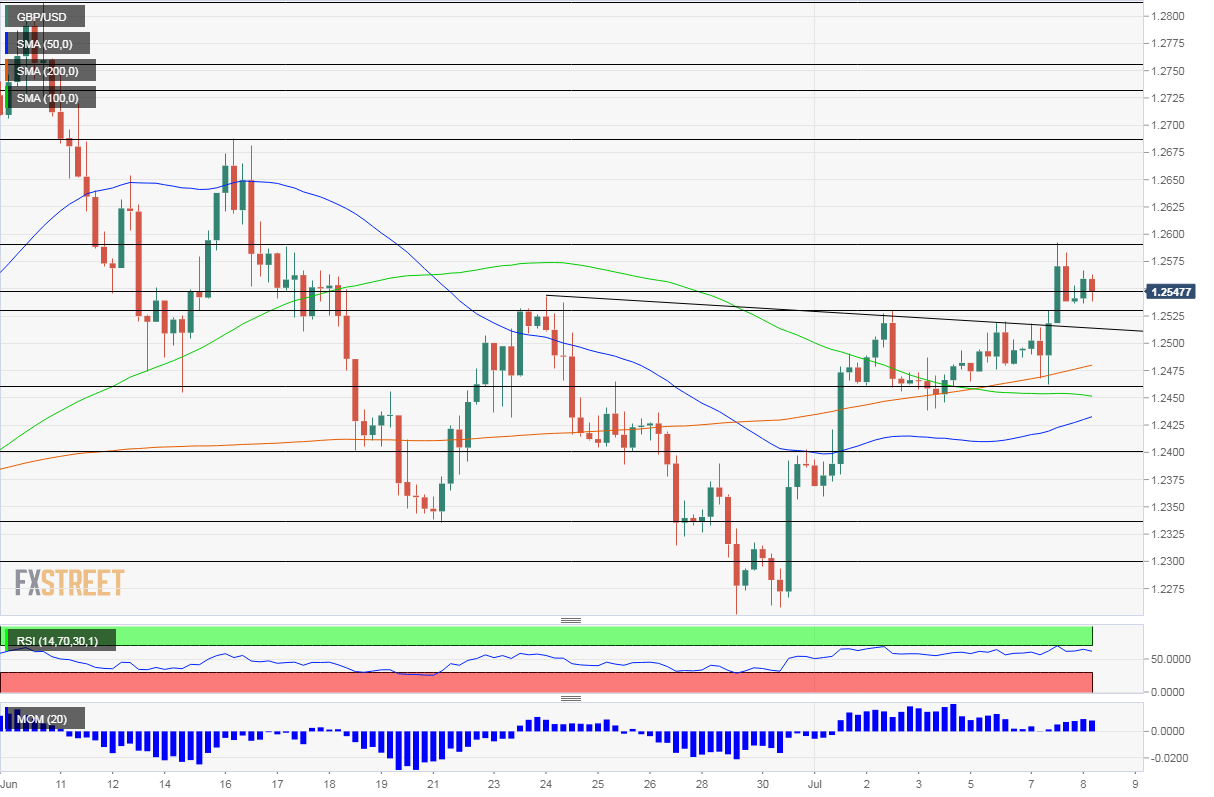
Pound/dollar has broken above a downtrend resistance line that capped it since late June and is trading above the 50, 100, and 200 Simple Moving Averages on the four-hour chart. It is also benefiting from upside momentum. The Relative Strength Index is nearing 70 – indicating overbought conditions. Another move higher and the RSI may play against the currency pair.
Resistance awaits at the recent peak of 1.2590. It is followed by 1.2680, which was a high point in mid-June. The next line to watch is 1.2730.
Looking down, support is at 1.2525, a temporary peak from early in the month. It if followed by 1.2460, the weekly low, and then by 1.24, a round level that also held GBP/USD down last week.
Author

Yohay Elam
FXStreet
Yohay is in Forex since 2008 when he founded Forex Crunch, a blog crafted in his free time that turned into a fully-fledged currency website later sold to Finixio.
















