WTI climbs above $90.00 per barrel as US oil inventories fall
- WTI is trading above $90.00 and has gained more than 2% weekly.
- The US government reported that oil-related products contracted, a tailwind for oil prices.
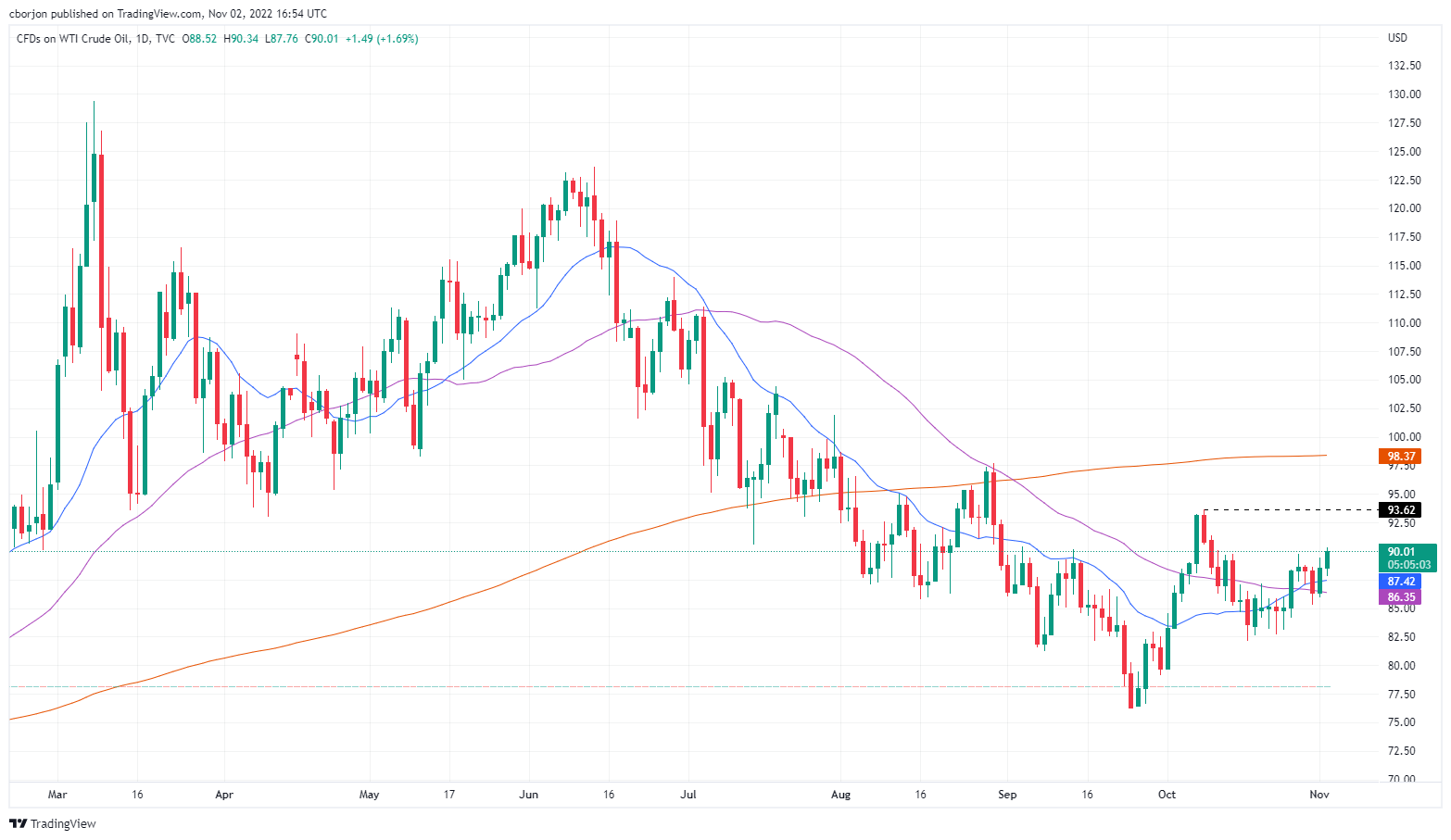
- WTI remains neutral, but a break above $93,62, could send oil rallying to the 200-day EMA.


Western Texas Intermediate (WTI), the US crude oil benchmark, rises close to 2% as the US Dollar weakens ahead of the Fed’s decision, while stockpiles in the US declined as refineries increased activity as the winter season looms. At the time of writing, WTI is trading at $90.13 per barrel after hitting a daily low of $87.76.
According to the US Energy Information Administration (EIA), most oil-related products, like gasoline and distillates, shrank, increasing analysts’ worries that an end of releases from the US reserves would tighten the markets.
Sources cited by Reuters said that “Every week that goes by, the US is drawing hydrocarbon inventories, and that leads to the question of where does the industry turn when there are no more supplies from strategic petroleum reserve releases.“
Meanwhile, production by the Organization of the Petroleum Exporting Countries (OPEC) fell in October, while the European countries’ oil embargo on Russia, set to kick in on December 5, would likely keep oil prices edging north.
However, China’s Covid-19 zero tolerance restrictions and broad US Dollar strength keep oil prices somewhat controlled, though once the Federal Reserve pauses, if it does, the WTI uptrend could resume.
WTI Price Analysis: Technical outlook
WTI is neutral-to-upward biased, though the 100 and 200-day Exponential Moving Averages (EMAs) would be challenging resistance levels to surpass, each at around $92.50 and $98.37. The Relative Strength Index (RSI), at bullish territory with an upward slope, would open the door for a test to October’s high at $93.62, which, if it gives way, could open the door for a test of the 200-day EMA. On the flip side, if WTI slides below $87.42, a fall toward the 50-day EMA at $86.36 is on the cards.
Author
Christian Borjon Valencia
FXStreet
Markets analyst, news editor, and trading instructor with over 14 years of experience across FX, commodities, US equity indices, and global macro markets.