WTI back over $83 as Crude Oil sees additional volatility
- Crude Oil gets pulled in both directions on Tuesday.
- A misfire in US PMIs spark fresh rate cut hopes.
- Risk assets get pumped higher as markets celebrate softening US economy.

West Texas Intermediate (WTI) US Crude Oil started Tuesday on the low side, falling below $81.00 per barrel before a broad-market recovery in risk appetite dragged barrel bids into a fresh high above $83.00. US Purchasing Managers Index (PMI) figures printed much softer than expected, sparking renewed hopes of a weakening US economy forcing the US Federal Reserve (Fed) to begin cutting rates sooner than previously expected.
Crude Oil markets remain exposed to downside moves as recent geopolitical tensions ease after Iran announced it would not seek further retaliation against Israel. WTI’s recent climb sparked by ongoing fears of a Middle East conflict spilling over into an all-out war faltered near $87.00 per barrel as cooler heads prevail.
US data is set to continue driving financial markets through the rest of the trading week. US Gross Domestic Product (GDP) figures are slated for Thursday, where investors are expecting, or hoping, for US GDP for the annualized first quarter to ease to 2.5% from the previous 3.4%. On Friday, US Personal Consumption Expenditure (PCE) Price Index inflation data will be released, which is forecast to hold steady at 0.3% MoM.
WTI technical outlook
WTI crossed $83.00 per barrel after recovering from Tuesday’s bottom bids just below $81.00. The day’s late-stage rally brought US Crude Oil prices just above the 200-hour Exponential Moving Average (EMA).
Despite Tuesday’s late rally, US Crude Oil remains knocked off of recent gains, with WTI down around 4.5% from April’s swing highs near $87.00 per barrel. On the low side, long-term technical support sits at the 200-day EMA, holding near $79.23.
WTI hourly chart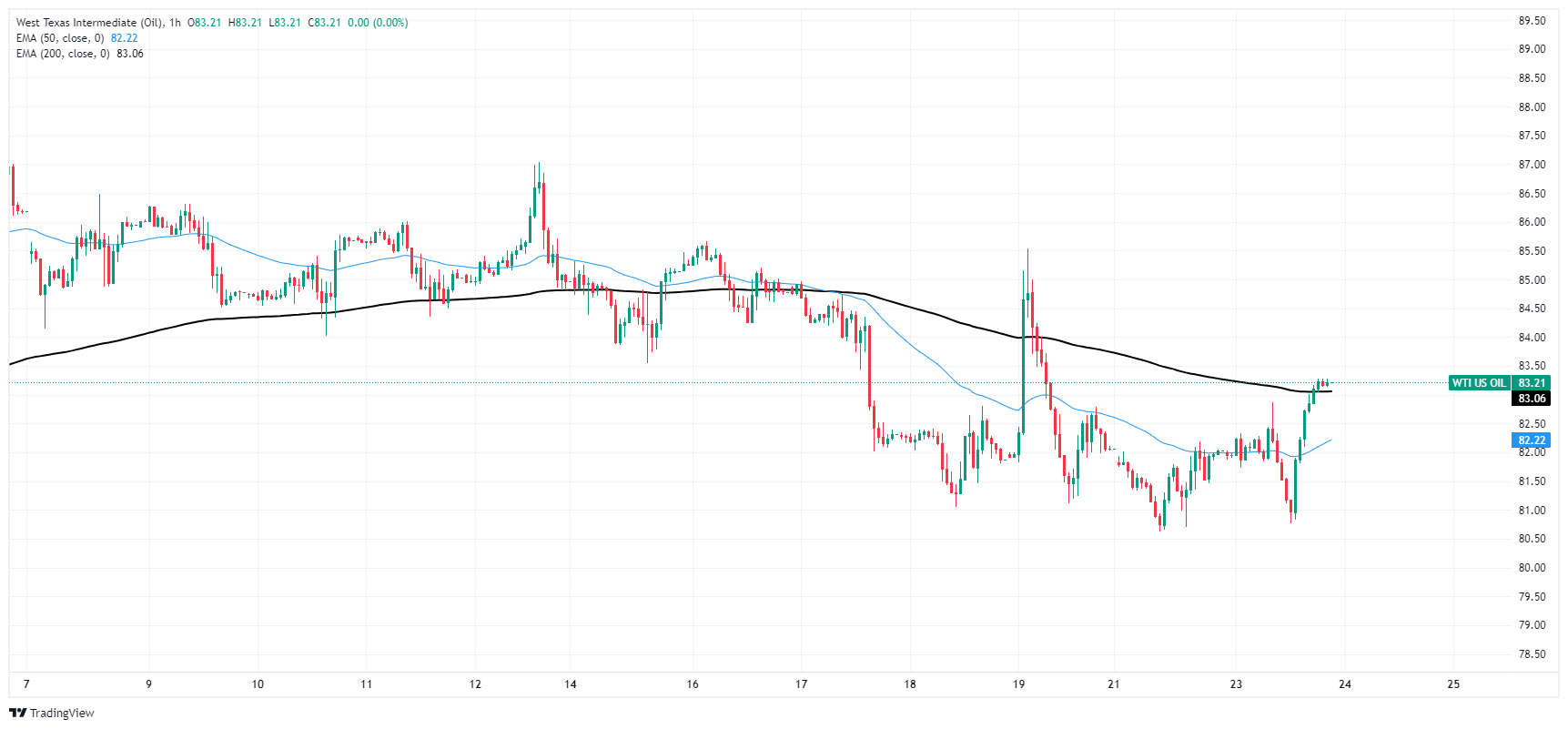
WTI daily chart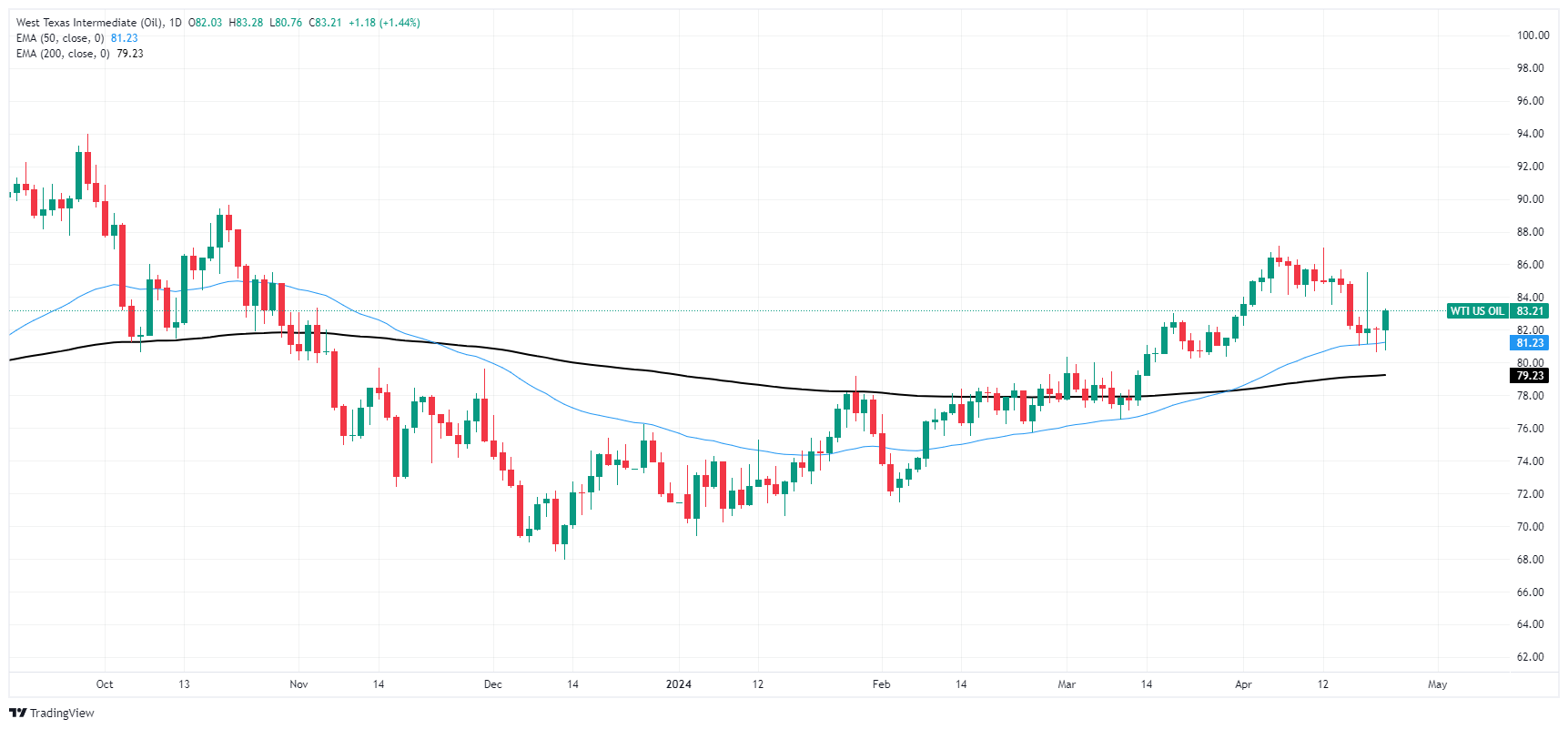
Author

Joshua Gibson
FXStreet
Joshua joins the FXStreet team as an Economics and Finance double major from Vancouver Island University with twelve years' experience as an independent trader focusing on technical analysis.

















