When are the UK retail sales and how could they affect GBP/USD?

UK Retail Sales Overview
The UK retail sales figures for September are scheduled to be published later this Thursday at 08:30 GMT. Following a 0.2% fall recorded in the previous month, the headline reading is expected to remain flat during the reported month. Conversely, sales are seen growing 3.2% over the year as compared to 2.7% previous. Meanwhile, core retail sales, stripping the basket off motor fuel sales, are anticipated to fall by 0.1% in September but rise 2.8% on a yearly basis, up from 2.2% recorded in August.
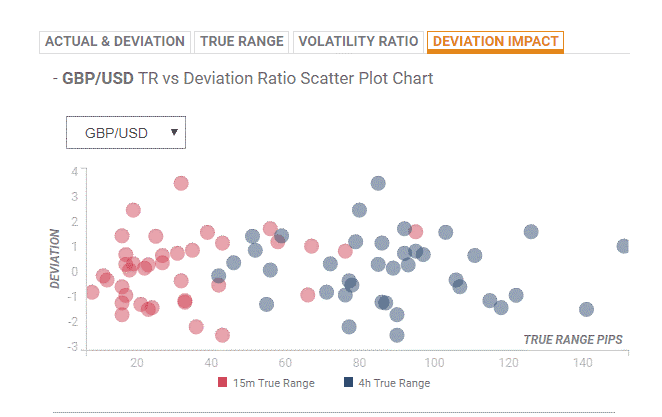
Deviation impact on GBP/USD
Readers can find FX Street's proprietary deviation impact map of the event below. As observed the reaction is likely to remain confined between 10 and 70 pips in deviations up to 3.5 to -1.5, although in some cases, if notable enough, can fuel movements of up to 100 pips.
How could it affect GBP/USD?
FXStreet’s Analyst Anil Panchal notes: “With the pullback from multi-month high easing worries of the Cable sellers, GBP/USD highlights a bearish chart pattern, rising-wedge. The bearish formation on the hourly (H1) chart gets confirmed if prices slip below 1.2755/50 support-zone, comprising formation’s lower line and 50-hour Exponential Moving Average (EMA).”
“In doing so, the fresh downturn towards 61.8% Fibonacci retracement near 1.2450 could be initiated theoretically. However, intermediate halts to 1.2615 and weekly low surrounding 1.2515 can’t be denied. Should bears refrain from respecting 1.2450, 1.2330 and 1.2200 will be on their radars.”
“Alternatively, pair’s run-up beyond 1.2850 should recall 1.2915 and 1.3000 mark back to the chart,” he added further.
Key Notes
UK: Retail Sales and Brexit negotiations in focus – TDS
GBP/USD path of least resistance is down at the dawn of the EU Summit — Confluence Detector
GBP Futures: rally has further legs to go
About the UK Retail Sales
The retail sales released by the Office for National Statistics (ONS) measures the total receipts of retail stores. Monthly per cent changes reflect the rate of changes in such sales. Changes in Retail Sales are widely followed as an indicator of consumer spending. Generally speaking, a high reading is seen as positive, or bullish for the GBP, while a low reading is seen as negative or bearish.
Author
Haresh Menghani
FXStreet
Haresh Menghani is a detail-oriented professional with 10+ years of extensive experience in analysing the global financial markets.