USDCAD climbs towards the head-and-shoulders neckline, though hovers around 1.3470
- USDCAD rose by 0.35% as buyers are eyeing to reclaim the 50-day EMA at 1.3515.
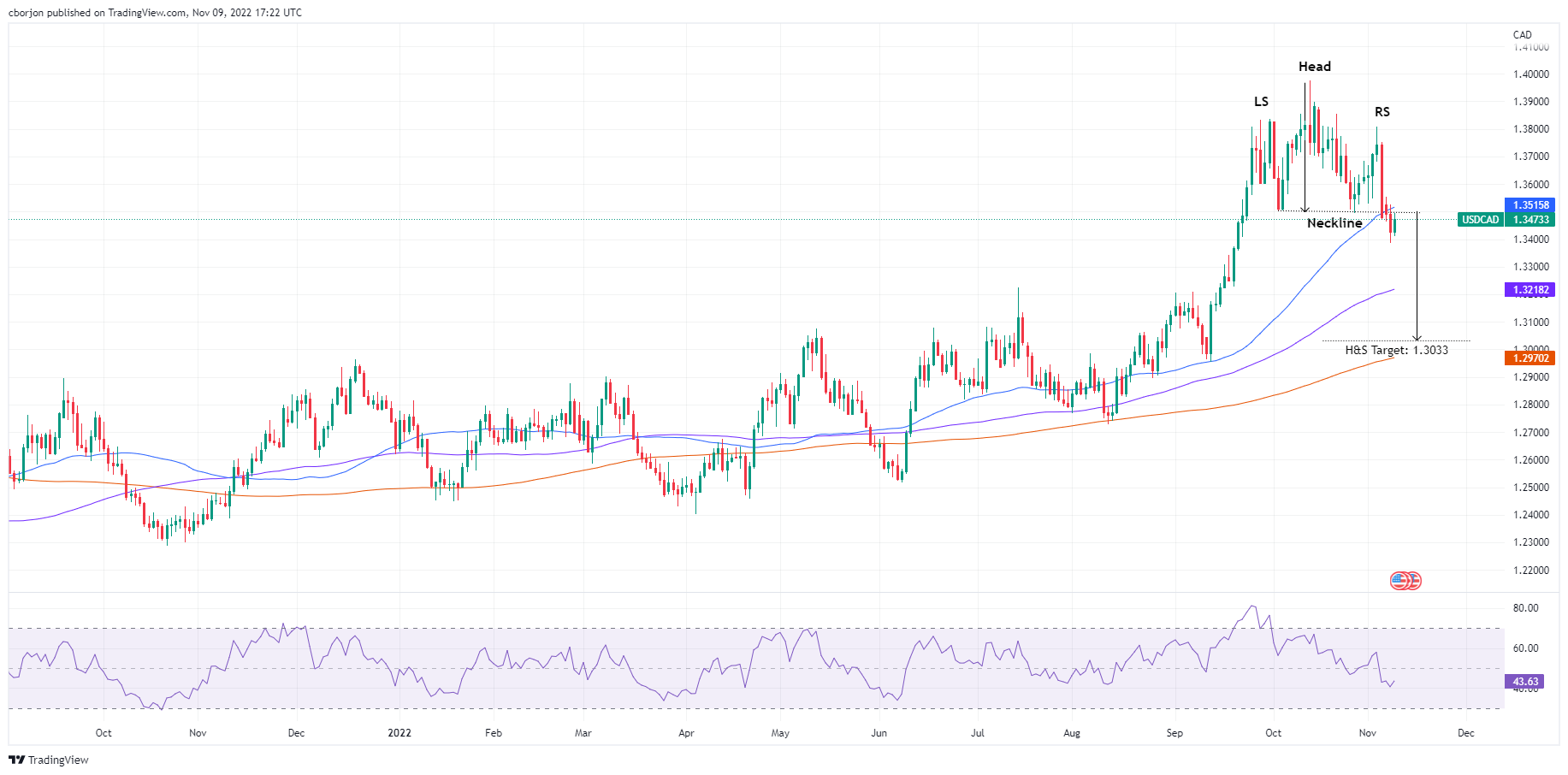
- Risk aversion kept CAD buyers from extending the USDCAD losses towards the head-and-shoulders chart pattern 1.3030 targets.
- Canadian and US jobs data suggests that the BoC and the Fed need some work to do.

The American Dollar is recovering some ground against the Loonie in the North American session after a head-and-shoulders chart pattern emerged in the daily chart, which targets a fall of USDCAD towards 1.3030. Factors like the US midterm elections showing that the Republicans and Democrats would split congress caused a risk-off impulse. US Treasury yields rose, and the greenback remains bid across the board. At the time of writing, the USDCAD is trading at 1.3470 after hitting a daily low of 1.3410.
USDCAD trims some of its three-day free fall from around 1.3700
Sentiment remains negative, as shown by US equities trading with losses. Data-wise, the US economic docket reported that wholesale stockpiles increased less than estimated in September. The US Commerce Department revealed that Wholesale Inventories rose by 0.6% MoM, below estimates and September’s reading of 0.8%. Additionally, uncertainty around the US midterm elections refrained traders from opening fresh bets on risk-perceived assets as flows toward safe-haven assets increased.
In the meantime, Fed officials crossed news wires led by the Richmond Fed President Thomas Barkin. Barkin said that the Fed’s willingness to fight inflation would lead to an economic downturn, though he added that the United States is not currently in a recession. He added that the country is at the back end of inflation and that it will begin to decline.
The lack of Canadian economic data leaves USDCAD traders leaning on the last week’s employment figures. Canada’s October Employment Change report smashed expectations of just 10K new jobs, adding more than 100K, suggesting that the Bank of Canada (BoC) still has work to do. On the US front, Nonfarm Payrolls exceeded estimates of 200K, printing 261K, but what caught investors’ eye was that the Unemployment Rate jumped from 3.5% in September to 3.7% in October. That said, speculations that the Fed could decelerate its pace of rate hikes.
Ahead in the week, the US docket will feature the Consumer Price Index (CPI) for October alongside Fed speakers. On the Canadian front, the Bank of Canada (BoC) Governor Tiff Macklem will cross newswires.
USDCAD Price Analysis: Technical outlook
The USDCAD daily chart suggests the head-and-shoulders chart pattern remains intact, even though the major hit a aily high of 1.3494 at the neckline. However, CAD buyers stepped in and dragged the USDCAD toward current exchange rates. For USD buyers to invalidate the pattern, they need to reclaim 1.3500 and clear the “right shoulder” at around 1.3808; otherwise, the resumption of the downtrend would likely send the USDCAD towards the head-and-shoulders target at 1.3030.
Author

Christian Borjon Valencia
FXStreet
Markets analyst, news editor, and trading instructor with over 14 years of experience across FX, commodities, US equity indices, and global macro markets.