|

USD/JPY sub-107 amid US Dollar weakness

  • The USD/JPY technical outlook is deteriorating for bulls.
  • US stocks are up and keep the safe-haven yen under pressure. 
USD/JPY sub-107 amid US Dollar weakness

The USD/JPY is trading at around 106.93 virtually unchanged on Monday as the main theme in the market are tensions revolving around the ongoing trade war between the US and China. In retaliation to a fresh US $100 billion worth of tariffs, China announced that they are considering devaluing their currency (yuan) in order to gain a commercial advantage.

The Japanese yen is under modest pressure as stocks on Wall Street are unaffected by the yuan´s devaluation threat and are in positive territories. The Japanese yen is bought as a safe-haven in market pullbacks and crashes.   

The US Dollar is trading lower against the euro, the British pound, the Candian dollar, the NZD and the AUD. The USD/JPY pair has been containing the US Dollar weakness quite well although the technical picture is slightly deteriorating for bulls. 

USD/JPY weekly chart
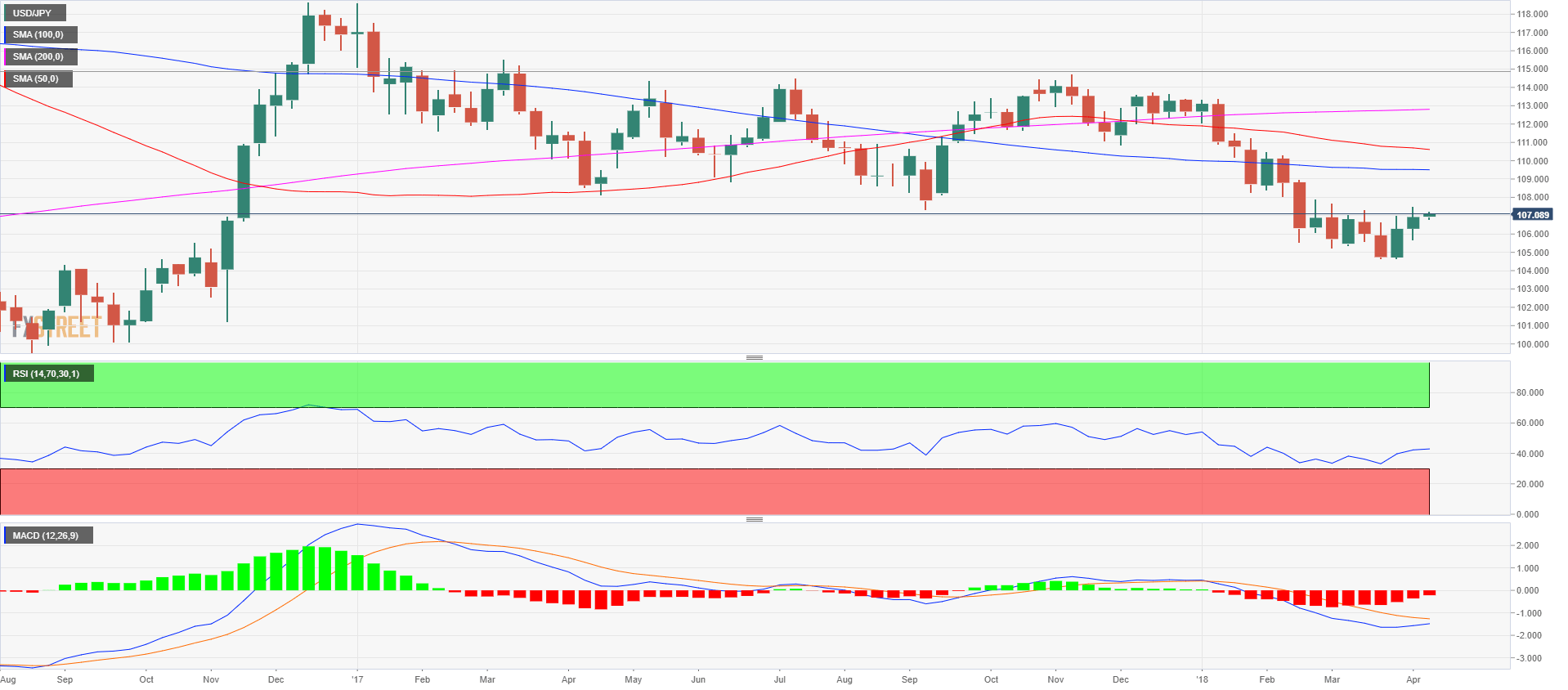
The bulls are trying to break above 107.51 (last week’s high) in order to reach the 108 psychological level. The daily RSI is at 42.95 and the MACD bear momentum is slowing down. The USD/JPY is trying to reverse its downtrend after the bulls took the lead on March 30, establishing a swing low. 

USD/JPY daily chart
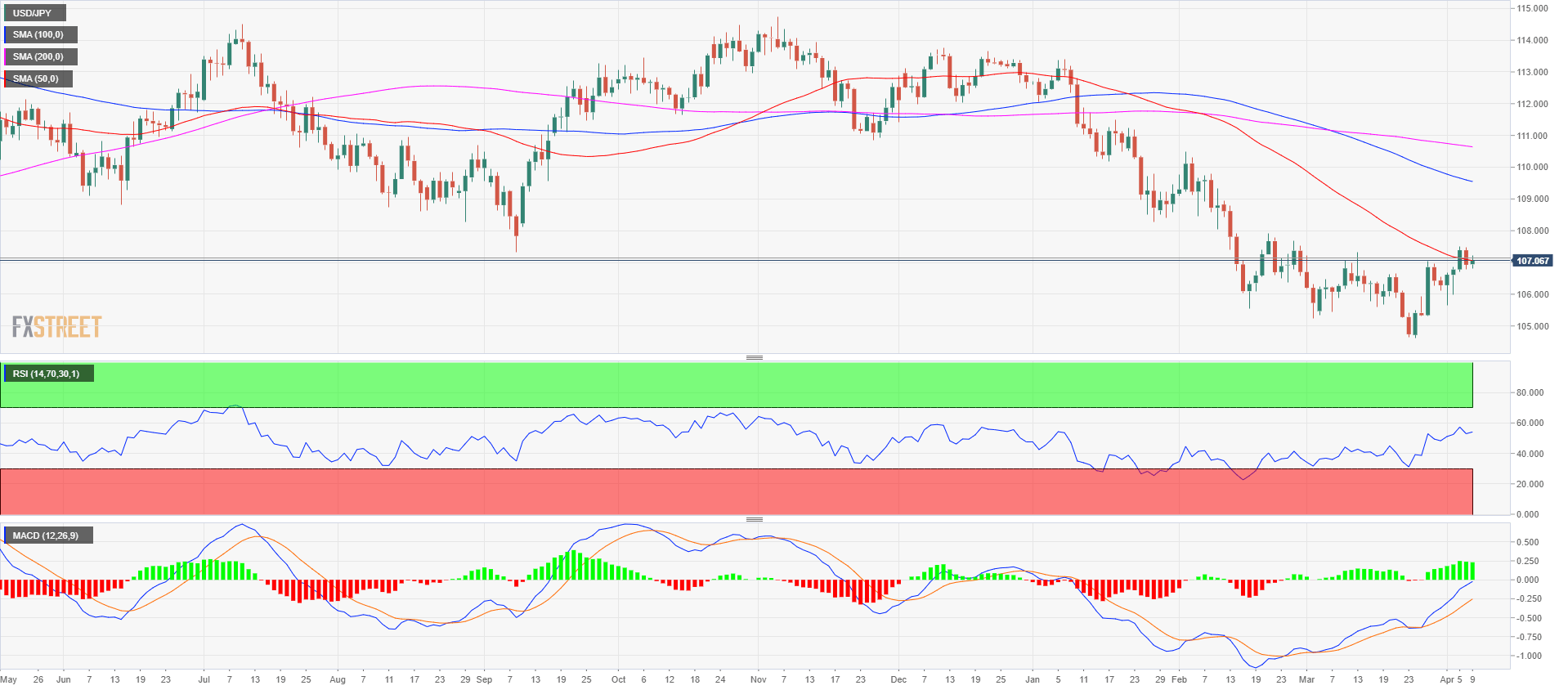
The market is currently consolidating in the 106.70-107.51 range, inside the range of the last two days. The 50-period simple moving average is capping the price as on Friday the market couldn’t close above it. The MACD bull momentum is slightly slowing down. 

USD/JPY 4-hour chart
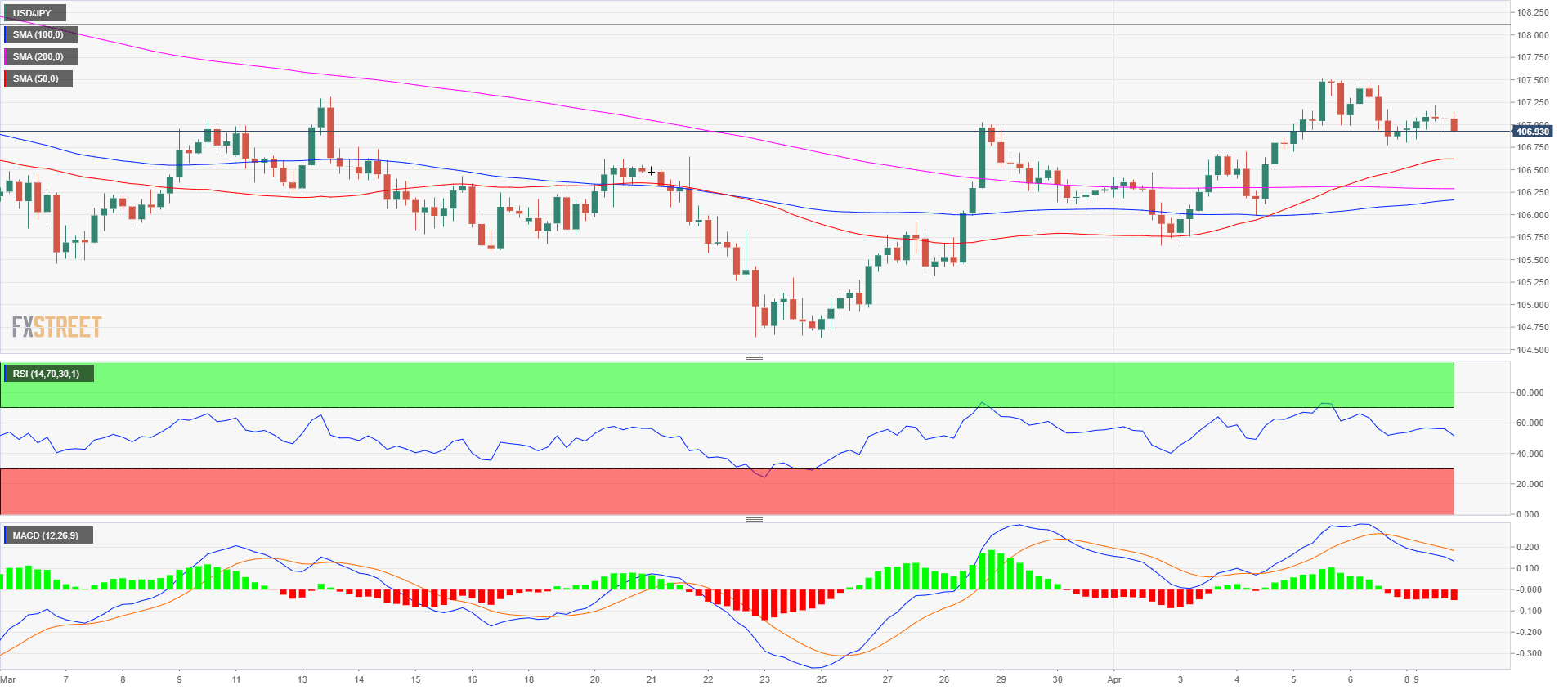
Supports are seen at 105.99 and 105.66 swing lows. Immediate resistance is at 107.22, followed by 107.50 (last week’s high). The RSI and MACD indicators are showing signs of weakness. 

Author

Flavio Tosti

Flavio Tosti

Independent Analyst

 

More from Flavio Tosti
Share:

Editor's Picks

AUD/USD extends losses below 0.6600, fresh YTD low amid US tariff threats

AUD/USD turns south in the European session on Wednesday, following the Australian consumer inflation-led uptick to the 0.6665 area, or a fresh weekly top. The latest downfall drives the pair further below the 0.6600 mark, or the lowest since December 2025, courtesy of US tariff risks-led broad US Dollar strength. Expectations of the Fed-RBA monetary policy divergence also adds to the weight on the Aussie.

USD/JPY flatlines above 159.00 amid intervention risks ahead of US PCE

USD/JPY is holding steady above 159.00 in the Asian session on Wednesday, stalling its two-day recovery from a two-week low as intervention risks offer support to the Japanese Yen. Meanwhile, the US Dollar attempts a bounce after the previous day’s sharp retracement from a 20-month peak ahead of US PCE Price Index data, guarding the downside for the currency pair.

Gold sinks below $3,500 as hawkish Fed bets and equity rout fuel selling

Gold extends losses on Wednesday, slipping below $3,500 after the latest US Personal Consumption Expenditures (PCE) data showed inflation remains stubborn, reinforcing expectations that the Federal Reserve (Fed) will stick to its hawkish stance. At the time of writing, XAU/USD trades around $3,469, down 2.34 % on the day and at its lowest level since September 2025.

Crypto Today: Bitcoin, Ethereum and XRP face fading recovery prospects

Bitcoin edges lower below $59,000 on Wednesday, as sellers continue to outweigh buyers in the broader cryptocurrency market. Ethereum trades at $1,643 amid subdued demand and, by extension, risk appetite. Similarly, Ripple shows signs of weakness.

The US tariff wall keeps changing, but it isn’t coming down

The US is preparing another round of tariffs, this time targeting structural overcapacity across 16 trading partners. It is another reminder that while the legal justification for tariffs keeps changing, US protectionism is becoming increasingly difficult to unwind.

Gold falls below $3,500 to its lowest since September 2025 after core PCE
Gold (XAU/USD) extends its sell-off on Wednesday, hitting its lowest level since September 2025. The precious metal breaks below the psychological $3,500 level after hotter-than-expected core inflation data from the United States (US), while turmoil across equity markets fuels further liquidations.
















