|

USD/JPY Price Analysis: Possibility of Key Reversal Day forming

  • USD/JPY could be forming a bearish Key Reversal Day. 
  • A bearish close on Wednesday will validate the one-day pattern. 
  • It often signifies major peaks and occurred at the highs of the stock market in 2007 prior to the crisis. 

USD/JPY is trading back in the lower 151.000s on Wednesday after rising up to a new high of 151.970 during the Asian session, its highest level for decades. 

The rapid reversal has been put down to intervention by the Japanese authorities who do not wish to see the Japanese Yen (JPY) depreciate any further. 

Such a strong reversal over the course of one day has a special term in technical analysis – it is called a “Key Reversal Day”. 

Key Reversal Days are a sign a major reversal in price is on the horizon. It is defined as a day in which price rises up to a new long-term high before rolling over and closing below the low of the previous day (rectangled). The sudden shift in sentiment is indicative of a sea-change in the fundamental outlook for the asset’s price.  
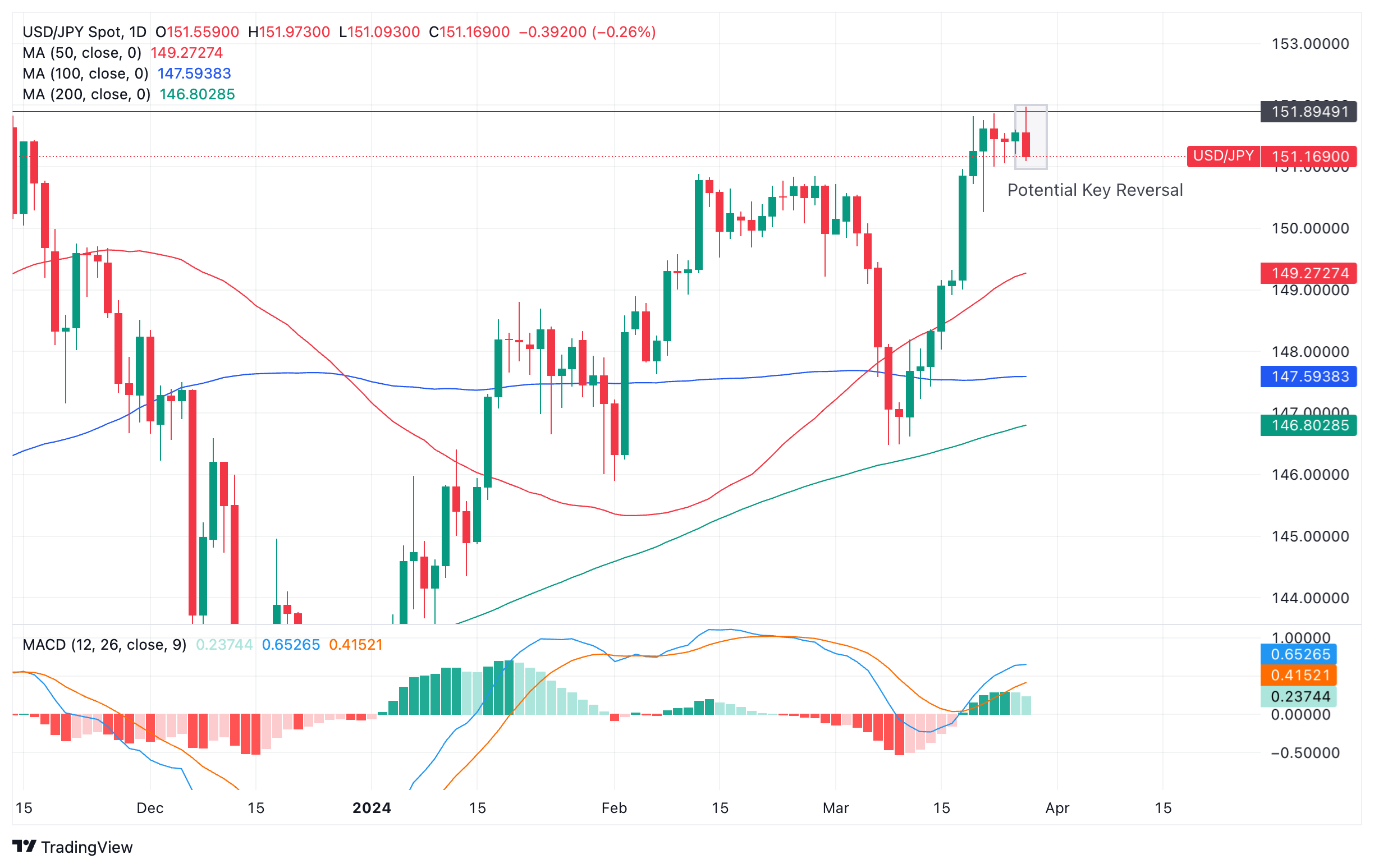
US Dollar versus Japanese Yen: Daily chart

If USD/JPY can maintain its current losses until the end of the day on Wednesday, it will have achieved a Key Reversal Day and may be in line for more losses to come. If it fails to close below Tuesday’s lows at 151.207 it will fail to meet the criteria for a key reversal. 

A Key Reversal happened on the S&P 500 index on October 11, 2007 at the peak of the stock market rally just prior to the Great Financial Crisis. 

It marked the peak price the S&P 500 achieved before the bear market that followed the banking crisis. 
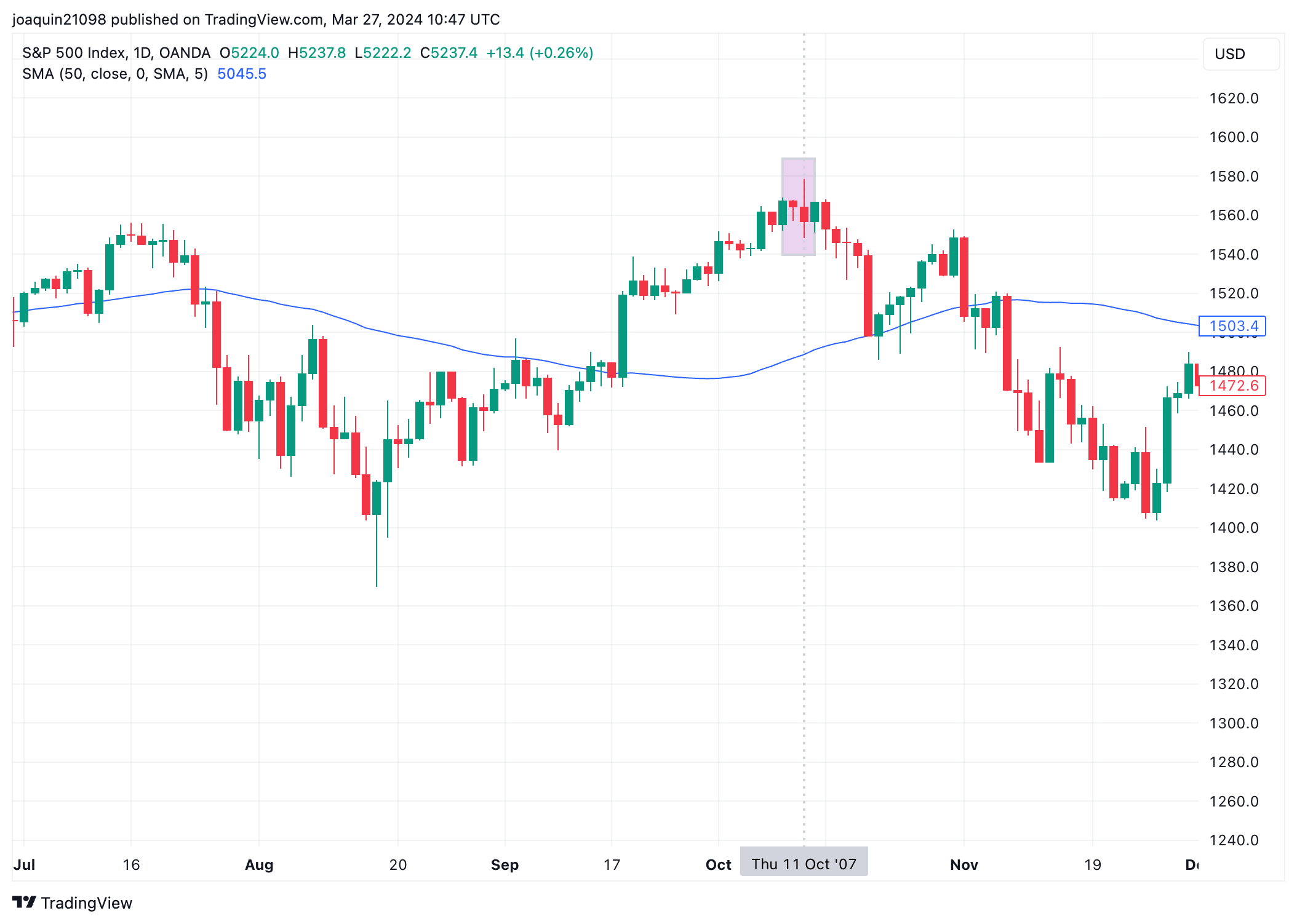
S&P500: Daily chart 

Although this subtle though important clue of future weakness largely went unnoticed by most investors, a few technical analysts brought it to attention at the time!

Author

Joaquin Monfort

Joaquin Monfort is a financial writer and analyst with over 10 years experience writing about financial markets and alt data. He holds a degree in Anthropology from London University and a Diploma in Technical analysis.


More from Joaquin Monfort
Share:

Editor's Picks

AUD/USD flirts with 0.7000, lowest since early August amid bullish USD

AUD/USD hits a fresh low since early August during the Asian session on Friday and looks vulnerable near 0.7000 after breaking below the 200-day SMA overnight. Against the backdrop of the hawkish Fed, a two-day rally in oil prices revives inflation fears and continues to push US bond yields to multi-year highs. Adding to this, geopolitical risks lift the US Dollar to a two-month high, overshadowing RBA rate hike bets and weighing on the pair.

USD/JPY pulls back from three-week high after failing near 159.00

USD/JPY edges lower during the Asian session on Friday, stalling its recent strong move to a three-week high of 159.00 as Japanese Yen bears turn cautious amid intervention fears. Meanwhile, the US Dollar retains a strong bullish undertone as the Fed's hawkish outlook and oil-driven inflation fears continue to push US bond yields to multi-year peaks. Furthermore, the BoJ's dovish rate hike last week might cap JPY and support spot prices.

Gold extends the range play below $4,300 as Fed hike bets counter modest USD pullback

Gold struggles to gain any traction and remains confined in a narrow range near the weekly low through the early European session on Friday amid a bearish fundamental backdrop. The US Dollar pulls back slightly following a strong rally to a nearly two-month high and offers some support to the commodity. However, the US Federal Reserve's hawkish outlook, elevated US bond yields, and persistent geopolitical uncertainties favor USD bulls.

Ripple, Cardano, Solana: ETF inflows and whale demand signal further rally
Ripple (XRP), Cardano (ADA), and Solana (SOL) continue to experience a steady recovery with double-digit gains so far this month. Ripple and Solana experience firm institutional demand, while the percentage of ADA supply in profit rises, underpinned by interest from large-wallet investors, commonly referred to as whales.
The Dollar is winning, but markets may be losing
The dollar is strengthening, Treasury yields are approaching levels not seen in almost two decades, and oil prices are again adding to inflation concerns. For currency traders, these developments appear to offer a relatively straightforward conclusion: higher US interest rates should support the dollar. But the broader market picture is considerably more complicated.
BoJ Recap: Not as hawkish as expected

The Bank of Japan (BoJ) raised its short-term interest-rate target to 1.25% from 1.00% in a 7-2 vote, marking another step in the normalisation of monetary policy and widely matching what everyone has been expecting for weeks.