USD/INR attracts some buyers amid firmer US Dollar, US Retail Sales eyed
- Indian Rupee drifts lower on the higher US Dollar and bond yields.
- The Reserve Bank of India’s Das said food inflation will be at the top of the central bank’s agenda.
- Investors await US Retail Sales ahead of the RBI’s Das speech at the World Economic Forum Annual Meeting 2024 on Thursday.
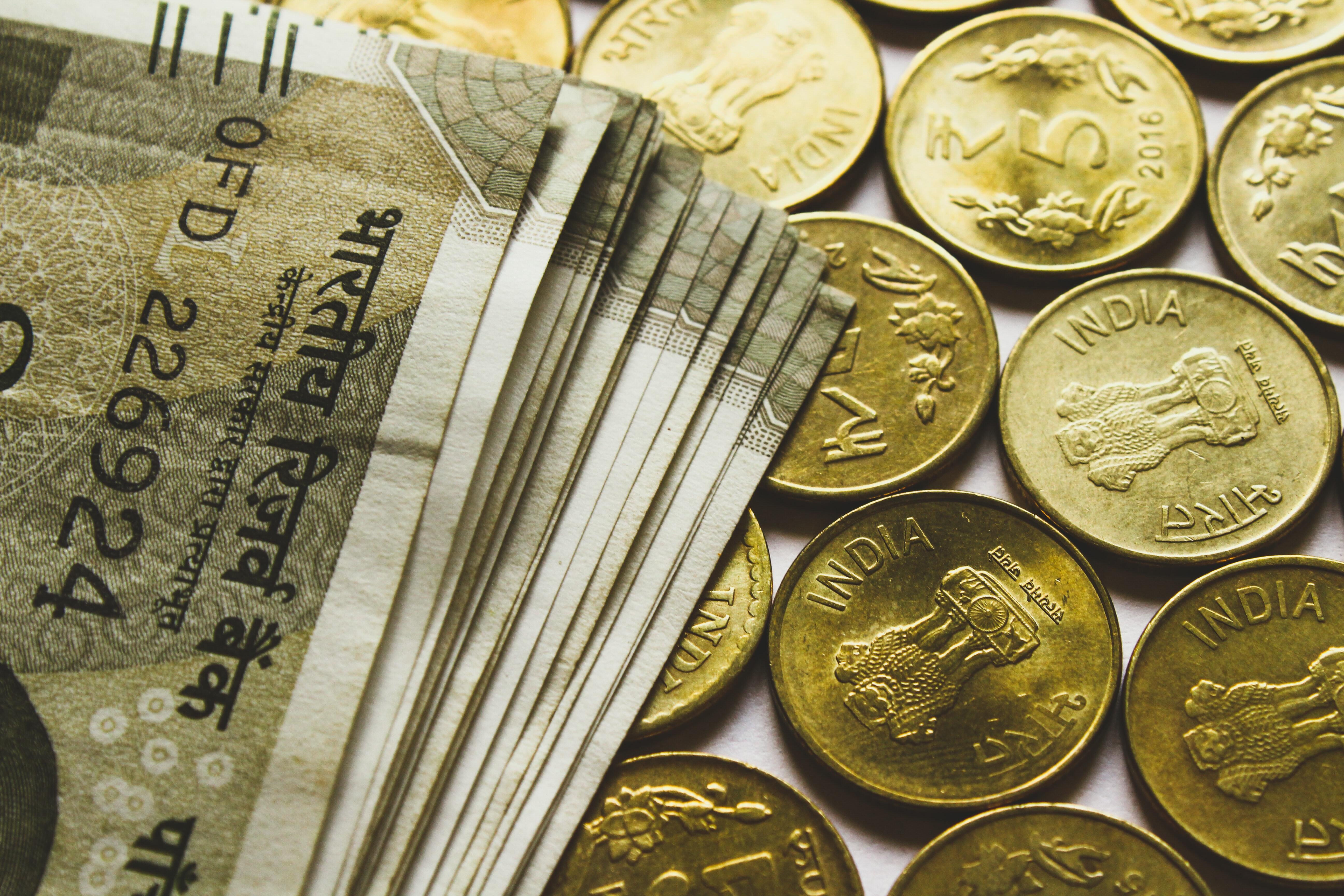
Indian Rupee (INR) trades on a softer note on Wednesday amid the extended rally of the US Dollar (USD). Nonetheless, traders place their bets that the INR will break out of its trading range and rally this year as India gains the confidence of foreign exchange investors who believe the Indian Rupee could trample the Greenback.
The Reserve Bank of India (RBI) Governor Shaktikanta Das said at the World Economic Forum (WEF) in Davos on Tuesday that food inflation can be volatile and will be on the top of the central bank’s agenda. WEF president Borge Brende stated that he sees India's growth story intact and running amid geopolitical tensions and a weak investment cycle.
Looking ahead, investors will keep an eye on US Retail Sales on Wednesday, which is estimated to show an increase of 0.4% MoM. On Thursday, the RBI governor Shaktikanta Das will share insights on key challenges and opportunities and his view on monetary policy at the World Economic Forum Annual Meeting 2024 at Davos.
Daily Digest Market Movers: Indian Rupee remains resilient amid geopolitical tensions
- The Reserve Bank of India (RBI) governor Shaktikanta Das said India's economic growth prospects remain robust and retail inflation is slowly moderating towards the 4% target.
- India’s December WPI inflation rose by 0.73% YoY from the previous reading of 0.26%, worse than the market expectation of 0.90%.
- India’s Wholesale Price Food Index arrived at 5.39% YoY in December.
- The Indian economy is predicted to grow by 8% this year, according to World Economic Forum (WEF) president Borge Brende.
- WEF’s Brende expects India will reach a $10 trillion economy, at least in the coming two decades.
- The US NY Empire State Index for January registered the lowest reading since 2020, coming in at -43.7 versus -14.5 prior, below the market consensus of -5.
- Fed Governor Christopher Waller said interest rate cuts are likely this year, but the central bank should not rush to cut its benchmark rate until it is clear lower inflation will be sustained.
Technical Analysis: Indian Rupee keeps the negative outlook intact in the short term
Indian Rupee trades weaker on the day. The USD/INR pair has maintained the 82.80-83.40 trading range since September 2023. The bearish mood prevails for USD/INR as the pair holds below the key 100-period Exponential Moving Average (EMA) on the daily chart. The short-term patterns lean somewhat negative, supported by the 14-day Relative Strength Index (RSI) which stands below the 50.0 midpoint.
The immediate resistance level for USD/INR will emerge at the upper boundary of the trading range at 83.40. A decisive break above 83.40 will see extended gains to a psychological round mark at 84.00. On the downside, the initial support level is seen at the 83.00 figure. The key contention level to watch is near the confluence of the lower limit of the trading range and a low of September 12 at 82.80. Any follow-through selling will see a drop to a low of August 11 at 82.60, followed by a low of August 24 at 82.40.
(This story was corrected on January 17 at 10:10 GMT to say that the USD/INR pair has maintained since September the 82.80-83.40 trading range, not 141.40-144.70.)
US Dollar price today
The table below shows the percentage change of US Dollar (USD) against listed major currencies today. US Dollar was the strongest against the .
| USD | EUR | GBP | CAD | AUD | JPY | NZD | CHF | |
| USD | 0.13% | 0.23% | 0.19% | 0.53% | 0.33% | 0.31% | 0.10% | |
| EUR | -0.14% | 0.08% | 0.05% | 0.39% | 0.21% | 0.18% | -0.04% | |
| GBP | -0.23% | -0.09% | -0.04% | 0.30% | 0.10% | 0.08% | -0.14% | |
| CAD | -0.19% | -0.05% | 0.04% | 0.34% | 0.14% | 0.12% | -0.11% | |
| AUD | -0.53% | -0.40% | -0.30% | -0.34% | -0.19% | -0.22% | -0.43% | |
| JPY | -0.35% | -0.20% | -0.11% | -0.15% | 0.18% | -0.03% | -0.24% | |
| NZD | -0.30% | -0.17% | -0.07% | -0.12% | 0.23% | 0.03% | -0.21% | |
| CHF | -0.10% | 0.04% | 0.13% | 0.09% | 0.44% | 0.24% | 0.21% |
The heat map shows percentage changes of major currencies against each other. The base currency is picked from the left column, while the quote currency is picked from the top row. For example, if you pick the Euro from the left column and move along the horizontal line to the Japanese Yen, the percentage change displayed in the box will represent EUR (base)/JPY (quote).
Risk sentiment FAQs
What do the terms"risk-on" and "risk-off" mean when referring to sentiment in financial markets?
In the world of financial jargon the two widely used terms “risk-on” and “risk off'' refer to the level of risk that investors are willing to stomach during the period referenced. In a “risk-on” market, investors are optimistic about the future and more willing to buy risky assets. In a “risk-off” market investors start to ‘play it safe’ because they are worried about the future, and therefore buy less risky assets that are more certain of bringing a return, even if it is relatively modest.
What are the key assets to track to understand risk sentiment dynamics?
Typically, during periods of “risk-on”, stock markets will rise, most commodities – except Gold – will also gain in value, since they benefit from a positive growth outlook. The currencies of nations that are heavy commodity exporters strengthen because of increased demand, and Cryptocurrencies rise. In a “risk-off” market, Bonds go up – especially major government Bonds – Gold shines, and safe-haven currencies such as the Japanese Yen, Swiss Franc and US Dollar all benefit.
Which currencies strengthen when sentiment is "risk-on"?
The Australian Dollar (AUD), the Canadian Dollar (CAD), the New Zealand Dollar (NZD) and minor FX like the Ruble (RUB) and the South African Rand (ZAR), all tend to rise in markets that are “risk-on”. This is because the economies of these currencies are heavily reliant on commodity exports for growth, and commodities tend to rise in price during risk-on periods. This is because investors foresee greater demand for raw materials in the future due to heightened economic activity.
Which currencies strengthen when sentiment is "risk-off"?
The major currencies that tend to rise during periods of “risk-off” are the US Dollar (USD), the Japanese Yen (JPY) and the Swiss Franc (CHF). The US Dollar, because it is the world’s reserve currency, and because in times of crisis investors buy US government debt, which is seen as safe because the largest economy in the world is unlikely to default. The Yen, from increased demand for Japanese government bonds, because a high proportion are held by domestic investors who are unlikely to dump them – even in a crisis. The Swiss Franc, because strict Swiss banking laws offer investors enhanced capital protection.
Author

Lallalit Srijandorn
FXStreet
Lallalit Srijandorn is a Parisian at heart. She has lived in France since 2019 and now becomes a digital entrepreneur based in Paris and Bangkok.