US Dollar turns bleak with Powell confirming rate cuts to come in 2024
- The US Dollar trips with Euro stronger while ECB overclassed Fed.
- US Federal Reserve Chairman Jerome Powell triggered a sell-off Wednesday, by confirming that rate cuts will come this year.
- The US Dollar Index snapped substantial support, increasing the selling pressure.
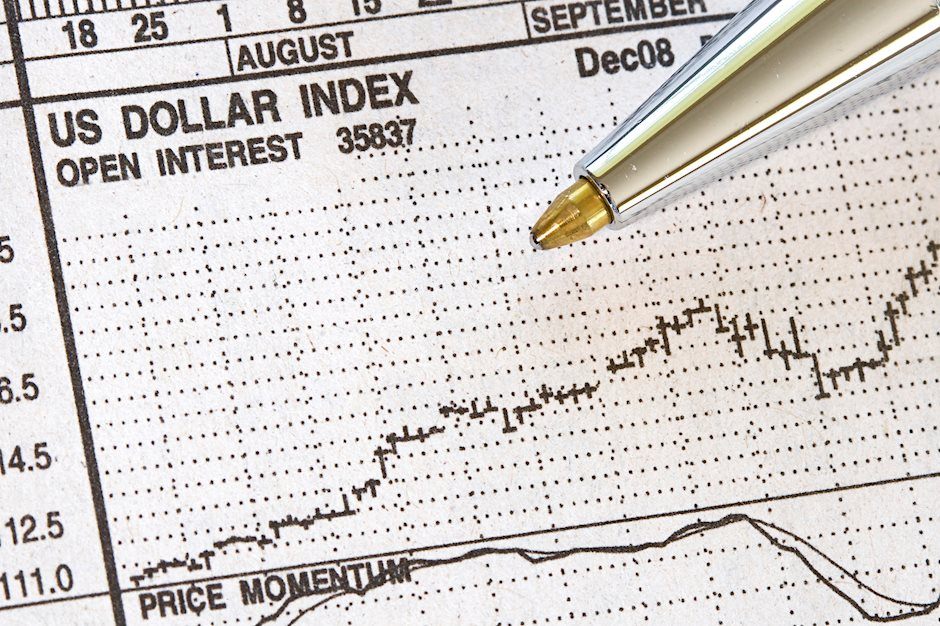

The US Dollar (USD) is back to session's low and could eke out further losses in the coming hours. Main catalyst this Thursday is the European Central Bank (ECB) meeting where Chairman Christine Lagarde did not speak on rate cuts at all. This makes the ECB rate decision rather hawkish against US Federal Reserve Chairman Jerome Powell's testimony on Wednesday where the Fed Chairman confirmed rate cuts are granted for this year. This sees yields in the US decline quicker than the European yields, and fuels a stronger Euro against the US Dollar, which is over 50% in the weighting of the DXY composition.
On the economic calendar front, most data came already came out and it is further confirming the picture that sentiment is turning in the US. Both the Challenger Jobcuts and the weekly jobless claims have ticked up. Even the US Goods Trade balance sees its deficit increasing, which is to be seen as a negative element.
- US Challenger Job Cuts report for February came in higher from 82,307 to 84,638.
- The European Central Bank kept its interest rates unchanged, though has cut its inflation forecast for 2025 to 2%.
- Weekly Jobless Claims have been released:
- Initial Claims jumped from 215,000 to 217,000.
- Continuing Claims jumped from 1.898 million to 1.906 million.
- US trade data for January got released as well:
- The Goods and Services Trade deficit widend to $67.4 billion from $64.2 billion.
- The Goods Trade deficit went from $90.2 billion to $91.6 billion.
- Unit Labor Costs data for Q4, went from 0.5% to 0.4%. Nonfarm Productivity remained steady at 3.2%.
- US Federal Reserve Chairman Jerome Powell heads back to Capitol Hill for a second day of testimony before Congress. In his second opening remark, Powell said that if the economy evolves as expected, cuts can already begin this year.
- Fed Cleveland President Loretta Mester will speak near 16:30 GMT.
- Equities have forgotten the negative mood from this Thursday morning and are firmly in the green after the ECB confirmed as well that its monetary policy will start to unwind. Although rate cuts for 2024 were not discussed, markets were already happy to hear that it will happen one day, even if that day is in 2025.
- According to the CME Group’s FedWatch Tool, expectations for a Fed pause in the March 20 meeting are at 95%, while chances of a rate cut stand at 5%.
- The benchmark 10-year US Treasury Note trades around 4.10%, the lowest level in over a week.
US Dollar Index Technical Analysis: ECB keeps lips sealed on cuts
The US Dollar Index (DXY) is trading at a crucial level, just above 103.00 and near the 55-day Simple Moving Average (SMA) at 103.28. Once that level gives way, it opens the door to a nosedive all the way to 100.00. With the rate differential gap starting to close, the risk is that the gap could flip in favor of other major currencies, which could mean longer-term weakness ahead for the Greenback.
On the upside, there is a long road to recovery for the Greenback, with the first reclaiming ground at the 200-day SMA near 103.73. Once broken through, the 100-day SMA is popping up at 103.85, so a bit of a double cap in that region. Depending on the catalyst that pushes the DXY back further upwards, 104.60 remains the key level on the topside.
It is a bit of an abyss for the DXY where it hangs at the moment, dangling around the 55-day SMA at 103.28. Should it move further away, 103.00 is the first thin line in the sand, though rather look for 101.75, which bears some pivotal relevance. Once through there, the road is open for another leg lower to 100.61, the low of 2023.
Central banks FAQs
Central Banks have a key mandate which is making sure that there is price stability in a country or region. Economies are constantly facing inflation or deflation when prices for certain goods and services are fluctuating. Constant rising prices for the same goods means inflation, constant lowered prices for the same goods means deflation. It is the task of the central bank to keep the demand in line by tweaking its policy rate. For the biggest central banks like the US Federal Reserve (Fed), the European Central Bank (ECB) or the Bank of England (BoE), the mandate is to keep inflation close to 2%.
A central bank has one important tool at its disposal to get inflation higher or lower, and that is by tweaking its benchmark policy rate, commonly known as interest rate. On pre-communicated moments, the central bank will issue a statement with its policy rate and provide additional reasoning on why it is either remaining or changing (cutting or hiking) it. Local banks will adjust their savings and lending rates accordingly, which in turn will make it either harder or easier for people to earn on their savings or for companies to take out loans and make investments in their businesses. When the central bank hikes interest rates substantially, this is called monetary tightening. When it is cutting its benchmark rate, it is called monetary easing.
A central bank is often politically independent. Members of the central bank policy board are passing through a series of panels and hearings before being appointed to a policy board seat. Each member in that board often has a certain conviction on how the central bank should control inflation and the subsequent monetary policy. Members that want a very loose monetary policy, with low rates and cheap lending, to boost the economy substantially while being content to see inflation slightly above 2%, are called ‘doves’. Members that rather want to see higher rates to reward savings and want to keep a lit on inflation at all time are called ‘hawks’ and will not rest until inflation is at or just below 2%.
Normally, there is a chairman or president who leads each meeting, needs to create a consensus between the hawks or doves and has his or her final say when it would come down to a vote split to avoid a 50-50 tie on whether the current policy should be adjusted. The chairman will deliver speeches which often can be followed live, where the current monetary stance and outlook is being communicated. A central bank will try to push forward its monetary policy without triggering violent swings in rates, equities, or its currency. All members of the central bank will channel their stance toward the markets in advance of a policy meeting event. A few days before a policy meeting takes place until the new policy has been communicated, members are forbidden to talk publicly. This is called the blackout period.
Author
Filip Lagaart
FXStreet
Filip Lagaart is a former sales/trader with over 15 years of financial markets expertise under its belt.