|

TELL Stock News: Tellurian declines despite American LNG industry heating up

  • NYSEAMERICAN:TELL fell by 1.37% during Wednesday’s trading session.
  • Tellurian begins construction of its Driftwood LNG project.
  • Tellurian stock receives a downgrade from Zacks Investment Research.

NYSEAMERICAN:TELL extended its recent decline on Wednesday as the Liquefied Natural Gas company fell for the fourth straight session. Shares of TELL dropped by 1.37% and closed the trading day at $5.76. Tellurian remains trading at levels above both its 50-day and 200-day moving averages, as the LNG industry continues to make global headlines as more countries impose economic sanctions against Russia. The major indices diverged on Wednesday, mostly due to the utter collapse of Netflix (NASDAQ:NFLX) following a disappointing earnings report. The Dow Jones posted a 249 basis point gain, while the S&P 500 and the NASDAQ posted losses of 0.06% and 1.22% respectively during the session.


Stay up to speed with hot stocks' news!


Tellurian has officially started construction on its Driftwood LNG project that is located in Lake Charles, Louisiana. The LNG terminal will be created in partnership with Bechtel Energy. The project is currently in Phase one and will see a second plant added to the property in Phase two. By the time the project is completed in 2026, it is anticipated that Tellurian will be able to export up to 11 million tonnes per annum. Tellurian is positioning itself to be a player in the LNG industry as the US becomes the top LNG exporter in the world.

TELL stock news
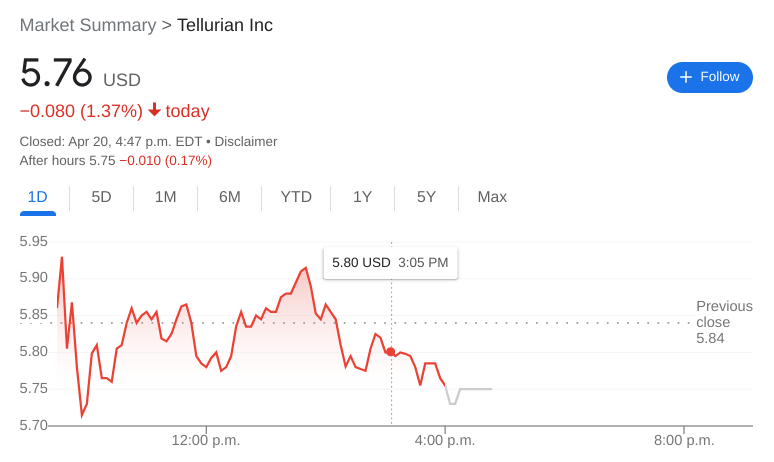
TELL Stock

On Wednesday, Tellurian did receive an analyst downgrade from Zacks Investment Research. The investment research firm downgraded TELL from a hold rating to a sell rating. Earlier this month Credit Suisse upgraded TELL to a buy rating and raised its price target to $8.00. In total, five analysts who cover TELL have issued a buy rating, two have a hold rating, and one has a sell rating for the stock.

Author

More from Stocks Reporter
Share:

Editor's Picks

GBP/USD stays positive near 1.3450 after UK jobs data

GBP/USD recovers ground and tests 1.3450 in early Europe on Tuesday. The UK ILO Unemployment Rate remained at 4.9% in the three months to May, compared with expectations of 5%, but fails to provide any impetus to the British Pound's renewed uptick. Traders stay cautious amid US-Iran uncertainty and the UK political transition.

EUR/USD steadies above 1.1400, awaits German ZEW Survey

EUR/USD is consolidating above the 1.1400 mark in European trading on Tuesday. The pair lacks any directional impetus amid a subdued US Dollar price action and ahead of the German ZEW Survey.


Gold: Acceptance above 21-day SMA at $4,065 is critical for buyers

Gold is building on its recovery from two-week lows of $4,024 reached last Friday, extending the winning streak into a third straight day on Tuesday. XAU/USD is capitalizing on the ongoing pullback in Oil prices from monthly highs near $84.50. The black gold is retreating for a second day in a row on emerging signs of diplomatic efforts to ease the US-Iran conflict.

Shiba Inu price extends gains as on-chain and derivatives metrics confirm bullish bias

Shiba Inu extends gains, trading above $0.0000042 after breaking above the descending trendline the previous day. Strengthening on-chain data and improving derivatives metrics support further gains for the meme coin. CryptoQuant’s exchange netflow chart below shows five consecutive days of net outflows since July 17.

Brent nears a critical crossroads as the global economy faces one too
Markets spent last Friday digesting a Reuters report that Iran has told the Houthis to stand ready to close Bab el-Mandeb if the US strikes Iranian power infrastructure — missiles and drones are reportedly already positioned near the strait, awaiting the order from IRGC officers in Yemen.
US Dollar mid-year outlook: Exceptional currency, exceptional risks?
The US Dollar enters the second half of 2026 in a markedly different position from a year ago. The King currency has recovered, reflecting persistent US inflation, changing expectations for Fed policy, geopolitical tensions and renewed demand for defensive assets.