|

SONN Stock News: Sonnet BioTherapeutics plummets by nearly 20% after medical community rebukes FDA

  • NASDA:SONN shares were sold off on Tuesday after a near 70% spike to start the week. 
  • Scientists, World Health Organization, voice scepticism about the proficiency of convalescent plasma therapy to treat COVID-19.

It has been an interesting start to the week for investors of Sonnet BioTherapeutics (NASDAQ:SONN). The announcement by the FDA over the weekend about a shift in focus towards convalescent plasma therapies as a viable coronavirus treatment sent shockwaves through the biotech industry. Sonnet shares were up nearly 70% pre-market on Monday and peaked at $4.32 before crashing back down to earth on Tuesday. The stock price of Sonnet has dropped by over 70% during the past year and is well over 90% below its 52-week high of $54.60.

The FDA is under fire after echoing President Donald Trump’s sentient that convalescent plasma therapy would save countless lives. Within 24 hours of the announcement, members of the scientific community, including the chief scientist for the World Health Organization questioned the FDA and even went as far as to say that the claims were “very low-quality evidence” and that convalescent plasma transfusion for COVID-19 is still “an experimental treatment”. Even Dr. Anthony Fauci – a member of the White House’s coronavirus task force – had his own reservations about how accurate the treatment statistics that the FDA provided truly are.

SONN Stock Price
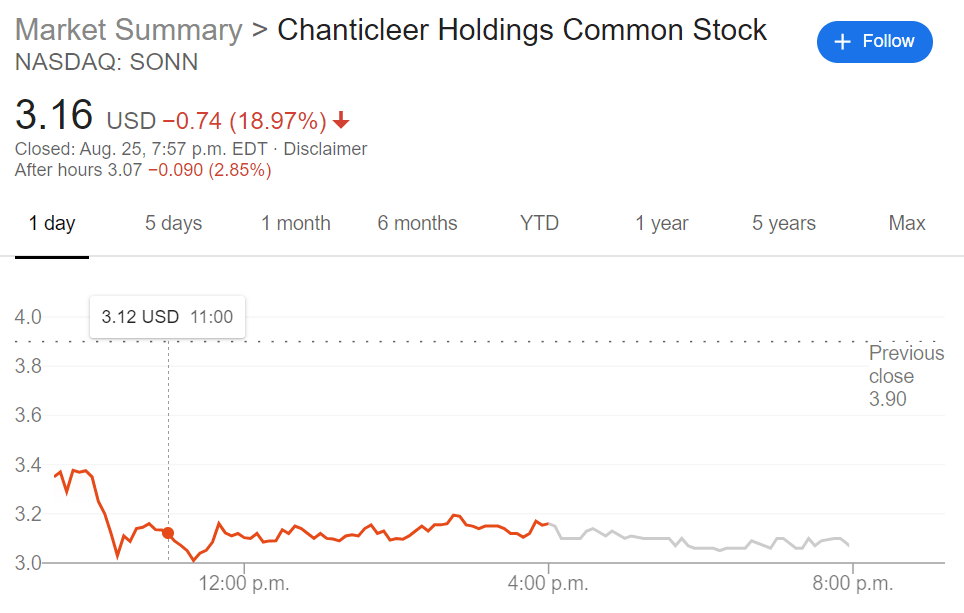
While the rebuking of the FDA’s claims of the efficacy of convalescent plasma-based treatments should not be ignored, it may not signal the end of Sonnet’s bid to produce an effective coronavirus treatment. Industry rivals ADMA Biologics Inc (NASDAQ:ADMA) and T2 Biosystems Inc (NASDAQ:TTOO) were also in the red on Tuesday – making it clear that investors are abandoning the plasma therapy industry almost as quickly as they entered it. 

Author

More from Stocks Reporter
Share:

Editor's Picks

AUD/USD turns south toward 0.6900 as USD firms up

AUD/USD sees fresh selling and drops toward 0.6900 in late Asian trading on Monday, as renewed US Dollar strength weighs on the pair amid lingering Middle East and Russia-Ukraine geopolitical tensions. Focus remains on Oil prices, Treasury bond yields, and RBA expectations for fresh trading impetus in the major.

USD/JPY retakes 158.00 amid hawkish BoJ bets, firmer USD

USD/JPY erases losses and retakes 158.00 in the Asian session on Monday, trading within a one-week-old range. Geopolitical uncertainty continues to underpin the US Dollar, despite fading Fed rate hike hopes, supporting the pair's rebound. However, further upside could be capped by hawkish BoJ expectations and looming intervention risks that could support the Japanese Yen.

Gold languishes below $4,200 amid high US yields

Gold trims some losses on Monday, but remains trapped within previous ranges, with upside attempts limited below $4,200 and with two-month lows of $4,110 at a short distance. The recent pullback on the US Dollar Index has provided some support for precious metals although the high US Treasury yields are keeping a floor on US Dollar dips so far.

Pi Network risks a steeper decline as bearish momentum builds

Pi Network extends losses below $0.090 maintaining a steady decline for the fifth consecutive day. The retail demand remains firm, with the notional value of active perpeutals holding above $10 million. The technical outlook for PI remains bearish as bearish momentum mounts.

ISM Services PMI expected to show robust US economy in September

The US ISM Services PMI is expected to improve marginally in September. The US services sector is expected to remain well into expansionary territory. Bets of further Fed tightening appear to have lost traction in the last few days.

The Euro is near a one-year low: Inflation could trigger its rebound, not its fall

EUR/USD has fallen to its lowest level since May 2025. The pair hit 1.1312 on Wednesday and trades well below the January peak of 1.2082. The decline reflects a powerful combination of US Dollar strength, geopolitical uncertainty and renewed concerns about Europe's exposure to higher energy prices.