Pound Sterling Price News and Forecast: GBP/USD rises above 1.3500

GBP/USD rises above 1.3500 as BoE rate cut odds fade, US Dollar weaken
GBP/USD appreciates after registering slight losses in the previous session, trading around 1.3530 during the European hour on Monday. The pair remains stronger as the Pound Sterling (GBP) receives support from the fading odds of further BoE rate cuts, driven by persistent inflationary pressures in the United Kingdom (UK). Catherine Mann, a member of the BoE Monetary Policy Committee (MPC), stated last week that the bank rate should be held persistently to lean against inflation risks.
The Pound Sterling holds gains following low-tier data from the United Kingdom. The non-seasonally adjusted UK Nationwide Housing Prices climbed 2.1% year-on-year in August, easing from a 2.4% gain in July. On a monthly basis, prices fell 0.1%, against an expected 0.2% increase and a 0.5% previous rise. Read more...
GBP/USD presses resistance as Dollar softens into data-heavy week
Sterling starts September with a modest bid while the dollar eases, as traders look past the U.S. Labor Day lull to a run of American manufacturing readings and broader labor-market updates later in the week. A fresh dip in the greenback reflects elevated odds of a September Fed cut, with markets watching ISM manufacturing and employment components for confirmation. In the UK, house prices slowed on the month but still rose 2.1% on the year, leaving the pound broadly steady into today’s manufacturing PMI update.
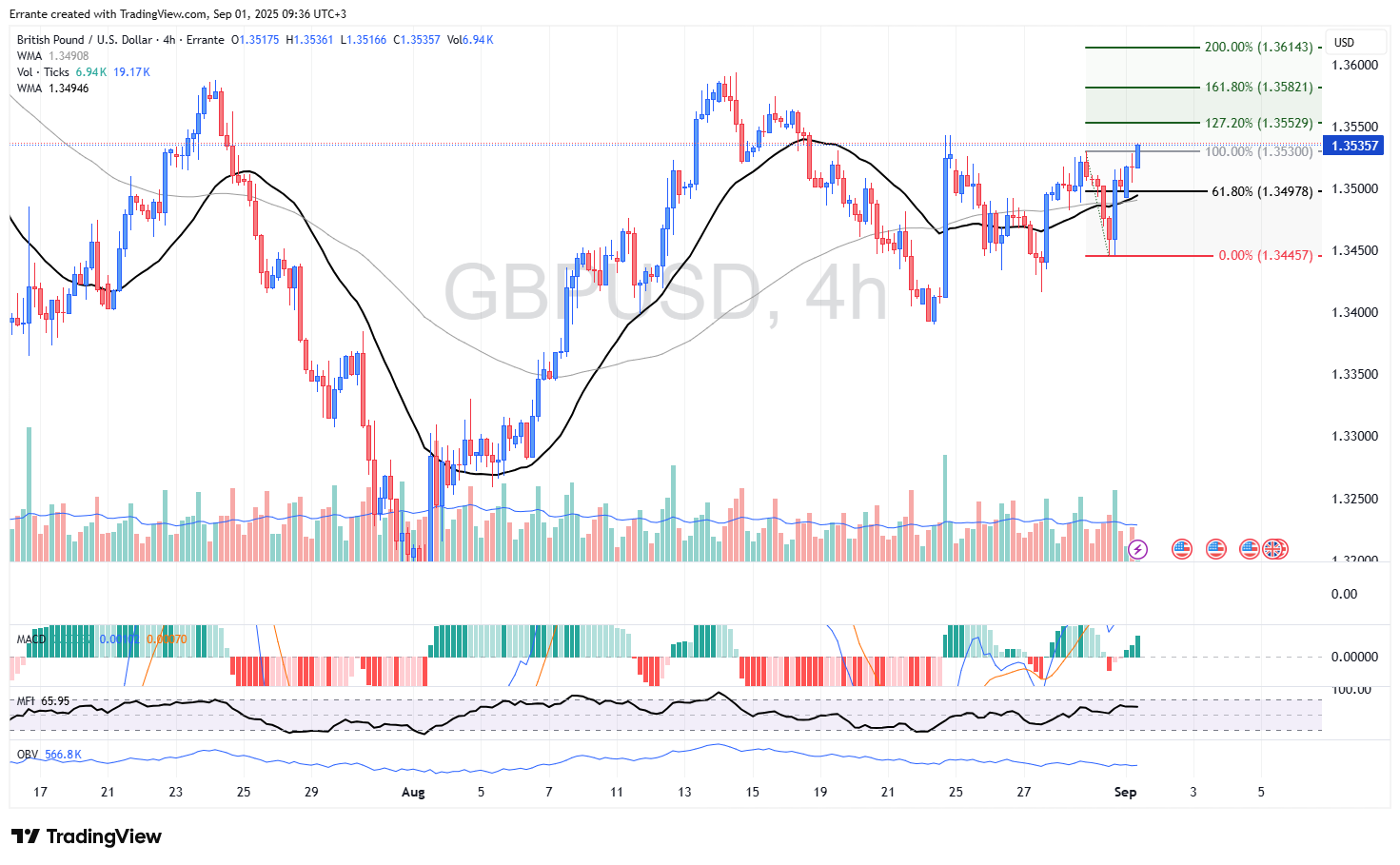
On the 4-hour chart, GBP/USD is probing the late-August swing high near 1.3530. Price trades above both the short and medium weighted moving averages (around 1.3491–1.3495), and the prior pullback held at the 61.8% retracement near 1.3498—keeping the short-term up-sequence intact. Read more...
GBP/USD Weekly Forecast: Pound Sterling awaits US Jobs data for fresh direction
The Pound Sterling (GBP) regained ground against the US Dollar (USD), albeit within the August 22 trading range. The GBP/USD pair gradually crawled back above the 1.3500 barrier on the renewed upside.
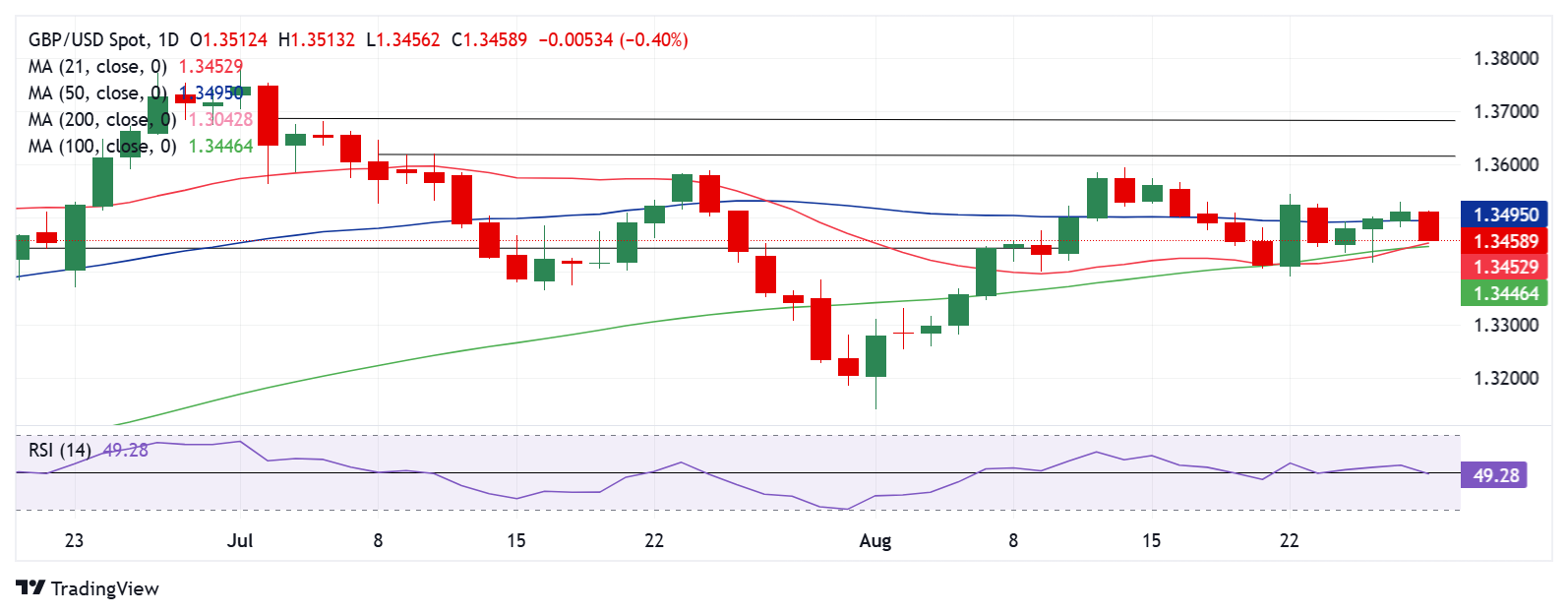
GBP/USD entered a consolidative mode following a late rebound last week. The bull-bear tug-of-war extended, but bargain-buying remained in vogue, courtesy of a broad-based US Dollar decline. Read more...
Author

FXStreet Team
FXStreet
Composed of a group of economic journalists and FX experts, the FXStreet content team produces and oversees all content published on FXStreet. It provides a purely journalistic approach to the Forex market.