|

Palladium Price Analysis: XPD/USD eyes $2800 but overbought conditions warrant caution

  • XPD/USD dived out of the rising wedge on the 4H chart.
  • Palladium remains on track to recapture the $2800 mark.
  • However, overbought RSI conditions remain a cause for concern.

Palladium (XPD/USD) is seeing sizeable gains above $2700 on Thursday, as the bulls reverse Wednesday’s drop below the latter.  

The white metal tracks the bullish momentum seen across the precious metals space, thanks to the relentless sell-off in the US dollar across the board.

Price of Palladium

As observed on the four-hour sticks, the price of palladium has charted a rising wedge breakout after closing the candlestick above the trendline resistance at $2715.

At the press time, XPD/USD trades at $2728, flirting with four-week highs of $2730 reached in the last hour.

The price is poised for additional upside, with a test of the March highs at $2756 inevitable. Further up, the XPD bulls target the $2800 threshold.

Palladium price chart: Four-hour
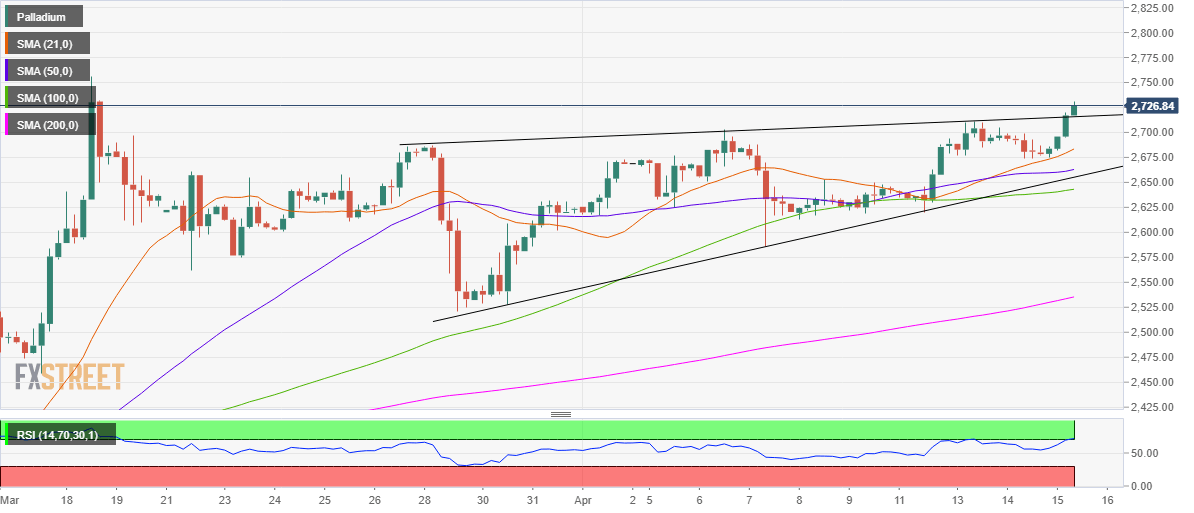
However, the Relative Strength Index (RSI) has entered into the overbought region on the said time frame, warranting caution for the XPD bulls.

A pullback towards the pattern resistance now support at $2715 could be in the offing.

If the sellers take over complete control, the bullish 21-simple moving average (SMA) at $2684 could be put at risk.

The next line of defense for the buyers is seen at $2663, where the 50-SMA is located.

Author

Dhwani Mehta

Dhwani Mehta

FXStreet

Residing in Mumbai (India), Dhwani is a Senior Analyst and Manager of the Asian session at FXStreet. She has over 10 years of experience in analyzing and covering the global financial markets, with specialization in Forex and commodities markets.


More from Dhwani Mehta
Share:

Editor's Picks

GBP/USD clings to small gains near 1.3450 after UK jobs data

GBP/USD trades in positive territory at around 1.3450 in the European session on Tuesday. The UK ILO Unemployment Rate remained at 4.9% in the three months to May, compared with expectations of 5%, but failed to provide any impetus to the British Pound's renewed uptick. Traders stay cautious amid US-Iran uncertainty and the UK political transition.

EUR/USD keeps range above 1.1400 after German ZEW

EUR/USD is keeping its range above 1.1400 in Tuesday's European session, as the US Dollar (USD) retreats following Monday's rebound. Nevertheless, the uncertainty around the US-Iran conflict limits the pair's upside. Meanwhile, the Euro (EUR) pays little heed to the strong German sentiment data, as traders await Thursday's European Central Bank policy announcements, which could drive the Euro's near-term valuation.

Gold extends recovery toward $4,100

Gold gains traction following Monday's choppy action and advances toward $4,100 on Tuesday. However, the uncertainty surrounding the conflict in the Middle East and growing expectations for a hawkish Federal Reserve policy outlook could make it difficult for the precious metal to gather bullish momentum in the near term.

Bitcoin extends advance as ETF inflows, Iran war mediators' proposal lift risk mood

Bitcoin extends its gains, trading above $65,800 after closing above the key technical hurdle the previous day. The bullish price action is further supported by the return of institutional demand, with spot Exchange Traded Funds continuing their inflows on Monday. In addition, the renewed hopes for peace between the US and Iran have lifted risk sentiment, providing an additional tailwind for the Crypto King.

Buy the dip on the Dow Jones and S&P? Forex Trading Gold descending triangle

Trading during a war, a pandemic, during trade disputes, and other geopolitical events, especially when some major players are sociopathic, can be quite challenging. The Iran war is no exception. The Iran war is no exception.

US Dollar mid-year outlook: Exceptional currency, exceptional risks?
The US Dollar enters the second half of 2026 in a markedly different position from a year ago. The King currency has recovered, reflecting persistent US inflation, changing expectations for Fed policy, geopolitical tensions and renewed demand for defensive assets.