NZD/USD rangebound below 0.6800 as broader market tone turn choppier and key US data looms
- NZD/USD has been going sideways on Wednesday, with broader risk appetite choppier/more mixed.
- Whilst some of the short-term technicals look favourable, NZD/USD may continue to struggle against the tide of a bullish USD environment.


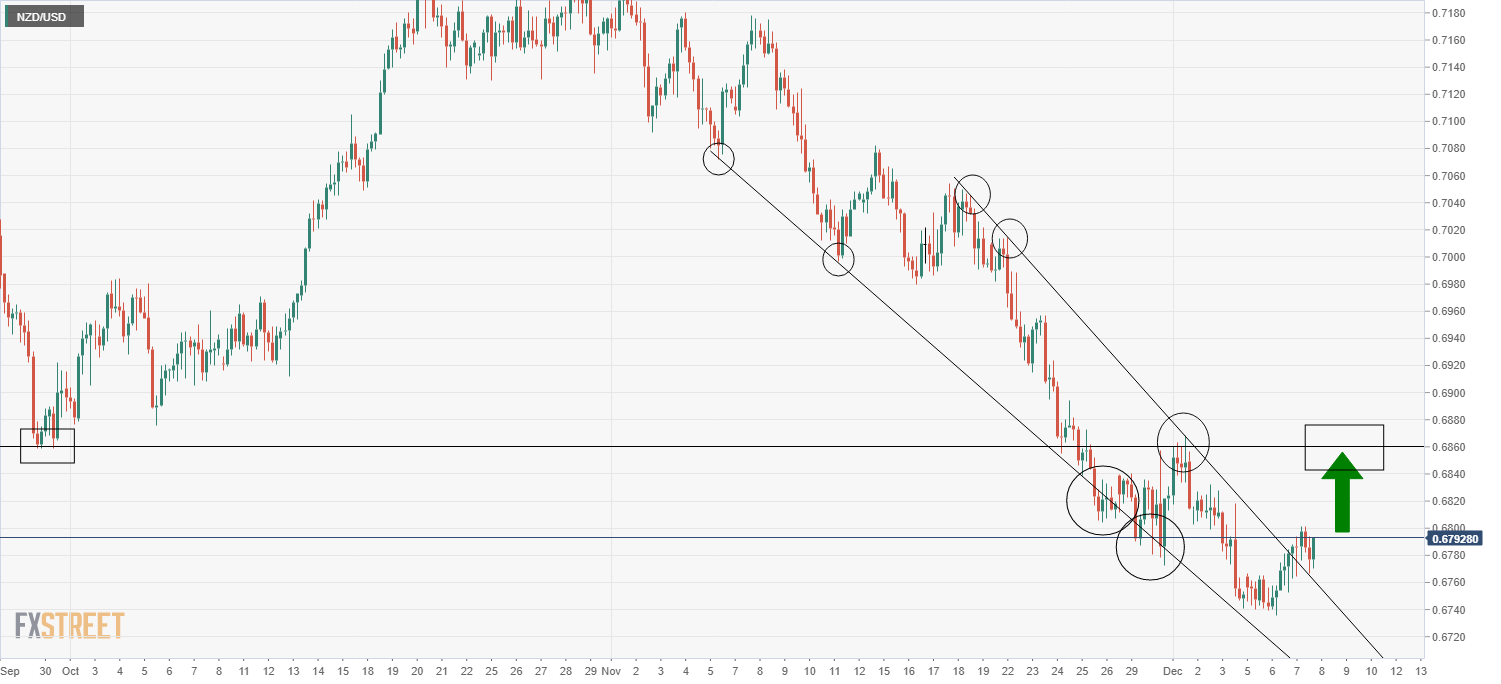
Amid a choppier feel to broader market sentiment on Wednesday as markets take a breather from recent risk-on flows amid mixed vaccine efficacy versus Omicron headlines and worries about tougher Covid-19 curbs, NZD/USD has been going sideways. The pair has for the most part stuck within a 0.6760-0.6800 range, and at current levels in the 0.6780s, is broadly flat on the day. The kiwi has this week seen a comparatively modest recovery from annual lows printed last week under 0.6750 and is up just 0.6% on the week versus weekly gains of more than 2.0% for AUD and about 1.7% for the loonie.
But from a technical perspective, things have brightened this week for NZD/USD. The pair gently pushed to the north of a negative trend channel that had been capping the price action going all the way back to early November. NZD/USD’s 14-session RSI also recently recovered from oversold territory (i.e. below 30), which some technicians may use as a signal that NZD/USD is overdue a period of consolidation/profit-taking on recent shorts. If the pair can break to the north of of resistance in the 0.6800 area, a move towards the next key area of resistance around 0.6850 may be o the cards.
But from a fundamental’s standpoint, other traders might be more cautious. US JOLTs Job-Opening numbers for October will be released at 1500GMT and should confirm that demand for labour (i.e. the number of job openings) remained well above the number of unemployed persons. This should underpin the Fed’s view that the labour market in the US is currently very tight. If Friday’s key US inflation report also comes in hot, this will support market expectations for the bank to agree on accelerating its QE taper when it meets next week.
Markets are betting that the annual rate of US Consumer Price Inflation will rise to 6.8% in November and some analysts have speculated that a print above 7.0% would push the Fed into indicating rate hikes as soon as the end of Q1 2022. The notions of a hot US labour market and inflationary environment contributing to an increasingly hawkish Fed policy stance may continue to weigh on NZD/USD in the days ahead. The pair could soon be headed for a retest of recent lows under 0.6750.
Author
Joel Frank
Independent Analyst
Joel Frank is an economics graduate from the University of Birmingham and has worked as a full-time financial market analyst since 2018, specialising in the coverage of how developments in the global economy impact financial asset