|premium|

NIO Stock News: Nio Inc extends slump on rising COVID lockdowns in China

  • NYSE:NIO fell by 3.50% during Tuesday’s trading session.
  • Mother nature seems to be taking its toll on China as an earthquake hits the Sichuan region.
  • Nio is reporting its second quarter earnings on Wednesday before the markets open.

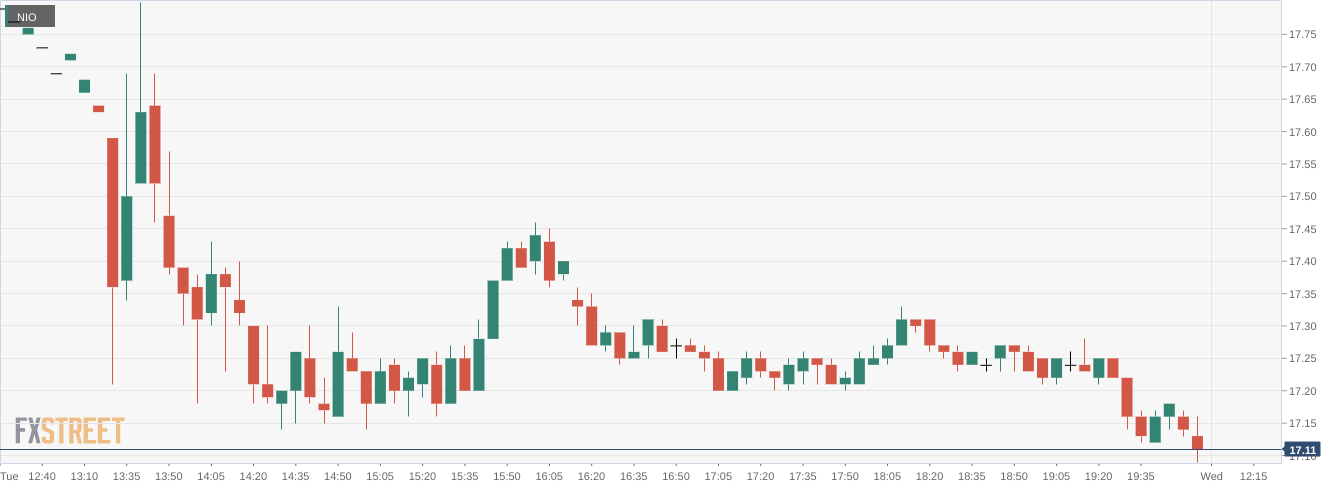
NYSE:NIO extended its slide on Tuesday as investors could be showing some bearish sentiment ahead of its earnings call on Wednesday. Shares of Nio dropped by a further 3.50% and closed the trading session at a price of $17.11. The Labor Day weekend did little to quell the bearish sentiment on the markets as all three major avengers resumed their slide on Tuesday. Further economic data from the August ISM data showed that the US economy is indeed in a stronger position than many believe. Overall the Dow Jones lost 173 basis points, the S&P 500 dropped by 0.41%, and the NASDAQ posted a loss of 0.74% during the session.


Stay up to speed with hot stocks' news!


As if the global supply chain issues and macroeconomic situation wasn’t bad enough, China is now dealing with Mother Nature as well. Following the ongoing droughts that have affected regions of China and caused some automotive manufacturing to pause, there was a magnitude 6.8 earthquake that hit Sichuan on Tuesday. The disasters have added to the already stressed country following continued lockdowns that have stemmed from recent outbreaks of the novel coronavirus. Some reports estimate that over 65 million Chinese residents are back in lockdown protocols.

NIO stock forecast
NIO Stock

On Wednesday, before the markets open Nio will report its second quarter earnings. The consensus forecast for the quarter seems to be an earnings loss of about $0.16 per share and a high single-digit year over year growth in revenues. Most will be looking to Nio’s guidance for the third quarter and beyond as the true indication of where the company stands.


Like this article? Help us with some feedback by answering this survey:

Premium

You have reached your limit of 3 free articles for this month.

Start your subscription and get access to all our original articles.

Subscribe to PremiumSign In

Author

More from Stocks Reporter
Share:

Editor's Picks

GBP/USD trims losses, disputes 1.3400

GBP/USD retreats after reaching a three-week high above 1.3430 and puts the 1.3400 region to the test on Thursday. Although easing political uncertainty in the UK helps the quid limit its downside, escalating tensions in the Middle East support the Greenback, keeping Cable under scrutiny.

EUR/USD off highs, back to 1.1430

EUR/USD loses momentum after briefly climbing to the 1.1450 area earlier in the day, revisiting the 1.1430 region on Thursday. Escalating tensions in the Middle East fail to underpin the US Dollar, although a broad sense of caution continues to prevail among market participants.

Gold climbs to two-day peaks near $4,130

Gold stages a modest rebound on Thursday, setting aside a three-day losing streak and managing to surpass the $4,100 mark per troy ounce. However, steady geopolitical tensions have revived concerns over persistently high global inflation, reinforcing expectations of higher rates across the board and somewhat curtailing the yellow metal’s upside potential.

Bitcoin stalls as mixed ETF flows, renewed US-Iran tensions cap upside

Bitcoin trades at $63,000 on Thursday, recovering slightly after facing rejection near $64,000. Renewed geopolitical uncertainty has dampened risk appetite, limiting BTC upside potential.

Japan may be changing its Yen strategy, but markets don’t look scared
Japan may be changing its intervention playbook, but that might not be enough to rescue the battered Yen. With USD/JPY hovering at four-decade highs, the currency’s weakness is being driven less by speculative pressure and more by a powerful structural force: the wide US-Japan rate gap.
Bye, forward guidance: How to trade when central banks choose silence

Central banks have spent years telling markets what might come next. Now, traders face the possibility that they say a lot less. From the Federal Reserve to the European Central Bank and the Bank of England, policymakers are pushing back against forward guidance.