|

NIO Stock Forecast: Nio Inc looks for rebound as it establishes its US headquarters

  • NYSE: NIO has fallen by 7.53% so far in 2022.
  • Nio establishes its US headquarters in San Jose, California.
  • Customers in Norway have received their first firmware update for the ES8 SUV. 

NYSE: NIO had a down year to say the least in 2021, but a long list of positive catalysts are providing some nice tailwinds as we head into 2022. Shares of NIO are still down by about 7.5% so far in 2022, as Nio has fallen alongside other EV stocks in the ongoing sell off in growth names. Two of its closest domestic rivals have also dipped so far this year, with XPeng (NYSE: XPEV) and LI Auto (NASDAQ:LI) falling by 1.15% and 3.74% respectively. Ongoing weakness in tech and a growing mistrust of Chinese stocks have put notable pressure on Nio and its peers. 


Stay up to speed with hot stocks' news!


Some positive news surfaced over the weekend as Nio has officially leased a larger headquarters building in San Jose, California. Nio has reportedly leased a space that is over 200,000 square feet, which likely means some form of production or research and development will be included in this space. While the company remains mum on when it will actually launch in the US, Nio already has plans to expand to 25 different markets by 2025, so we can reasonably expect the US to be on that list of countries. 

NIO stock price
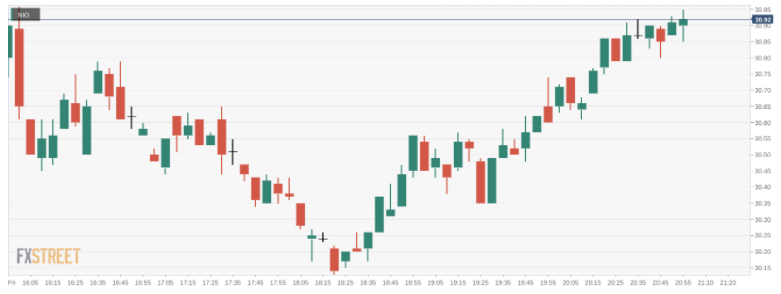
NIO Stock

Speaking of global expansion, Nio has sent out its first official firmware update to vehicle owners in Norway. This marks the first time Nio has sent an FOTA or Firmware Over the Air update outside of its home market of China. The update is providing some much needed winter updates for Nio’s ES8 SUV, which includes features like manual battery warmup. Norway is one of the hottest markets for electric vehicles outside of the US and China, and its unique climate has certainly made for some challenges for EV makers.


Like this article? Help us with some feedback by answering this survey:

Author

More from Stocks Reporter
Share:

Editor's Picks

AUD/USD defends 0.7000 ahead of RBA on Tuesday

AUD/USD is defending 0.7000 at the start of a new week, trading near its lowest level since August 4 amid a bullish US Dollar. US yields hold near multi-year highs amid inflation risks from higher oil prices and rising bets on an October Fed rate hike. This, along with the US-Iran standoff, continues to underpin the safe-haven buck and weigh on the pair ahead of Tuesday's RBA policy announcements.

USD/JPY climbs back toward 158.00 after BoJ minutes amid firm USD

USD/JPY finds dip-buyers and reverses part of Friday's slide driven by speculation that authorities will step in again to prop up the Japanese Yen. However, the BoJ's dovish Minutes cap the JPY. Meanwhile, the US Dollar regains traction as the US-Iran standoff supports crude oil prices, fueling inflation fears and reaffirming bets for an October Fed rate hike. This further supports the pair, driving it back toward 158.00.

Gold cracks $4,200 for the first time in eight weeks

Gold falls hard at the start of a new week, breaching $4,200 for the first time in eight weeks. Firming October Fed rate-hike bets, along with oil-driven inflation risks, keep US bond yields elevated near multi-year highs, helping the US Dollar regain positive traction amid persistent Iran risks. These factors weigh heavily on the bullion.

Bitcoin takes a breather, Ethereum faces pullback, XRP consolidates 
Bitcoin (BTC), Ethereum (ETH) and Ripple (XRP) take a breather at the start of the week on Monday after their recent gains last week. BTC pulls back, trading below $83,600 while ETH extends its losses, trading below $2,700, and XRP consolidates around $1.500. The price action of these top three cryptocurrencies suggests a mild pullback or consolidation as traders assess their next direction.
After the Trump Xi summit, markets are trading three clocks
The summit delivered time, not a deal. Trade, oil and chips now each run to a date, and the macro backdrop matters more than the pageantry. Markets wanted a deal and got a calendar date instead. Xi Jinping left Washington on Friday after tea at the White House and a tour of the National Archives.
Fed vs BoJ: Both hiked. The market only believes one of them – and the chart shows which

The Fed and the BoJ have just done something remarkably similar. Both central banks raised interest rates by 25 bps last week, both are confronting inflation risks, and both signal that future decisions will depend on incoming economic data.