GBP/USD records a weekly high near 1.2669 but retreats towards 1.2610s post-US PCE
- Cable is about to post back-to-back weekly gains, up by 0.94%.
- The Fed’s favorite inflation gauge eases from above the 5% threshold, showing signs that elevated prices could be peaking soon.
- UK’s PM Boris Johnson said that the UK might avoid a recession.
- GBP/USD Price Forecast: If bulls fail to reclaim 1.2700, expect selling pressure to mount and send the pair towards a YTD low re-test.

The British pound marches firmly during the last week’s trading day, gaining some 0.45% after the Commerce Department reported that the Fed’s preferred inflation gauge, the Core Personal Consumption Expenditure (PCE), rose by 4.9%, in line with estimations, but lower than 5.2% in March. At 1.2614, the GBP/USD keeps extending its gains during the North American session.
Global equities reflect a positive mood, climbing on Friday. Investors begin to shrug off worries that inflation will keep rising. Also, the pullback in core inflation could deter the Fed from hiking rates as aggressively as previously priced in by market players, which lifted the yield on the 10-year benchmark note to its YTD high at 3.20% earlier this month.
Before Wall Street opened, additional data was revealed. Consumer spending rose 0.9% last month and beat estimations as consumers boosted purchases of goods and services, a sign that could underpin US economic growth in the Q2 amid increasing worries of a recession.
Analyst of ING wrote in a note that the inflation reading is encouraging, though reiterated that bringing it back to its target will take a while. “We believe we need to see three conditions to get inflation to drop meaningfully quickly. Firstly, an improved geopolitical backdrop to get energy prices lower, which seems unlikely given Russia’s actions. Secondly, an improved supply chain environment, which also seems unlikely given China’s zero-Covid policy and the potential for strike action at US ports. Then thirdly, we would need to see a big increase in labor supply to mitigate surging labor costs, which again doesn’t seem on the cards just yet,” ING analysts added.
In the meantime, UK’s Prime Minister Boris Johnson commented that the UK could avoid a recession in the months ahead, despite UK’s last inflation report, popping up 9% at forty years high. Even the Bank of England is expecting a contraction in growth late in the year and a prolonged stagnation scenario.
Elsewhere, the US Dollar Index, a gauge of the greenback’s value vs. its peers, bounces off weekly lows and grinds higher by 0.10%, sitting at 101.850.
GBP/USD Price Forecast: Technical outlook
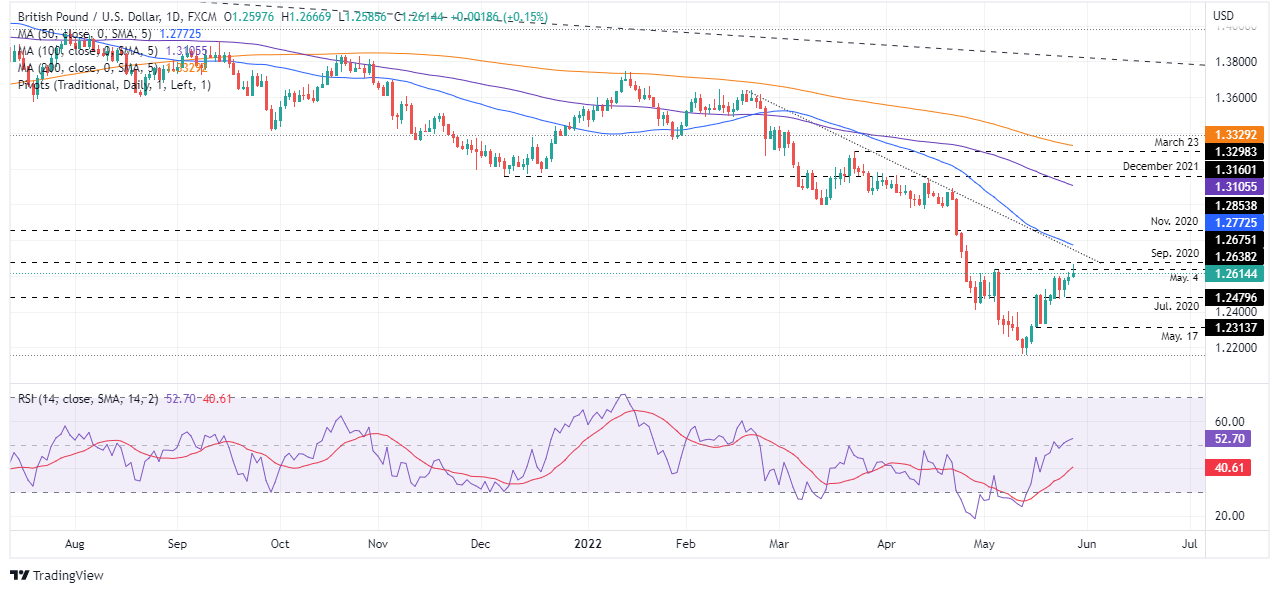
From a daily chart perspective, the GBP/USD remains downward biased. During the day, the major failed to break above the May 4 daily high at 1.2638 and pulled back towards 1.2610s, well below the daily moving averages (DMAs). However, the RSI shows some signs of turning bullish, but the GBP/USD bulls need to reclaim 1.2700 to shift the bias to neutral-upwards.
Failure to the above-mentioned would keep the pair vulnerable, sending the pair towards the May 20 daily low at 1.2436, followed by the May 17 lows at 1.2315, and the YTD low at 1.2155.
Key Technical Levels
Author

Christian Borjon Valencia
FXStreet
Markets analyst, news editor, and trading instructor with over 14 years of experience across FX, commodities, US equity indices, and global macro markets.














