|

GBP/USD Price Analysis: Bulls capped at fresh cycle highs

  • GBP/USD bulls print a fresh cycle high, but resistance is strong. 
  • DXY is building the case for an upside continuation and a correction into deeper resistance. 
In a follow up to the prior analysisGBP/USD Price Analysis: Bulls taking charge above critical long-term support structure, cable has indeed moved higher as expected.

Prior analysis
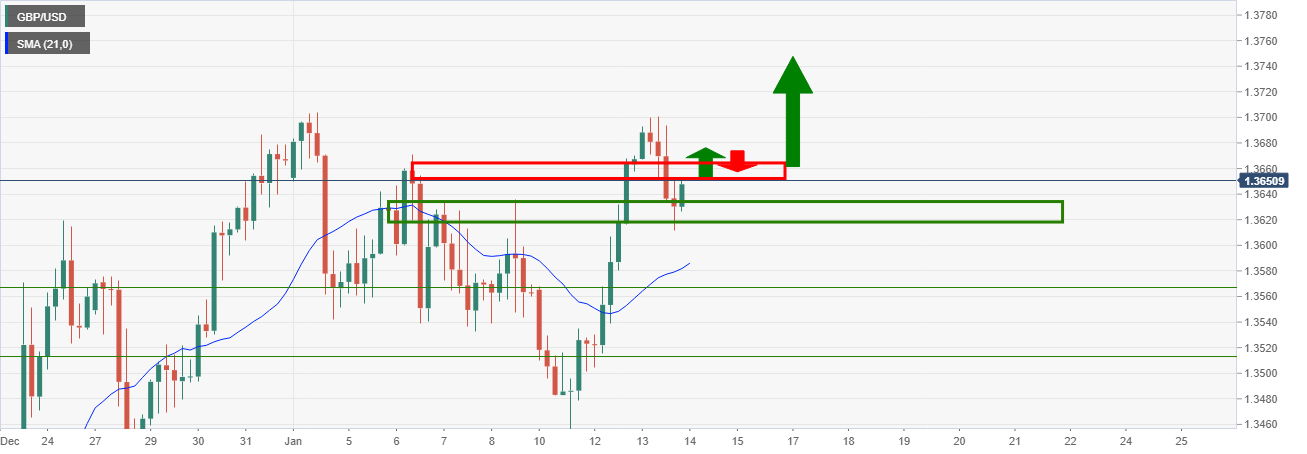
In the above 4-hour chart, the price was testing support and it was highly probable, that following a retracement such as this, that the price would extend the bullish trend. 

Current state of play for GBP/USD

The bulls have subsequently taken on the resistance and have gone on to print a fresh cycle high, the highest level since May 2018:
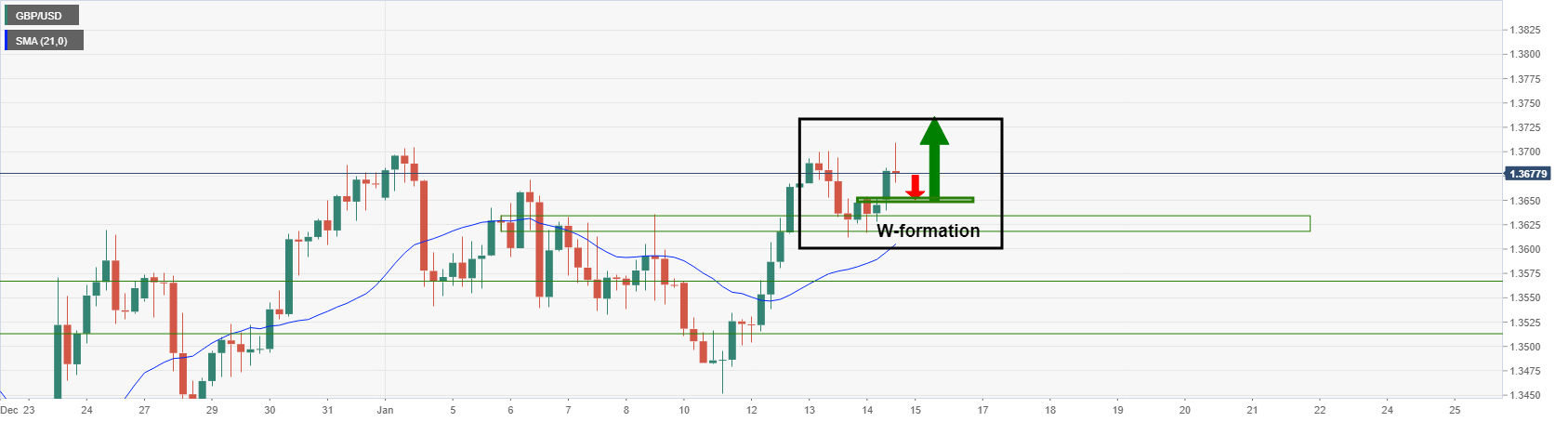
 The 4-hour chart has now formed a W-formation and following a 38.2% Fib correction to the nose of the W, a bullish continuation would be probable. 

DXY bulls in play

That being said, the US dollar is in favour of the markets and a prolonged recovery would cap the pound's advance. 

Overhead resistance lies with the monthly chart:
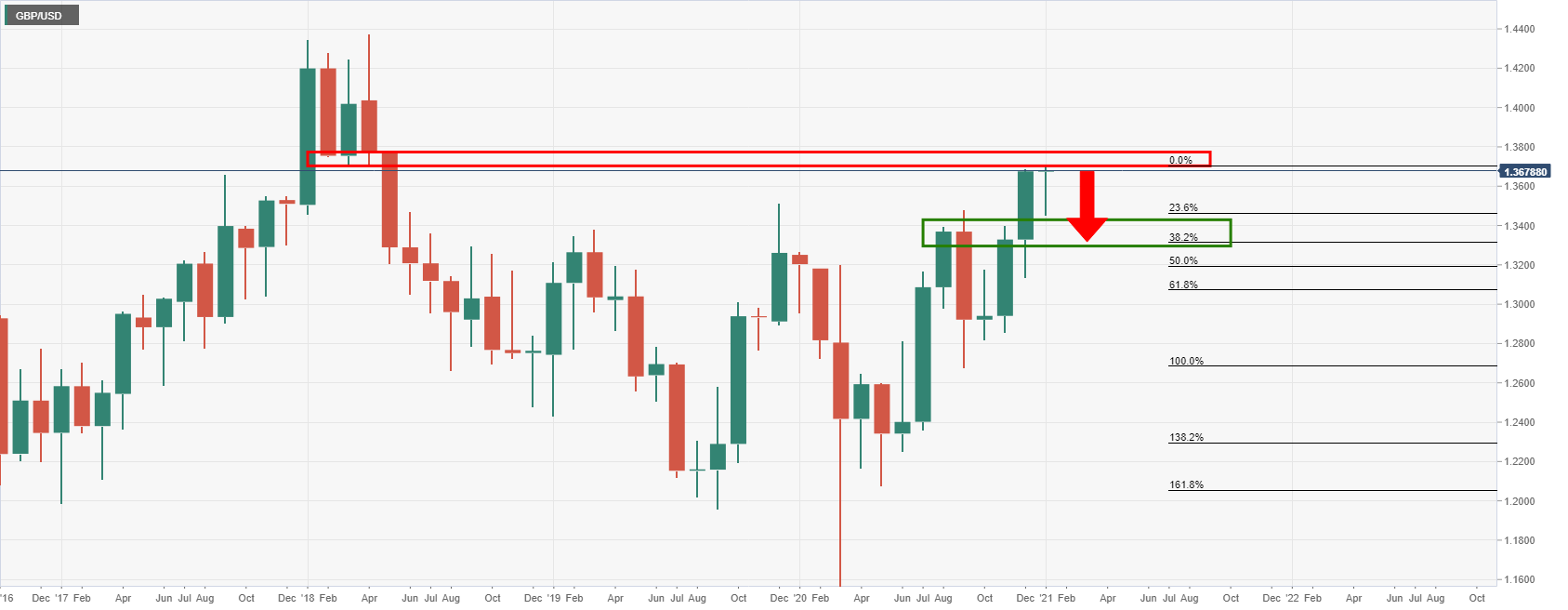
As can be seen, the price is running up to a probable strong level of resistance. 

Given the how far the pound has travelled over the past few months without a meaningful correction, there is a high probability that the price will revert back to test support and the confluence of a 38.2% Fibonacci retracement. 

This would be especially true if the DXY does indeed continue to correct:
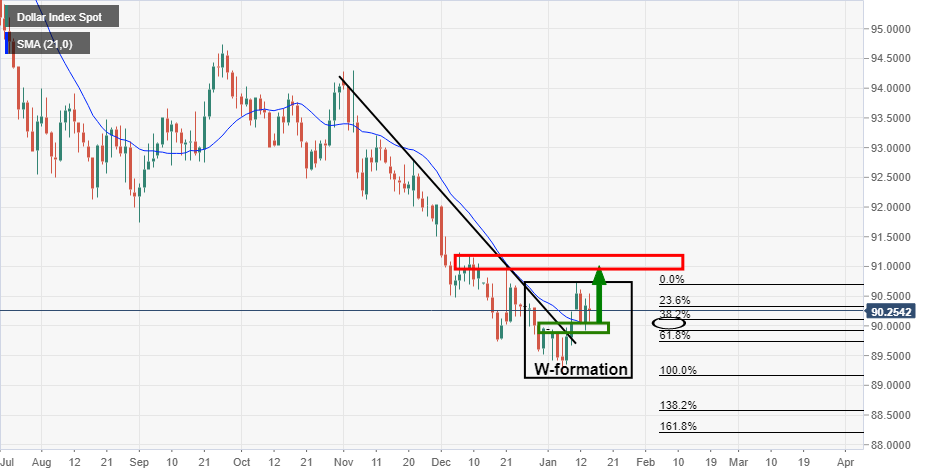
The daily chart shows the index has penetrated beyond dynamic trendline resistance, retested the support of the W-formation's neckline and is subsequently building a case for an upside continuation towards resistance. 

Author

Ross J Burland

Ross J Burland, born in England, UK, is a sportsman at heart. He played Rugby and Judo for his county, Kent and the South East of England Rugby team.


More from Ross J Burland
Share:

Editor's Picks

EUR/USD gains traction to near 1.1800 as tariff uncertainty weighs on US Dollar

The EUR/USD pair holds positive ground around 1.1795 during the early Asian session on Tuesday. The US Dollar weakens against the Euro amid US tariff uncertainty. The release of the US January Producer Price Index report will be in the spotlight later on Friday. 

GBP/USD treads water near 1.3500 as BoE-Fed divergence debate stalls

GBP/USD spent Monday spinning in place as market participants await a fresh catalyst to break the pair out of its recent range. The BoE's February hold came with a surprisingly dovish 5-4 split, and UK Consumer Price Index data last week showed inflation easing to 3.0%, reinforcing the case for earlier rate cuts, with most economists now looking to April or March for the next move. 

Gold falls below $5,200 amid pullback from monthly highs

Gold price is back under the $5,200 level in the Asian session on Tuesday, pulling back from the highest level in four weeks reached at $5,250 earlier on. The Gold price upsurge was fuelled by heightened geopolitical tensions and global trade uncertainty following US tariff decisions. However, an improvement in risk sentiment and a fresh US Dollar upswing trigger a corrective decline in the yellow metal. 

Solana DeFi platform Step Finance to close operations following treasury hack

The Solana based decentralized finance platform Step Finance announced it will end all operations effective immediately following a breach that drained its treasury.

Supreme Court nixes tariffs, Trump teases 15% global tariff

On February 20th, the Supreme Court ruled that Trump’s global tariffs under IEEPA authority were unconstitutional, effectively nullifying the framework. However, the relief was short-lived. Within hours, Trump floated a 15% blanket tariff under an alternative legal authority.

XRP recovers slightly as bearish sentiment dominates crypto market

Ripple is rising above $1.40 at the time of writing on Monday amid fresh tariff-triggered headwinds in the broader cryptocurrency market. The sell-off to $1.33, the token’s intraday low, can be attributed to macroeconomic uncertainty, geopolitical tensions and risk-averse sentiment among other factors.