GBP/USD hits 15-month peak as UK wages jump, USD weakness
- UK wage jump increases BoE rate hike chances, with analysts expecting a 50 bps rise in August.
- GBP/USD hits year-to-date high, with buyers eyeing 1.3000.
- USD weakness continues ahead of US inflation data.

GBP/USD rallied to a 15-month high of 1.2934 after a solid employment report in the United Kingdom (UK) increased the chances the Bank of England (BoE) will need to raise rates further. That, alongside broad US Dollar (USD) weakness, underpinned the GBP/USD pair. The GBP/USD trades at 1.2923 after hitting a daily low of 1.2853.
Bank of England rate hike prospects bolster the Pound Sterling
UK’s May jobs report was mixed, as wages jumped by 7.3% YoY above estimates of 7.1% putting pressure on the Bank of England (BoE), with its Governor Andrew Bailey and Co looking forward to stirring inflation down from the 8.7% figure on May. Although wages suggest further tightening is needed, the rise in the unemployment rate to 4.0% from 3.8% in the three months to April tempered fears of a wage-price spiral.
The GBP/USD climbed towards 1.2900 on the data but failed to crack the latter on its first try. Later, the 1.29 figure gave In, exacerbating a rally to a new year-to-date (YTD) high, opening the door for a possible test of the 1.3000 figure in the near term.
Across the pond, a light economic docket in the United States (US) provided no support for the Greenback, which extended its losses past the 102.000 figure per the US Dollar Index (DXY). US Treasury bond yields had reversed some of the last week’s gains, with investors bracing for US inflation data release, Wednesday.
The Consumer Price Index (CPI) for June is foreseen to fall to 3.1% YoY, from 4% in May, while month-over-month (MoM) is estimated at 0.3%, higher than May’s 0.1%. Excluding volatile items, the core CPI is estimated to cool down to 5% YoY from 5.3% in the last month. In comparison, MoM data is estimated at 0.3%, a downtick from the latest 0.4% readings during the previous two months.
Aside from this, words from the New York Fed President John Williams “signaled” the Fed will increase rates by a half percentage point or more over the year. He added that supply and demand in the labor market are coming into better balance while adding a recession is not on his forecast.
Williams’s words, added to Monday’s comments by San Francisco’s Fed President Mary Daly suggesting that a couple of rate hikes are needed. This might refrain GBP/USD traders from opening fresh bets on the pair.
GBP/USD Price Analysis: Technical outlook
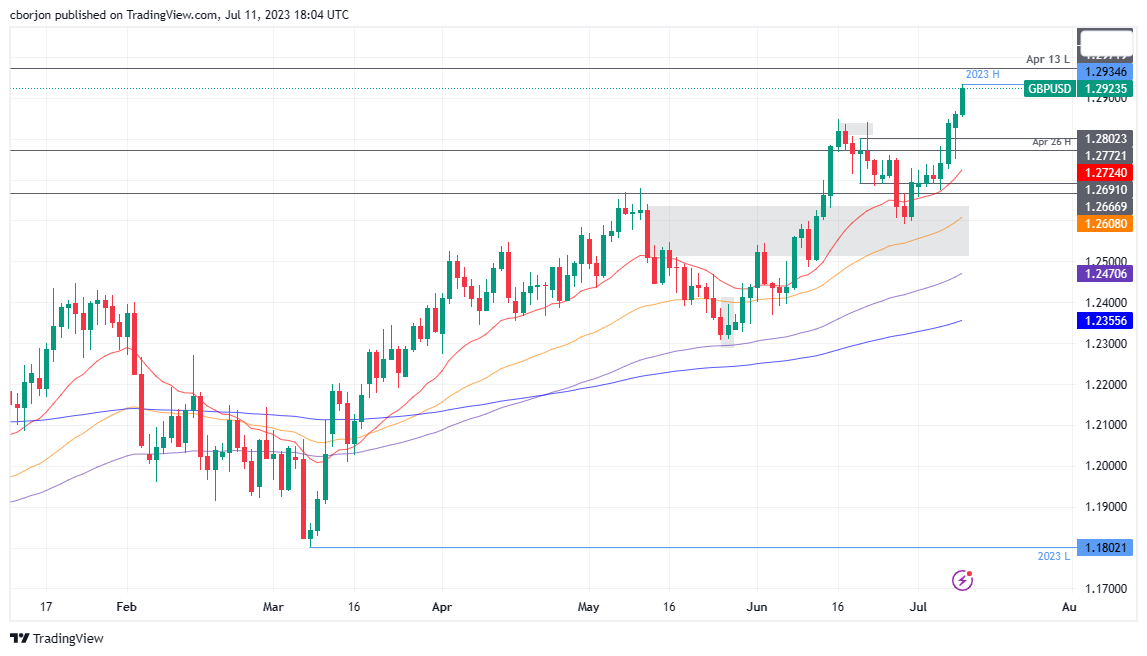
The GBP/USD price action suggests the pair would extend its gains after reclaiming 1.2900. Following key resistance levels emerge at April 13 low-turned resistance at 1.2972 before testing 1.3000. A breach of the latter will expose the April 18, 2022, daily high at 1.3089 before challenging the 2021 yearly low of 1.3160. On the contrary, if GBP/USD drops below 1.2900, that could pave the way for further downside, with first support at June 19 daily high at 1.2837. Once cleared, the GBP/USD could dive towards the 20-day EMA at 1.2724.
Author

Christian Borjon Valencia
FXStreet
Markets analyst, news editor, and trading instructor with over 14 years of experience across FX, commodities, US equity indices, and global macro markets.