|

EUR/USD risk reversals hit lowest since March 1, show EUR puts in demand

  • Risk reversals show increased demand for the EUR puts (bearish bets)

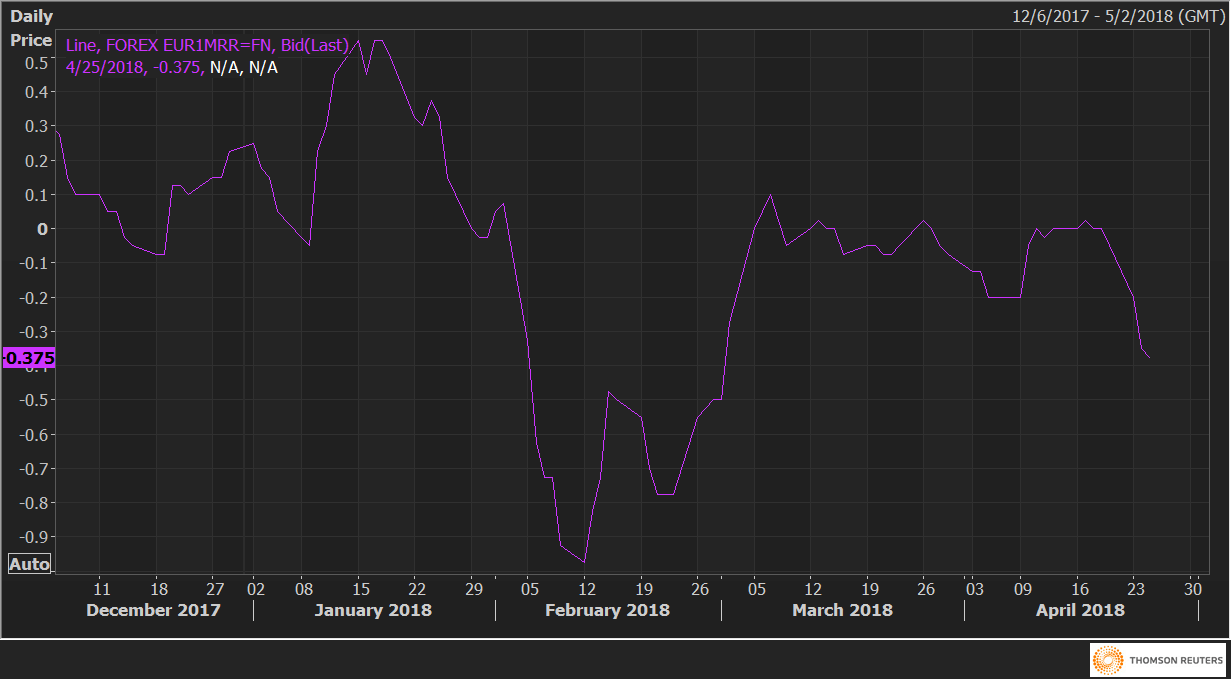
The EUR/USD one-month 25 delta risk reversals (XAU1MRR) fell to -0.375 today - the lowest level since March 1, indicating an increase in the implied volatility premium for the EUR puts. 

The risk reversals had turned positive on April 17, meaning the implied volatility for EUR calls (bullish bets) was more than that of puts. However, the sharp decline from 1.2397 (April 17 high) to 1.2182 (previous day's low) seems to have revived interest in the EUR put options. 

The drop in the risk reversals also indicates the investors see the potential for a further sell-off in the EUR/USD. As of writing, the spot is trading at 1.228. The risk reversals may slide further if the spot finds acceptance below the ascending (bullish biased) 100-day moving average support of 1.2212.

EUR1MRR
Author

Omkar Godbole

Omkar Godbole

FXStreet Contributor

Omkar Godbole, editor and analyst, joined FXStreet after four years as a research analyst at several Indian brokerage companies.


More from Omkar Godbole
Share:

Editor's Picks

GBP/USD: Downward-sloping trendline near 1.3470 remains key barrier

The British pound faces selling pressure against its major currency peers, trading 0.1% lower at around 1.3420 against the US Dollar during the European trading session on Tuesday.

Euro clings to the bid bias above 1.1500

EUR/USD has picked up pace, reversing Monday’s decline and advancing past the 1.1500 barrier on Tuesday. In the meantime, hopes for a diplomatic solution to the Middle East crisis keep the US Dollar under modest downside pressure, helping spot in its recovery.

Coinbase Bitcoin Premium Index extends historical negative streak as risk appetite deteriorates
The Coinbase Bitcoin Premium Index extends its negative streak to 78 consecutive days on Tuesday, the longest on record. This reading comes amid the ongoing bearish trend, which has seen Bitcoin (BTC) drop by almost 50% from its record high to trade around $64,000.
Why the WTI sell-off may be hiding a supply warning
Prices for the barrel of the American Oil benchmark have fallen sharply as hopes of a US-Iran agreement have resurfaced, but a deeply backwardated Oil curve, tight Cushing stocks and light speculative positioning all warn that the sell-off may have gone too far.
9-3: Is the Federal Reserve’s vote tally Warsh's new forward guidance?
The rate did not move. Neither did the statement, and that’s the more interesting fact. Set the July 29 Federal Open Market Committee (FOMC) statement beside the one issued on June 17, and the two documents are identical apart from a single verb and a paragraph at the bottom naming three dissenters.