DXY bulls need to break 107.40 to gain control again
- US dollar pressured by dovish Fed outcome but remains in a bullish cycle.
- The bulls need to break 107.40 DXY to gain control again.

The US dollar is pinned to the ground following the latest economic update from the Federal Reserve that raised rates by just 75bps in a decision that the FOMC unanimously decided upon, increasing the target range for the federal funds rate to 2.25-2.50%.
The FOMC statement downgraded its assessment of the economic situation and admitted that “recent indicators of spending and production have softened”. This immediately pressured the greenback and took a little while longer to within rates in the 2 and 10year yields. The statement repeated that job gains have been robust in recent months and the unemployment rate has remained low. However, Fed's chairman Jerome Powell conceded that the labour market would likely moderate in time.
ish outcome for the September meeting as the Fed turns data-dependent. The Fed's chairman's presser concluded in recent trade and following a cautiously optimistic tone over the US economy, with Jerome Powell warning of a softer labour market, the US dollar was down to the lows of the day at 106.279, losing 0.86% as per the DXY index.
Fed Powell key takeaways
-
Powell speech: We want to get to 3% to 3.5% by end-2022
-
Powell speech: Time to go to a meeting-by-meeting basis
-
Powell speech: Another unusually large increase could be appropriate at next meeting
-
Powell speech: Labor market is extremely tight
-
Powell speech: Growth in consumer spending has slowed significantly
-
Powell speech: Another unusually large increase could be appropriate at next meeting
- Powell speech: Time to go to a meeting-by-meeting basis
-
Powell speech: We want to get to 3% to 3.5% by end-2022
-
Powell speech: Want to see demand running below potential for sustained period
- Powell speech: Balance sheet reduction will be picking up steam
- Powell speech: Households are in very strong shape
At the press conference, Powell said he does not think the US is currently in recession and the Fed tends to take the advanced growth reports with a grain of salt.
The door has been left open for 25, 50, 75 or 100 bps in September from a now data-dependent Fed.
DXY 4-hour chart
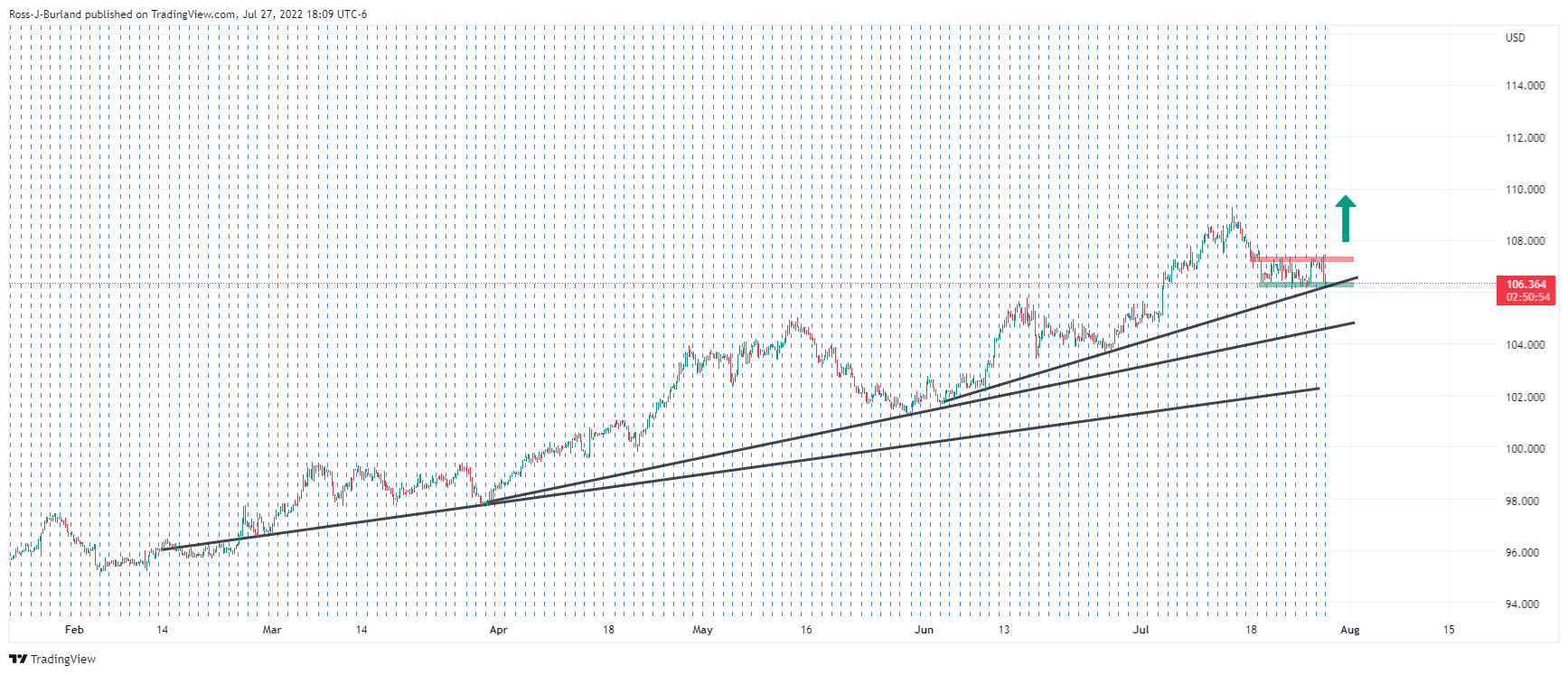
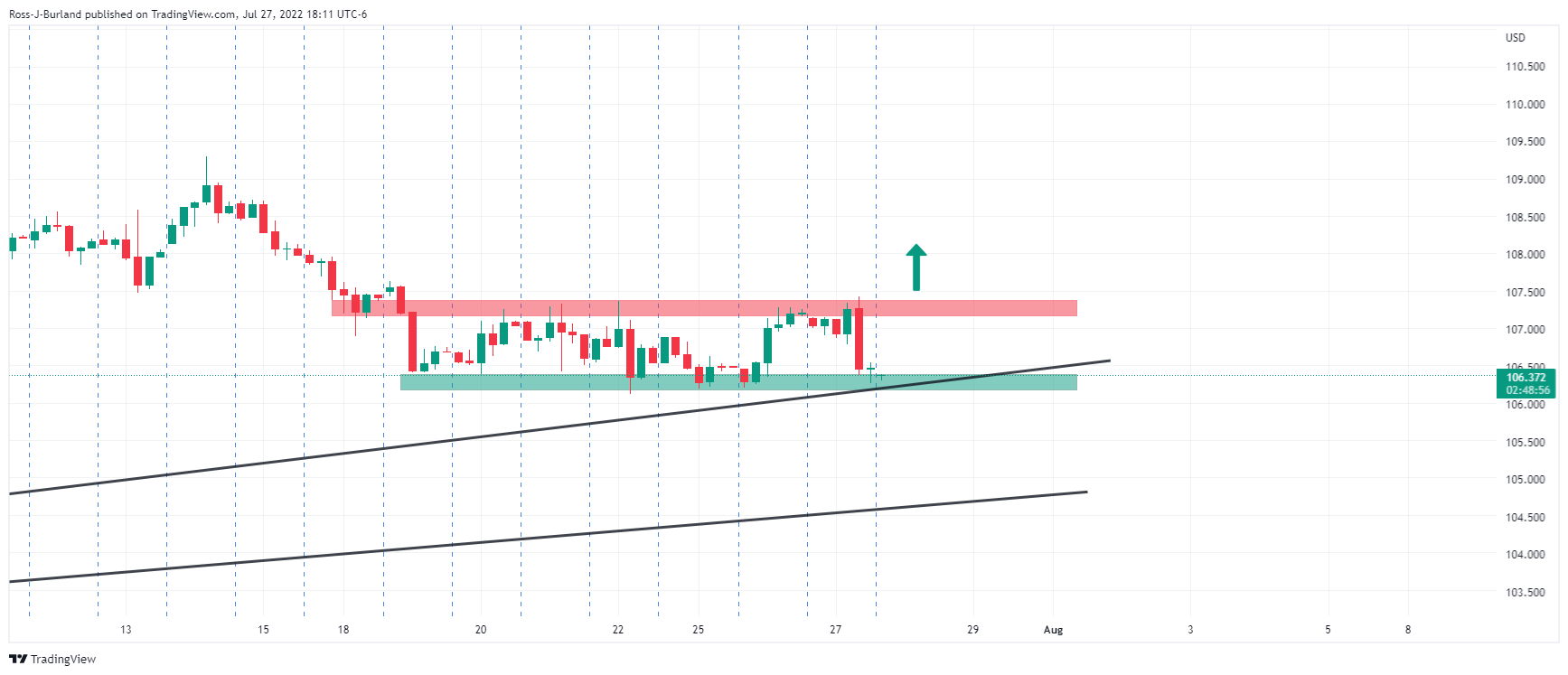
Bulls need to break 107.40 to gau back control in an otherwise bullisj trajectory.
Author

Ross J Burland
FXStreet
Ross J Burland, born in England, UK, is a sportsman at heart. He played Rugby and Judo for his county, Kent and the South East of England Rugby team.