|

Central Bank of Russia leaves policy rate unchanged at 4.25%, hints at future cuts
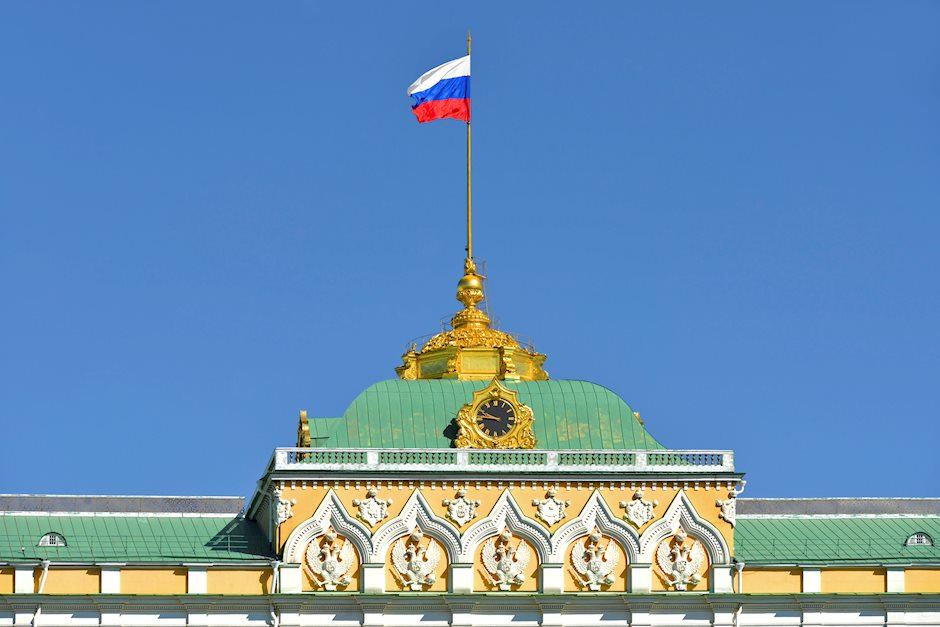
Russia’s central bank announced on Friday left its policy rate unchanged at 4.25% but noted that it will consider the possibility of further rate cuts.

Additional takeaways from the policy statement

"Inflation seen at 3.7-4.2% in 2020. In 2021, it will be close to 4%."

"Growth of prices slightly above forecast."

"If the situation develops in line with the baseline forecast, the Bank of Russia will consider the necessity of further key rate reduction at its upcoming meetings."

"This is driven by two key factors: an active recovery of demand after the lockdown as well as the weakening of the ruble on the back of generally increased volatility in global markets and higher geopolitical risks."

"Inflation expectations of households and businesses remain elevated."

"Although the effect of short-term proinflationary factors has strengthened, disinflationary risks still prevail in the medium run."

"As the stage of lively recovery growth owing to restriction lifting and support measures complete, the pace of return of the global and Russian economies to their potential will slow down."

"This will have a constraining effect on price growth rates."

"In its key rate decision-making, the Bank of Russia will take into account actual and expected inflation dynamics relative to the target and economic developments over the forecast horizon, as well as risks posed by domestic and external factors.

Market reaction

The USD/RUB pair's reaction was largely muted and it was last seen losing 0.17% on the day at 75.0785.

Author

Eren Sengezer

As an economist at heart, Eren Sengezer specializes in the assessment of the short-term and long-term impacts of macroeconomic data, central bank policies and political developments on financial assets.


More from Eren Sengezer
Share:

Editor's Picks

EUR/USD edges lower below 1.1650 as Middle East tensions fuel US Dollar strength

The EUR/USD pair trades in negative territory around 1.1635 during the early Asian session on Thursday. The US Dollar strengthens against the Euro as escalating Middle East conflict boosts safe-haven flows. Traders brace for the Eurozone Retail Sales and US weekly Initial Jobless Claims reports, which will be released later on Thursday. 

GBP/USD tests key moving averages as growth downgrade weighs

GBP/USD was nearly flat on Wednesday, edging up 0.08% to settle around 1.3370 in a quiet session. The pair has fallen sharply from its late-January high near 1.3870 and is now testing the 200-day Exponential Moving Average, with this week's one-week forex heatmap showing Pound Sterling as one of the worst performers against the US Dollar, down about 1.4% on the week.

Gold benefits from a retreating USD; reduced Fed rate cut bets cap gains

Gold attracts some buyers for the second consecutive day on Thursday amid a modest US Dollar pullback from an over three-month high, though it remains below the $5,200 mark. Wednesday's upbeat US macro data further tempered hopes for three rate cuts by the Fed in 2026. Furthermore, escalating Middle East tensions might continue to benefit the USD's status as the global reserve currency and contribute to capping the bullion.

Morgan Stanley files amended S-1 for spot Bitcoin ETF

Morgan Stanley submitted an amended S-1 filing to the US Securities and Exchange Commission on Wednesday, providing additional details on its proposed Bitcoin exchange-traded fund.

First Venezuela, now Iran: The US-China energy war escalates

At first glance, the latest escalation involving the United States with both Iran and Venezuela looks like another chapter in a long-running geopolitical story. But viewed through a broader strategic lens, something else may be unfolding: Energy.

Bittensor extends recovery despite retail demand slump

Bittensor, a leading Artificial Intelligence token, is aging up above $190 at the time of writing on Wednesday. Steady price increases characterise the broader crypto market, with Bitcoin holding above $71,000 and Ethereum above $2,000.